


Loading titles…
Documentary
Zoologist Nigel Marvin travels back in time to visit deadly creatures of the prehistoric oceans.
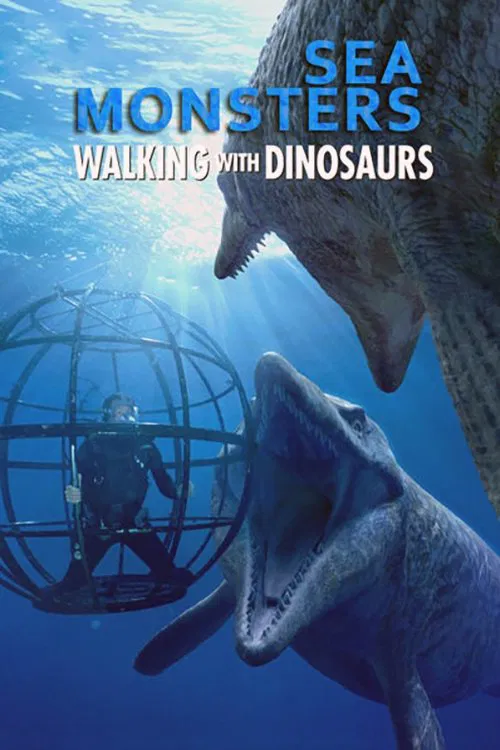

Nigel travels back in time to the seventh deadliest sea of all time, the Ordovician period (450 million years ago), where he is attacked by sea scorpions and comes face-to-face with a giant orthocone. He then explores the sixth deadliest sea, the Triassic (230 million years ago), where he encounters a pair of Nothosaurus, the bizarre sea reptile Tanystropheus and the giant primitive predatory ichthyosaur Cymbospondylus, which Nigel keeps at bay through using a cattle prod. Nigel then dives in the fifth deadliest sea, the Devonian (360 million years ago). In the Devonian, Nigel encounters the strange primitive shark Stethacanthus and the placoderm Bothriolepis and he uses a rounded shark cage to protect himself from the giant predatory placoderm Dunkleosteus.

Leaving the Devonian, Nigel travels forward in time to the fourth deadliest sea, the Eocene (36 million years ago), where he encounters the strange elephant-related Arsinoitherium. Diving in the Tethys Sea, Nigel encounters the primitive whale Dorudon and the crew of The Ancient Mariner uses recorded whale sounds to attract the giant predatory primitive whale Basilosaurus. In the third deadliest sea, the Pliocene (4 million years ago), Nigel encounters the strange whale Odobenocetops and dives with a adolescent megalodon shark. He later uses the rounded shark cage to dive with an adult megalodon, the largest shark of all time.

After leaving the Pliocene, Nigel explores the second deadliest sea, the Jurassic (155 million years ago). There, he meets the giant filter-feeding fish Leedsichthys and predators such as the shark Hybodus and the marine crocodile Metriorhynchus. The apex predator of the Jurassic sea is the giant pliosaur Liopleurodon, which Nigel keeps away through spraying putrescine at them when they approach him. Nigel then travels to "Hell's aquarium", the Cretaceous (75 million years ago). The sheer number of different predators present, including sharks, giant predatory fish Xiphactinus and giant mosasaurs, makes the Cretaceous the deadliest sea of all time. In addition to predators, Nigel also encounters a variety of other Cretaceous animals, such as the aquatic bird Hesperornis, plesiosaur Elasmosaurus, pterosaur Pteranodon and giant sea turtle Archelon.

Self

Narrator (voice)


Biologist and naturalist Dan O'Neill embarks on a groundbreaking mission to protect one of the world's most elusive creatures—the snow leopard. Set against the stunning backdrop of Kyrgyzstan's rugged mountains, this two-part adventure follows Dan as he works to build a new research center dedicated to studying these majestic cats.


Geologist Iain Stewart explain in three stages of natural history the crucial interaction of our very planet's physiology and its unique wildlife. Biological evolution is largely driven bu adaptation to conditions such as climate, soil and irrigation, but biotopes were also shaped by wildlife changing earth's surface and climate significantly, even disregarding human activity.

Ronan Donovan, our expert guide and National Geographic photographer, takes the audience on an intimate exploration of the Arctic during the endless day of the summer months, giving insight to the unexpected abundance of the 'Garden of the Arctic' in Wolf Valley as he attempts to embed with a wolf family pack.


Continuing the compelling saga of the heartstring-tugging, dramatic tale of survival revolving around three families of meerkats who are descendants of the legendary meerkat matriarch, Flower. Neighbors and rivals who share a bloodline are forced to compete for food and resources in an environment that is undergoing a great deal of change: the Kalahari Desert in South Africa.

