Loading titles…
Documentary
“Years of innocence” signifies the return to the sports memories that have been the balm of the souls of our grandparents, our fathers and those younger people who have heard the narratives or studied the photographs of the great idols of older times. We return to the age of…
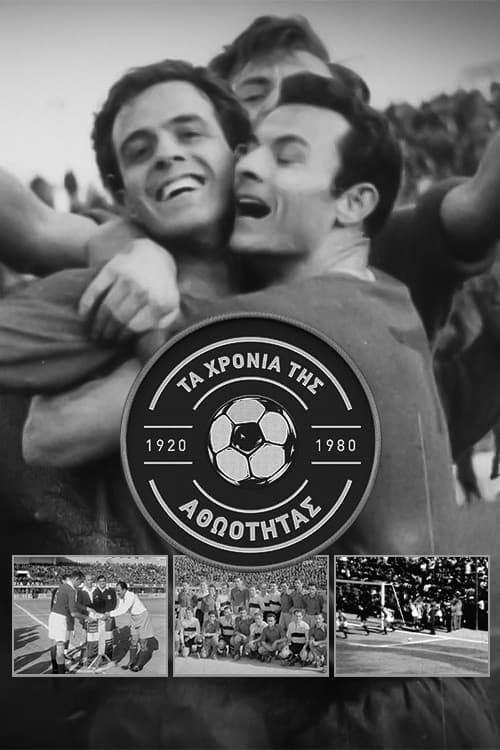
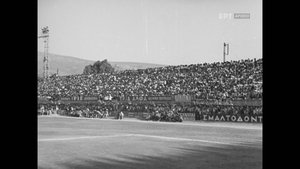
The story of Greek football, mainly in the 1920s, when the Hellenic Football Federation establishes the National Team, the Championship and the Cup. Up to 1959, Greek football is at an amateur level, played on dry fields, where players and fans on crowded platforms experience the same degree of poverty. Great historical events define our country at the time, such as the 1922 refugees, the "Ohi day" in 1940, the occupation, the civil war and the exiles.
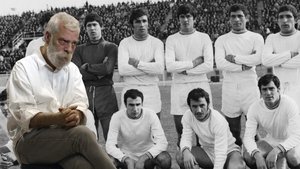
Panionios, Apollon Smyrnis and Ethnikos Piraeus were, throughout the twentieth century, the unsung backbone heroes of Greek football. They were powerful teams, who supplied the grand teams with great players and were always the regulators of the title. Always on the backseat of the then powerful POK’s (Central Football Club) system, with fewer but devoted fans, dedicated to fair and honest play; they gradually left the scene, as did their era.
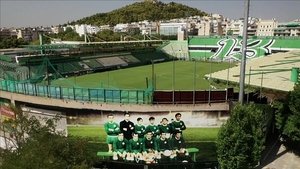
Panathinaikos, that made it to the European Champions Cup final in 1971, at Wembley Stadium, is the top Greek team of all time. That team was created by a schism and the restoration that followed it. Ferenc Puskas was the visionary of the team at the bench and its big stars were “General” Mimis Domazos and “Gunner” Antonis Antoniadis. The spirit of that team remains unchanged even today, fifty years later, when they gather together again at the Stadium of Alexandras Avenue.
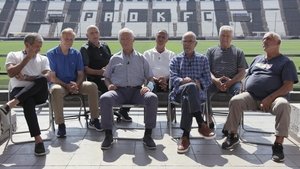
PAOK’s team in the seventies made history as the most spectacular team of all time in Greek football. When Koudas returned, after Olympiakos tried to sign him, something that PAOK's administrative leader, the famous Giorgos Pantelakis, staunchly opposed, PAOK shot to prominence, played mythical football, but only won one championship and two cups. The club was certainly persecuted by the football status quo, but it also did itself an injustice.
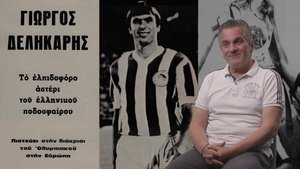
The short term of Goulandris in Olympiakos, from 1971 to 1975, was the only case where Greek football became a dream come true. A dream that ended abruptly, when Nikos Goulandris suddenly left, leaving, however, a legacy of football bliss behind him.
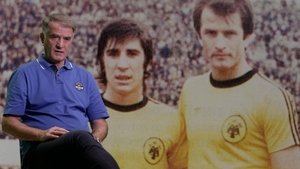
In the club’s entire history, the 1970s incarnation of the AEK team, presided by Loukas Barlos, was by far the one that stirred up the most powerful emotions, both in its fans and in its players. We focus on a highly exciting period that is full of spectacle, love, beauty and intense passion.
After the unprecedented emergence of Doxa Dramas in the second half of the fifties, the football clubs of the province didn’t aim high. In the seventies, however, three teams shook things up. The great Panachaiki with Kostas Davourlis and the rest of the talented players reached Europe. PAS Giannina with players from Argentina, which initially appeared as pseudo-Greeks, but eventually became an integral part of the city of Ioannina, offered unforgettable moments of football greatness. Finally, Kastoria went even further by winning the Greek Cup in 1980.
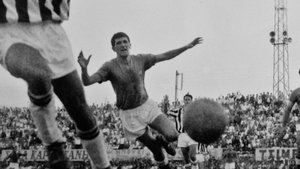
The First National League was established in 1959 and Greek football took its first steps towards semi-professionalism, while still predominantly characterised by amateurism. The presence of a few great foreign coaches, the installation of artificial turf on some fields, as well as the emergence of great players and other factors in the sixties and the seventies, changed the climate. Our National Team came very close to the finals of major competitions twice, but on both occasions it failed in the end. Nonetheless, Panathinaikos reached Wembley Stadium, and we also admired the great teams of Olympiakos led by Goulandris, PAOK led by Koudas and AEK by Barlos. Eventually, after a lot of ups and downs, the Greek National Team managed to qualify for a major competition, the European Championship, for the first time in 1979, the same year that we entered the European Union and, thus, it became professional.
No cast information available.

English football's famous 'fallen giant' Leeds United is at the start of a journey: to win promotion back to the Premier League. New owner Andrea Radrizzani has recruited a world-class head coach, Marcelo Bielsa, to lead the team back to the promised land. This will be one of the most dramatic seasons in the club's history as fans, players and a city start to dream of a return to the top flight.
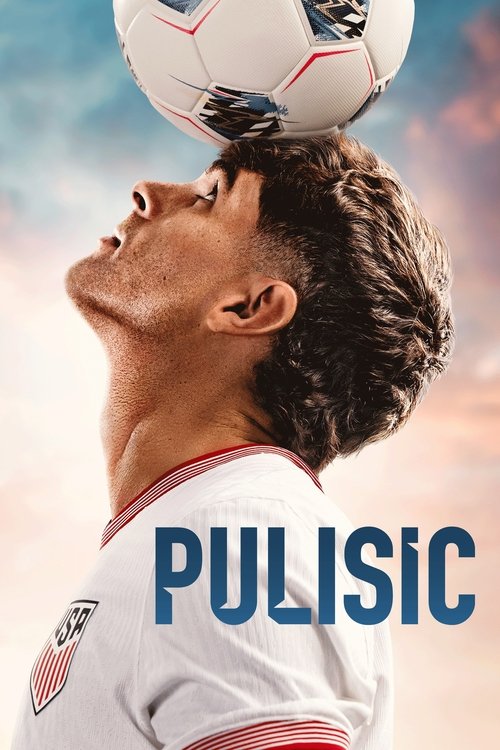
A behind-the-scenes look at American soccer's biggest star Christian Pulisic, providing unprecedented access to his life and growing celebrity in Italy as he competes in UEFA Champions League and Serie A competitions. Cameras capture Pulisic's journey in meeting the demands of global stardom while he prepares for the biggest moment of his career – the 2026 FIFA Men's World Cup on home soil.
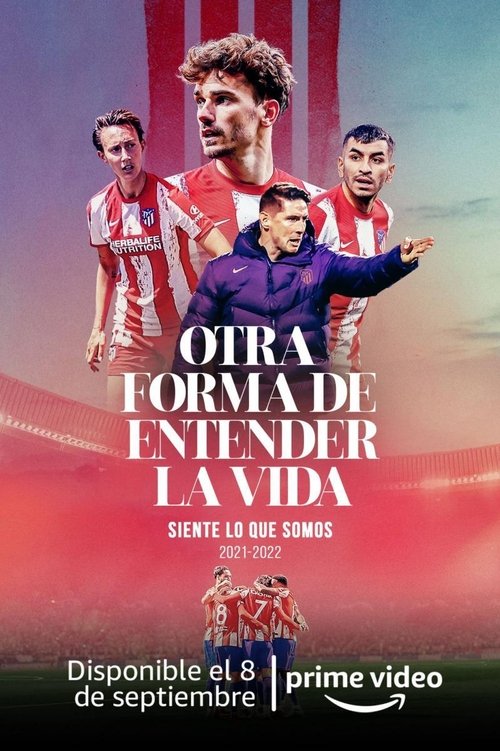
We go into the life of Atlético de Madrid for a year: the players, the day-to-day life at the club, the passion of its fans, its international dimension, the enormous impact that Atleti has on the lives of millions of people. Around the men's first team, the women's team and the lower categories, we will access extraordinary stories that will help us to discover the most unknown of sportsmen.



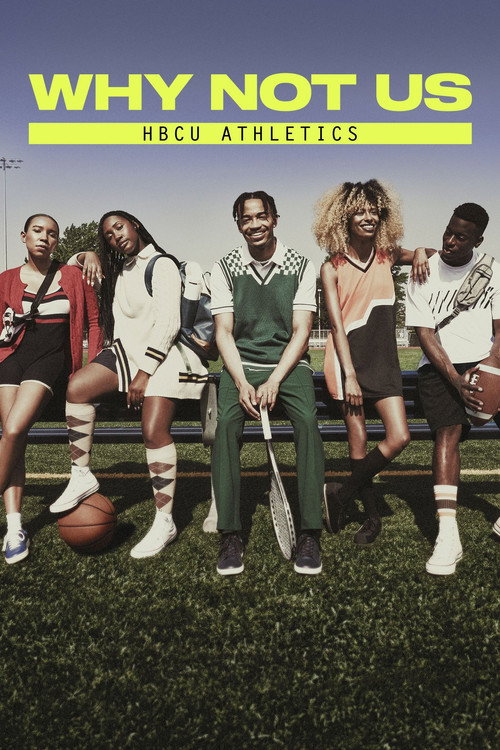
Why Not Us takes you into the locker rooms, practice facilities, dorm rooms, classrooms and communities of some of the most well-respected HBCU athletic programs in the country. Explore what it means to be an athlete, student and coach at an HBCU and why men & women everywhere are choosing to experience the rich tradition of these often lesser funded and lesser known programs.