


Loading titles…
Reality / Drama
Crime & Punishment is a 2002 reality television, nontraditional court show spin-off of the Law & Order franchise. It premiered on NBC on Sunday, June 16, 2002, and ran through the summers of 2002, 2003, and 2004.

The first episode chronicles the trial of John Dailey, who is accused of murdering his wife. Many witnesses attest to the fact that Dailey had often spoken about graphically killing her, but there was no body for evidence. The prosecutor was able to sway the jury through intelligent remarks and stong witnesses. John Dailey was given a sentence of 25 years to life in jail.
Deputy District Attorney Garry Haehnle prosecutes Marshall Jones, a father accused of suffocating his 4-month-old son and burying the body in a shallow grave in the woods. Attempting to pass the murder off as an unfortunate accident, the defense paints the picture of a loving father who made one bad decision, which Haehnle must disprove in the eyes of the jury. After Jones is convicted, during the sentencing hearing, he domonstrates his callousness and ultimately his guilt. The judge strongly rebukes him and gives him the maximum sentence.
A man is tried for murder in the first degree. He had supposedly stabbed his girlfriend out of jealousy. However, the intent that the prosecutor describes does not match up with the lustful insanity that the defense describes. After credible witnesses help the case, Vasquez is sentenced. During the sentencing, Vasquez and his brother attack the prosecutor (Lindberg) and they both are given extended jail sentences.
A man is tried for the rape of a woman. What would seem like an easy case, difficulties appear because the victim had been inebriated and may have not been fully aware of her actions. Luckily, the defendant gives the least plausible testimony that he could give, which would give him a jail sentence.
A girlfriend of a gang member is found dead from a bullet behind a dumpster. With a minimal amount of evidence and a difficult judge, it becomes difficult for the District Attorney to convince the jury that the murderer was the victim's boyfriend.

In the first case of Villa, the defendant is brought up on charges of beating his wife and committing a third strike of domestic abuse. In another case, the Deputy District Attorney tries to get Schierbaum convicted of crimes including kidnapping and sexual assault, and attempted murder. The parallels between the cases can be seen in the domestic abuse of Villa and the violence made by Schierbaum towards his children and wife.
A girl who had been kidnapped and abused within her own apartment complex comes to the stand to give her attacker a prison sentence. Difficulties arise when the both parties admit to a candy exchange on more than one instance. Given the fact that Taitano's roommate had a record of child abuse, the defense tries to persuade a jury that the roommate had been the perpetrator in the incident. Despite a believable plea, the defense does not sway the jury...fully.
For a strange twist in the series, this case has a living victim that supports the defendant. When Garcia is found by his wife wearing her lingerie and partaking in controversial activities, he becomes enraged and stabs her. She survives and makes a case against her husband difficult because her guilt compels her to want to save him from a sentence.
A District Attorney with a heavy caseload tries two cases in this episode. The first case has a high media spotlight because Kayser is being tried on DWI charges. He had killed a 13 year old boy while driving. emotions are unleashed by the boy's family and the case is followed closely in the news. Bowman's second case deals with Palomino, who is convicted of possessing crystal meth. The case becomes more complicated because it was not his first parole violation.
When a man is killed, matters become complicated when it becomes apparents that California gangs are entrenched in the incident. An eye-witness is killed before the hearing and other witnesses lose any recollection of the murder. Even though there are many charges, Redondo is only found guilty of only one. A mistrial is called due to a deadlock on other charges.
Keeshawn Scott seems anything but innocent when he is accused of an unsolicited premeditated murder. He shoots a man in his girlfriend's home but the crime is deemed a murder in the first-degree. The second case explores a serious offense when a teenager is brought up on charges after purportedly threatening high school students that survived high school shootings through e-mail.
A drunken murder occurs when an inebriated Mayta becomes upset at a popular gay night club. Mayta is unhappy when a man he is seeking is uninterested which prompts the defendant to kill a bystander. However, the District Attorney is convinced that the murder was not a drunken crime of passion but rather a premeditated crime.
No synopsis available.
No synopsis available.

Self - Host

Narrator (voice) (uncredited)


I'll Fly Away is an American drama television series set during the late 1950s and early 1960s, in an unspecified Southern U.S. state. It aired on NBC from 1991 to 1993 and starred Regina Taylor as Lilly Harper, a black housekeeper for the family of district attorney Forrest Bedford, whose name is an ironic reference to Nathan Bedford Forrest, the founder of the Ku Klux Klan. As the show progressed, Lilly became increasingly involved in the Civil Rights Movement, with events eventually drawing in Forrest as well. I'll Fly Away won two 1992 Emmy Awards, and 23 nominations in total. It won three Humanitas Prizes, two Golden Globe Awards, two NAACP Image Awards for Outstanding Drama Series, and a Peabody Award. However, the series was never a ratings blockbuster, and it was canceled by NBC in 1993, despite widespread protests by critics and viewer organizations. After the program's cancellation, a two-hour movie, I'll Fly Away: Then and Now, was produced, in order to resolve dangling storylines from Season 2, and provide the series with a true finale. The movie aired on October 11, 1993 on PBS. Its major storyline closely paralleled the true story of the 1955 murder of Emmett Till in Money, Mississippi. Thereafter, PBS began airing repeats of the original episodes, ceasing after one complete showing of the entire series.


Rafferty's Rules was an Australian television drama series which ran from 1987 to 1990 on the Seven Network. Rafferty's Rules was one of the first programs undertaken by the Seven Network's then new in-house drama unit, going into production in May 1985 as "a 15-part courtroom drama". The program had started out as a pilot episode, recorded in early 1984 with the actor Chris Haywood in the lead role. When the pilot episode was remounted later in 1984, Chris Haywood wasn't available and the lead role was re-cast to John Wood. This second recording was eventually broadcast as the program's first episode.
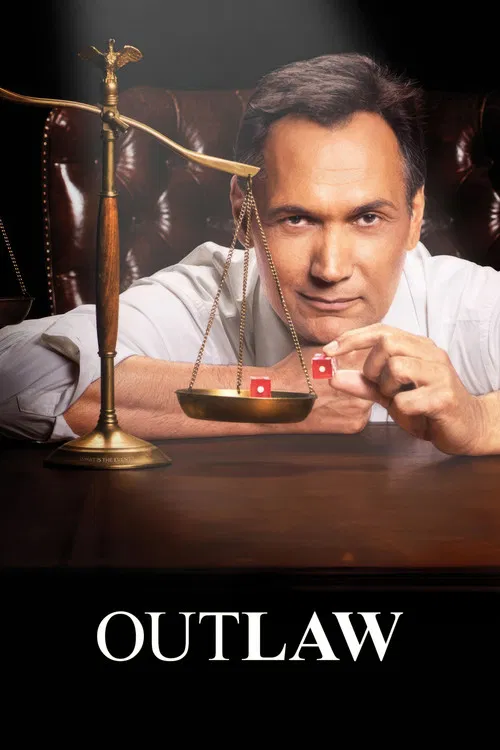
Few jobs are guaranteed for a lifetime, and a Supreme Court appointment is one you just don't quit. Unless you're Cyrus Garza. A playboy and a gambler, Justice Garza always adhered to a strict interpretation of the law. Until he realized the system he always believed in was flawed. Now, he's quit the bench and returned to being an attorney. Determined to represent "the little guy," he's using his inside knowledge of the justice system to take on today's biggest legal cases. And making plenty of powerful people unhappy along the way.


John Thaw dons the silks as barrister James Kavanagh Q.C., one of the most highly respected criminal advocates in London, commanding admiration from colleagues and opponents alike. However, all this has come at a price as his dedication to work has taken its toll on his private life… Going beyond traditional courtroom dramas, “Kavanagh Q.C.” uncovers the pressures of legal battles and the problems of defining the truth, providing a compelling representation of the euphoric ups and costly downs of success and failure in the legal world.
