

Loading titles…
Documentary / War & Politics
For Palestinians, 1948 marks the “Nakba” or “catastrophe”, when hundreds of thousands were forced out of their homes. For Israelis, the same year marks the creation of their own state. This four-part series attempts to present an understanding of the events of the past that are…

Napoleon Bonaparte, seeking to establish a French presence in Ottoman-controlled Palestine, laid siege to the walled city of Acre in 1799. He advertised Palestine as a homeland to the Jews under French protection, calling on them to 'rise up' against their 'oppressors.' While his assault failed, Napoleon's project for a Jewish homeland in the region under a colonial protectorate would go on to be revived by the British 40 years later.
A national strike by Palestinians to protest mass Jewish immigration was met with violence by British authorities. Despite the British killing over 190 Palestinians and wounding more than 800 between April and October 1936, it was pressure from Arab heads of state that convinced Palestinian leaders to end the strike and join an inquiry headed by Lord Peel. In 1937 the Peel Commission recommended partition of Palestine: one-third for a Jewish state and two-thirds for an Arab state to be merged with Transjordan. A corridor from Jerusalem to Jaffa would remain under British mandate. The Commission also recommended relocating Palestinians where necessary.
In late 1947 the United Nations devised a new plan for the partition of Palestine. Resolution 181 divided Palestine into an Arab and a Jewish state, with Jerusalem as an internationalised city. The Jewish state was granted 56 percent of the land; the city of Jaffa was included as an enclave of the Arab state; and the land known today as the Gaza Strip was split from its surrounding agricultural regions. Many Palestinians viewed the proposed Arab state as impractical. When the draft resolution was presented for voting, Arab newspapers 'named and shamed' the countries that voted for it, and Arab protesters took to the streets. Following the resolution's passage, Britain announced it would end its mandate in Palestine.
In early 1948, Jewish paramilitary forces began to seize more land in Palestine. By the end of July, more than 400,000 Palestinians had been forced to flee their homes, and their plight as refugees had just begun.
No cast information available.

The specter of drug trafficking haunts Europe. Struggling with ultra-violent criminal groups that control the vast majority of cocaine trade, European police forces are overwhelmed. The epicenter of all this trafficking: the Netherlands. A nation at the forefront of international trade and drug policy. This two-part film delves into the origins of European drug trafficking through the unique history of the Kingdom of the Netherlands.
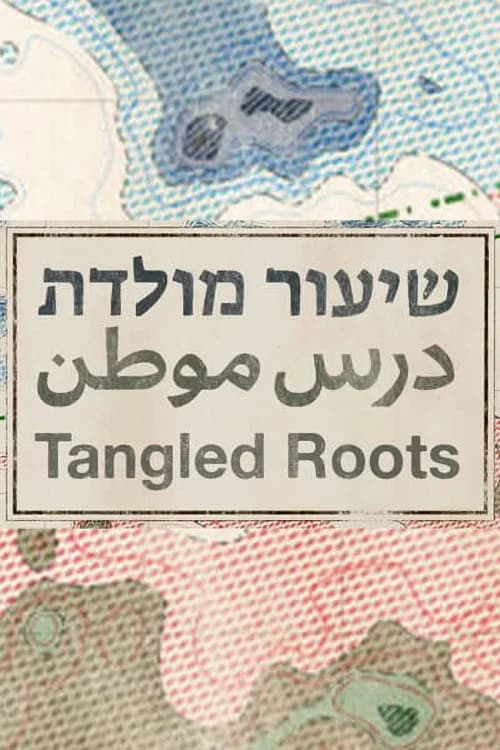
A brief televised guide to the history of the Israeli-Palestinian conflict. A succinct, lucid summary and concise presentation of its basic concepts and decisive events, while laying them out on a timeline and a spatial map, related from a variety of viewpoints and positions concerning the conflicted parties.


This is the story of a power struggle between two men - one fictional, and one real. In one corner is the master of crime – the greatest detective who never lived, Sherlock Holmes. In the other is writer, physician and spiritualist leader Sir Arthur Conan Doyle. Lucy Worsley explores the extraordinary love-hate relationship between author and creation.


