
Loading titles…
Documentary
Three years in the making, this comprehensive study of the Soviet dictator blends documentary footage and interviews with experts and surviving witnesses.

He was hailed as "teacher, leader, favorite friend" and given flowers by adoring children on his 70th birthday in 1949. A former prisoner recalls that upon his death in 1953, "Even in the prison camp they wept." Another man defends his actions as an informer for Stalin. This hour traces Stalin's ascent in Lenin's shadow and his accumulation of power at the expense of his Bolshevik comrades and rivals, whom he outmaneuvered and then consigned to their deaths. The account of how he managed to create a Lenin-Stalin cult despite the famous testament of Lenin that warned against him and recommended his removal as General Secretary of the Communist Party is fascinating for its display of hypocrisy, audacity and ruthlessness.
Stalin's reign is one of murder on an immense scale: an estimated 20 million deaths at the hands of the state. Historians tell of the destruction of the peasantry that resulted in a famine in the early 1930s that took the lives of more than 5 million people yet went unreported by most Western observers including George Bernard Shaw, shown here. Forced labor killed millions more.
The last years of Stalin's life, from the 1939 non-aggression pact with Germany through the victory of the Red Army in World War II, the takeover of Eastern Europe, and the beginnings of a new purge before his death. He was mourned by millions of those whom he held in subjugation.
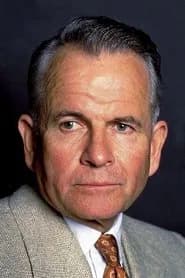
Self - Narrator (voice)

Communism spread to all of the continents of the word, lasting through four generations and over seven decades. Hundreds of millions of men and women were affected by this political system, one of the most unjust and bloodiest in history. Using newly discovered propaganda films and archival photos, these four episodes explore the mysteries of this totalitarian political machine that lured its share of important followers into the fold. Known as the red church, communism seduced its ardent followers like some earthly religion.


Mussolini seized power in Italy in 1922, after his March on Rome. He would hold it in his grasp until his death in 1945, establishing a dictatorship that lasted more than 20 years. Long considered a buffoon and a second-rate dictator, Il Duce invented fascism that was imitated by Hitler, who viewed the Italian as his political master. He wanted to transform his country into a warrior nation and promised Italians a return to the grandeur of the Roman Empire. He governed by violence and trickery and was one of the first populist leaders of modern times, leading his country into the catastrophe of the World War II. But who was Mussolini, this former teacher who came from the extreme left to become a newspaper editor and creator of the Fascist Party? Why did he ally himself with Hitler? Were the Italians really behind him? With archives and interviews with the last-surviving witnesses of the era, this portrait takes a look back at one of the most notorious dictators of the 20th century.


It started with Lenin and ended with Gorbachev. In this three-part documentary we highlight the people and events that played key roles in the rise of a revolutionary idea and the fall of an empire. How was it possible that this idea could fascinate so many people, including hundreds of intellectuals? How did so many thousands of people put up with suppression, indignity and economic hardship and still remain true to the fundamental concepts of communism?

The story of an empire: From its founding in 1922 to its dissolution in 1991, the Soviet Union was shaped by revolutionary idealism, but also by oppression and decay. The USSR evolved from Stalinist terror through the Thaw under Khrushchev to political processes such as glasnost and perestroika under Gorbachev. Finally, in 1991, it collapsed.


