Loading titles…
Drama / Animation / Kids
Sisters Laura and Diana enjoy reading, but Laura is passionate about it. She tells different stories from Peruvian and world literature, among which there are novels, poems, short stories and oral stories. Each one transmits a message.

A Diana la invade la nostalgia por las playas de Huanchaco y esto le recuerda a Laura un cuento del gran Abraham Valdelomar: “Los Ojos de judas”, la trágica historia de Luisa y de un niño con el que entabla una conexión en las playas de Pisco.

A lost scholarship, a half-finished first university cycle... all of Diana's plans were frustrated by the pandemic, so Laura tries to get her out of her dramas by reciting some poems from the collection of poems “5 Meters of Poems” by the Peruvian avant-garde Carlos Oquendo de Amat. .

After a fight between Diana and her father, Laura decides to tell him a story about another father and son in conflict: “Frankenstein,” a novel by Mary Shelley that gives a twist to this type of story with a creature looking for a place in the world and only finding rejection.

Diana has fallen in love with Giacomo Razzolini, a boy she met on Instagram, but this displeases Laura who believes that her sister only likes him because he is “handsome”, this makes them talk about how sometimes appearances can be deceptive. and to review the story of “The Picture of Dorian Gray.”

The dilemma about what to do with Diana's old dress leads the sisters to ask a very interesting question: Do we wear what we wear conditioned by others or because we really like it? Seeking to find an answer, Laura remembers a story by Clorinda Matto de Turner on a very popular feminine garment of her time: “The corset”.

“I hate 2020!” Diana believes that this year ir responsible for all of her misfortunes. Could it be true? Laura remembers a story that has to do with that and leads them to question whether the years are really the culprits for what happens in them: “El engendro” by Emilia Pardo Bazán.

A call upsets Diana, her friend has just been accepted at a foreign university to go on an exchange and Diana wishes that something would happen that would prevent her trip. This makes Laura remember a story that she has to do with the dark sides that we can hide: “The Strange Case of Dr. Jekyll and Mr. Hyde” by Robert Louis Stevenson.

A volunteer experience leaves Diana very sensitive and makes her question her privileges and society's neglect of vulnerable populations. To seek to console her sister, Laura recites one of César Vallejo's poems from his book “Human Poems”
A fight between her parents has Laura very worried, she had never heard them yell at each other like that and she thinks she should have done something to stop them. Talking with Diana she remembers a story that helps her with her situation: “A cry in the night” by Grazia Deledda.

Diana has “alienated”, u know? Or at least that's what her sister Laura thinks, who sees her behavior more and more like a person from Lima. So, she tells her a story that has to do with the rejection of our identity: “Alienación” by Julio Ramón Ribeyro.
Mr. Lucilo, a neighbor of Diana's, has died and he blames her for treating him badly the last time they saw each other being tortured. Laura believes that her sister is exaggerating, so she tells her a story where there is a lot of guilt involved: “The Tell-Tale Heart” by Edgar Allan Poe.
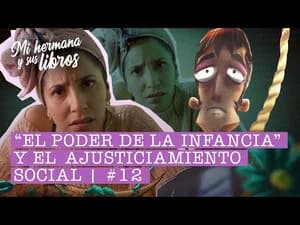
On a visit to the market, Diana witnesses how people beat up a boy who tried to steal a sack of potatoes and this disturbs her a little. On one hand, she understands people's anger, but does that justify violence? This leads the sisters to question the punishment for crimes and talk about the story “The Power of Childhood” by Leo Tolstoy.
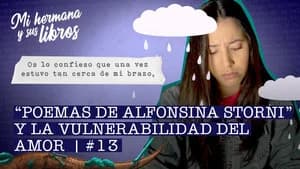
Diana has fallen into the trap of love, but the boy she likes has fallen in love with someone else. Seeing her on the verge of tears, Laura recites some poems by Alfonsina Storni to make her come back to herself.
Chío
Sara

An animated adaptation of six classical Japanese literature pieces, including No Longer Human (Ningen Shikkaku) and Run, Melos (Hashire, Melos) by Osamu Dazai, Kokoro by Natsume Souseki, Hell Screen (Jigoku Hen) and The Spider's Thread (Kumo no Ito) by Ryunosuke Akutagawa and In the Forest, Under Cherries in Full Bloom (Sakura no Mori no Mankai no Shita) by Ango Sakaguchi.


Wishbone is a children's television show. The show's title character is a Jack Russell Terrier of the same name. Wishbone lives with his owner Joe Talbot in the fictional modern town of Oakdale, Texas. He daydreams about being the lead character of stories from classic literature He was known as "the little dog with a big imagination". Only the viewers and the characters in his daydreams can hear Wishbone speak. The characters from his daydreams see Wishbone as whatever famous character he is currently portraying and not as a dog.

1837: Another year of the grueling Caucasian war. A young officer, Grigory Pechorin, was sent into exile to the active army for participating in a duel. Here in the Caucasus, Pechorin will have to become an unwitting participant in rapidly unfolding events - a fight with smugglers, the abduction of a young Circassian princess, another duel. And when the whole world turns against Pechorin, and a close friend falls by his hand, he will continue his journey alone, a hero, a product of the new age...

Oreki Houtarou is a minimalistic high school boy. One day, he joins the Classic Literature Club at his elder sister's request. There he meets Chitanda Eru, Fukube Satoshi, and Ibara Mayaka. Chitanda is a calm beautiful girl but she turns into an embodiment of curiosity once she says, "I'm curious." Fukube is a smiling boy with a fantastic memory who calls himself a database. Ibara is a short girl and is strict with others and herself. They begin to investigate a case that occurred 45 years ago. Hints of the mystery are buried in an old collection of works of the former members of Classics Club. The collection is titled "Hyouka."

Stalked by a beastly white tiger, Atsushi Nakajima has no idea that the menace lives inside him—a power that catches the attention of the Armed Detective Agency. Using inhuman abilities to combat crime, this team takes Atsushi under the wing of their most eccentric member, Dazai. Together, they tear through mafia-muddled mysteries while enemies keep an eye on the tiger’s lofty bounty.

The publication of a new dictionary titled The Great Passage progresses. Mitsuya Majime, originally from publisher Genbu Shobo's sales department, has been recruited by Kouhei Araki, a veteran editor of the dictionary department who is looking to retire soon. The dictionary department is known internally as the "money-eating insect," but Mitsuya uses his perseverance and attachment to the words in order to become a great editor. Mitsuya, who has poor social skills, finds himself working with another man named Masashi Nishioka, who is able to express himself better.