

Loading titles…
Documentary
Juice: Power, Politics, And The Grid is a five-part documentary series produced by two Austin-based filmmakers, Tyson Culver and Robert Bryce, that follows the success of their first film: Juice: How Electricity Explains the World, which is now available on streaming platforms…

In February 2021, millions of Texans lost power, and the state’s grid came within four or five minutes of a total failure that would have resulted in tens of thousands of deaths. It’s hard to overstate the importance –– and complexity –– of our electric grid. But how did our most important energy network get weakened? And what can we do to fix it?
Enron Corporation may have declared bankruptcy in 2001, but the company’s effect on America’s electric grid can still be seen today in states like California and Texas, where power prices are soaring and reliability is declining. The push to treat electricity as a commodity instead of a service is particularly punishing in California, where electricity prices are increasing three times faster than in the rest of the U.S.
The Osage Nation is in the midst of the longest-running legal battle against wind energy in American history. The tribe’s fight against Rome-based Enel is reminiscent of the themes in Martin Scorsese’s epic film, Killers Of The Flower Moon. But the tribe’s resistance against Enel’s rent-seeking is only one example of the fights against alternative energy projects that are happening all across rural America.
The global nuclear comeback is real, even in Japan, where the accident at Fukushima Daiichi still looms large in the public’s consciousness. For proof of that comeback, we went to Canada, where a tall, Toronto-based emergency room doctor named Chris Keefer ignited a groundswell of support to expand and refurbish Ontario’s fleet of nuclear reactors.
America is plagued by short-term thinking, particularly regarding our electric grid. If we are going to be serious about energy security, energy access, and climate change, we need to make our electric grid weather-resilient, not weather-dependent. That will require thinking long-term. It will require embracing fission. It will require us to consider our nuclear power plants as the crowning achievements of our society. It will require us to see them, as Emmet Penney does, as “industrial cathedrals.”
Narrator

Hinkley Point C, in a remote corner of the Somerset countryside, will be one of the largest nuclear power stations in Europe, and the UK's first new station in a generation. The 22-billion-GBP project requires mammoth foundations for the two reactors, excavation of 3.5km cooling water tunnels under the Bristol Channel, and an airtight inner steel lining to contain any radioactive material in the event of a meltdown.

A stunning new documentary series exploring the incredible story of uranium, from its creation in an exploding star to its deployment in nuclear weapons, nuclear power, and nuclear medicine. It’s a journey across nine countries and more than a century of stories, to discover the rock that made the modern world. It’s part science, part history, and all epic adventure. Join physicist and YouTube phenomenon Dr. Derek Muller as he reveals the untold story of the most wondrous and terrifying rock on Earth.
David Biello, energy and environment editor at Scientific American magazine, walks viewers through a series of scenarios that outline what the nation’s energy future might look like. What if America invests in carbon capture? Could we see a nuclear power renaissance? Is wind power possible? What is a super grid, anyway?

War and Peace in the Nuclear Age, first broadcast in 1989, is a thirteen-part PBS series on the origins and evolution of nuclear competition between the United States and the former Soviet Union. The series examined the rivalry for power and how it shaped the diplomacy, negotiation, ethical debates, and doctrine of deterrence that ran through the forty-year history of the nuclear age. This collection contains the full interviews and selected stock footage from the series.

On Eco House Challenge two suburban, Australian families are about to find out what it takes to help save the planet. Over several weeks, while still living their normal lives, the families must radically reduce consumption in four eco hot-spots – Energy, Water, Transport and Waste – or face the consequences we all face.
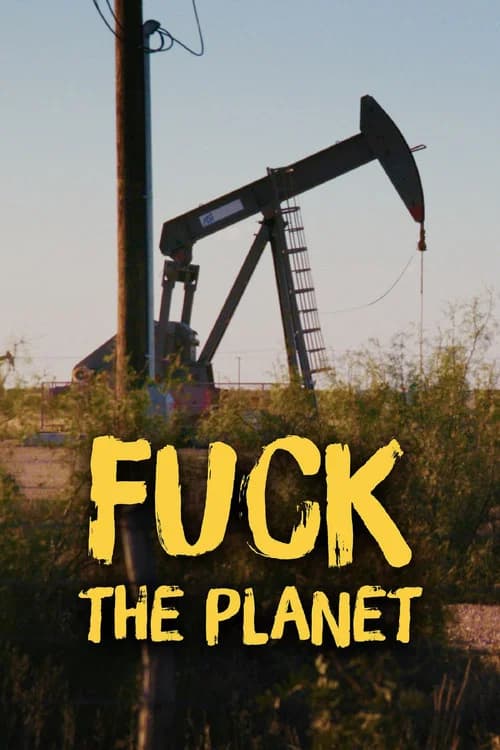
Jakarta Is Sinking, the Sea Is Rising - Why Were the Warnings Ignored? Scientists warned of the consequences of industrialization as early as the 19th century. Yet political and economic interests repeatedly delayed effective climate action. Through compelling historical testimony, this account traces decades of missed warnings and asks when the consequences of inaction will finally become impossible to ignore.


