Loading titles…
Documentary
Professor Alice Roberts travels across Greece and thousands of years back to our collective past, tracing how the Ancient Greeks developed philosophy, art, theatre and democracy.


In Thessaloniki, Alice explores local legend Alexander the Great. In Delphi she visits possibly the greatest ancient site in the world.

In Athens, Alice explores the origins of theatre and local ancient Thespis, who liked a drink or two. Alice also meets a Greek politician to discuss the return of the Elgin Marbles.
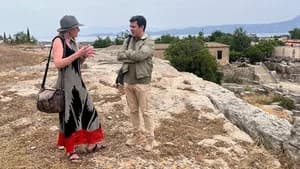
Alice's odyssey takes in Corinth, a guide called Socrates, Aristotle the historian, and the story of the wars at sea between the ancient Romans and the Greeks.
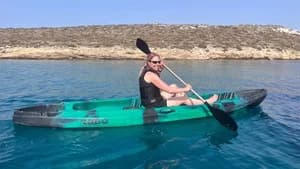
Alice explores the spectacular Greek archaeology of the Cyclades Islands, including Delos, where the Temple of Apollo once stood. Later Alice takes the boat to Türkiye.

Alice tracks the Ancient Greek legacy to modern Türkiye and concludes her odyssey with the spectacular city of Ephesus and the truth behind the legend of Troy.

Self - Host

Chris Barrie's Massive Speed follows on from the series Massive Engines and Massive Machines , both of which were also presented by petrolhead Chris (of Red Dwarf fame). In Massive Speed Chris turns his attention to the evolution of machines designed purely to achieve maximum speed. He travels the world searching for the most thrilling, speed-packed machines he can find and introduces audiences to huge engined bikes, planes, trucks and boats that battle it out in power races. Whether it's crossing an otherwise impenetrable snow drift, desert or swamp at the speed of an Olympic sprinter or cutting through the atmosphere at six times the speed of sound, Chris tells the stories of the greatest achievements of speed design and engineering. In each episode Chris follows the evolution of a specific genre of machine by testing them and reveals both the classsic stories and secret histories that surround each of them.


Out of the ashes of World War I, a new generation of titan rises…Pierre Du Pont, Walter Chrysler, J.P. Morgan Jr., Henry Ford, and William Boeing. Their fight to reach the top will transform America as they compete to dominate new industries—from the highways to the skyways. After years of fighting each other, and FDR, these rivals must unite during World War II to defeat a greater enemy and save the world.

For centuries, explorers have searched for the Bible’s most sacred religious artefacts. One of the most mysterious of these objects is the famed Ark of the Covenant. The gold-plated wooden chest – one of the most instrumental symbols of faith and God's presence – was believed to house the two tablets bearing the Ten Commandments. The Ark’s exact whereabouts has long puzzled scholars. Where did it go? And why has it remained such a mystery?

Myths die hard, and the history of the 20th century is no exception to this rule. Even today, we hold popular beliefs that we take for Evangelical truths. Thus, we believe that Hiroshima caused Japan to surrender, that the Marshall Plan saved Europe, that Adolf Hitler was a military genius, or that Mao Zedong was a necessary evil for China’s modernization. Of course, these judgements contain some truth; but, too broad-stroked to be accurate, they contradict the historical reality by denying its complexity. What if the truth was slightly different? Through an exploration of great national or international myths, this full archive documentary collection revisits the key moments of the 20th century with a new perspective in order to provide a new, smarter and more subtle interpretation, bringing elements to light that have been forgotten or sometimes overshadowed.

One of the most important historical investigations carried out by Rai, signed by the great Sergio Zavoli with the collaboration of Luciano Onder and Edek Osser and the scientific consultancy of Alberto Aquarone, Gaetano Arfé, Renzo De Felice, Gabriele De Rosa, Gastone Manacorda and Salvatore Valitutti. The six-part series, broadcast for the first time in the autumn of 1972, represented, half a century after the "March on Rome", a significant assessment of the years of the advent of the Mussolini regime, recalled with the rigor of the best television journalism (Saint-Vincent Award 1973) and through the direct testimonies of over fifty protagonists of the time, both fascists and anti-fascists.