


Loading titles…
Documentary
Extinct for millions of years, dinosaurs continue to fascinate as scientists struggle to understand the creatures that went from domination to extinction seemingly overnight. This four-part documentary series attempts to provide some answers. From the badlands to the Yucatán…

Narrator


The astounding story of the Chinese province of Guangdong – and the local people protecting its extraordinary wildlife from the modern world. Lying on the Tropic of Cancer, what should be desert is a wonderland of mountain forests, river deltas and coastal ecosystems, with over 1,000 species of animals. But with a booming economy, Guangdong is also the most densely populated province in China, home to over 126 million people. This beautiful, dramatic and epic natural history documentary celebrates not only the wildlife of Guangdong, but also reveals how its people cherish and protect it from the modern world.

Few countries in South America can boast to have such contrast and variety as Argentina. Diverse habitats such as Patagonia's bleak steppe, soaring Andean snowcaps, vast salt pans, lush rainforest around Iguazu Falls, steamy marshlands of Ibera, and grasslands of the Pampas support an astonishing range of wildlife - from penguins, whales and seals to condors, armadillos and guanacos.

A thrilling expedition across Bolivia in search of the most venomous snakes in this remote country. The main goal is to discover a new species unknown to science: a large pitviper that has not been classified yet. It will be tracked down and filmed alive for the first time. Spanish herpetologists Juan Timms and Jairo Cuevas embark on a perilous expedition across remote Bolivia, determined to capture the country's most venomous snakes. Their ultimate prize? Discovering a new, unclassified species of massive pitviper, known only from a single photograph.
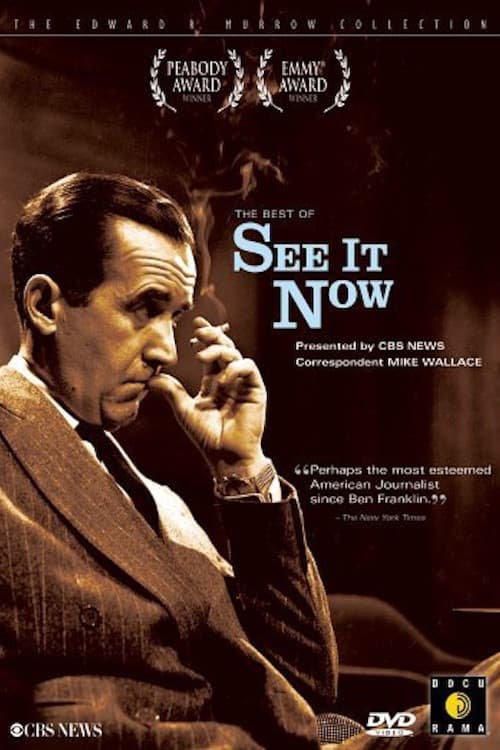
See It Now is an American newsmagazine and documentary series broadcast by CBS from 1951 to 1958. It was created by Edward R. Murrow and Fred W. Friendly, Murrow being the host of the show. From 1952 to 1957, See It Now won four Emmy Awards and was nominated three other times. It also won a 1952 Peabody Award, which cited its

Australian host Steve Irwin and his wife Terri run a wildlife refuge. Their shared passion is educating the world about wildlife, including the much feared crocodile and numerous venomous snakes. Steve's specialty is the capture and relocation of crocodiles. No animal appears too threatening to Steve, his true respect for animals is the foundation for everything he does.

Islands can be home to the most extreme examples of life and the some of the most dramatic landscapes. Natural selection fuels evolution in the most extraordinary way. Isolated for hundreds of thousands of years, pockets of individuals survive, thrive and adapt to fill all available niches fuelling a rapid development of new species. Wildest Islands, a stunning five-part series featuring the world’s most spectacular island locations. Dive into the crystal clear waters of the Caribbean; journey through the lush forests of Zanzibar; discover the unspoilt environs of the Hebrides; and uncover the enduring wonders of the Galapagos Islands as Wildest Islands investigates the rich history of these pristine paradises.

The '90s: The Last Great Decade? revisits the decade through "inside out" storytelling and analysis via 120 original interviews—from unsung heroes behind the decade's most riveting stories to the biggest names in politics, tech, movies and music. They reveal a decade of highs and lows: Bill Clinton swept into office on the promise of change; we all made new "Friends"; the LA Riots kept us glued to our TVs; Nirvana gave Generation X a voice but everyone danced the Macarena; and "The Real World" and Jerry Springer changed the television programming landscape. With a star-studded cast of actors, eyewitnesses, politicians and celebrity interviewees, The '90s tells the story of 10 years before boom turned into bust; 10 years when the Web was wide open; 10 years before global terror hit hard.

Life is a fragile thing. It changes and adapts so specifically to survive in the environment it's placed in. This ability to adapt is called evolution, and it's the reason that life has endured for the past few billion years. But evolution takes a long time, so when environments change too quickly for the inhabitants to keep up, the result is a drop in population or at the worst… extinction. And sometimes these changes can be so big that they affect the entire globe. Leading to some of the most catastrophic events in our planet’s history… mass extinctions. Content creator Angel of Death explores the five mass extinctions and the effects they had on life on earth in this five part miniseries.
