Loading titles…
Comedy
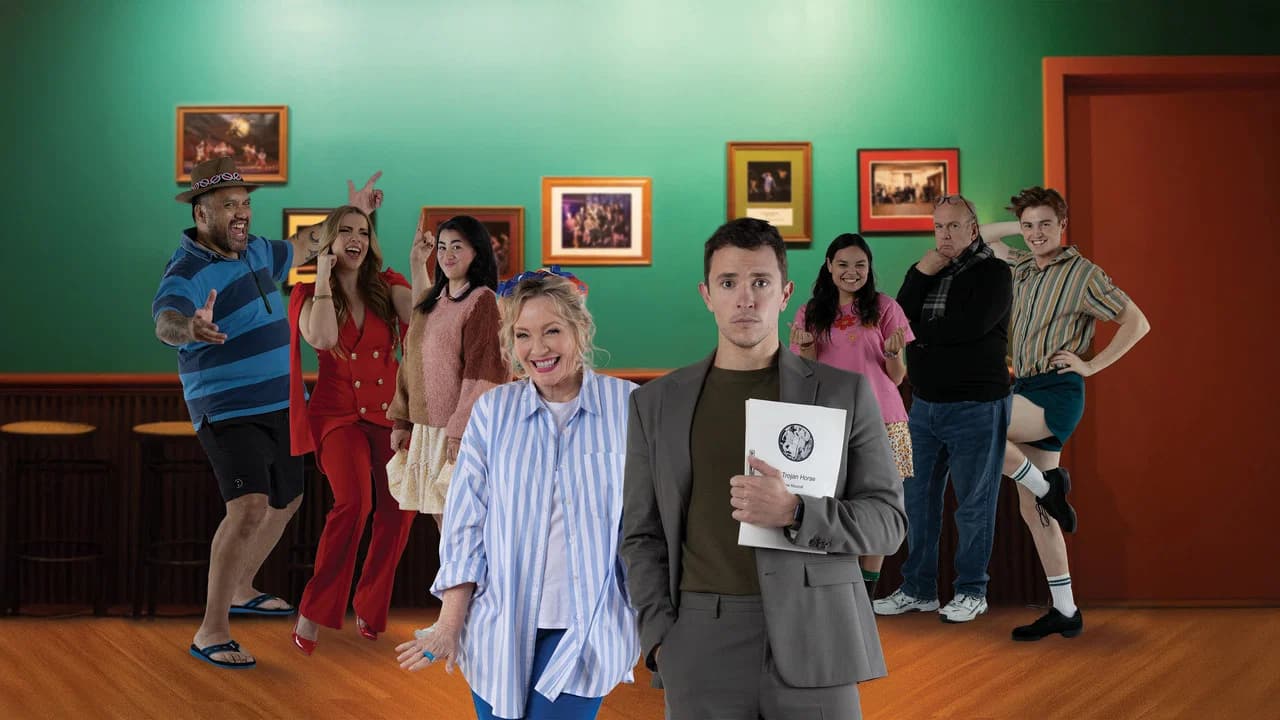
Charlie Summers, ex-Kiwi Broadway director, is forced by circumstance to return to his home town of Tauranga, where his mum makes him join her amateur theatre society.

After a setback on Broadway, director Charlie Summers returns to his hometown, where he reluctantly joins the amateur musical theatre society led by his devoted mother.
Charlie's desperation to get back to the US sees him drawn into Pizazz's rehearsals, clashing with Adrian over composer Gloria's vision for the musical.

Charlie champions Gloria's musical vision against Adrian's resistance, unintentionally encouraging the ensemble to look to Charlie as their new director.
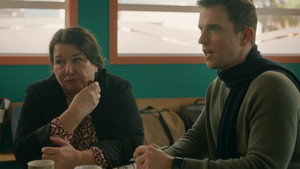
Under Charlie's direction, rehearsals flourish, Mia shines, Gloria and Connor grow closer, and Jacqui's jealousy stirs conflict.
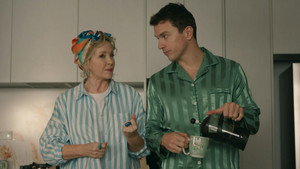
Charlie's impulsive vision disrupts Nicky's schedule, tensions flare at Pizazz, leading to a frustrated Charlie showing his true feelings.
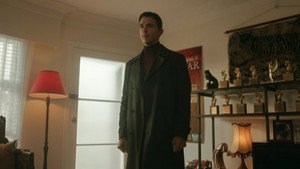
Opening night dazzles the audience, but simmering resentment could undo all Charlie's hard work.

Charlie Summers

Gaye Summers

Jacqui James
Adrian Templeton
Adam Whitford

Mikaere Dean

Gloria
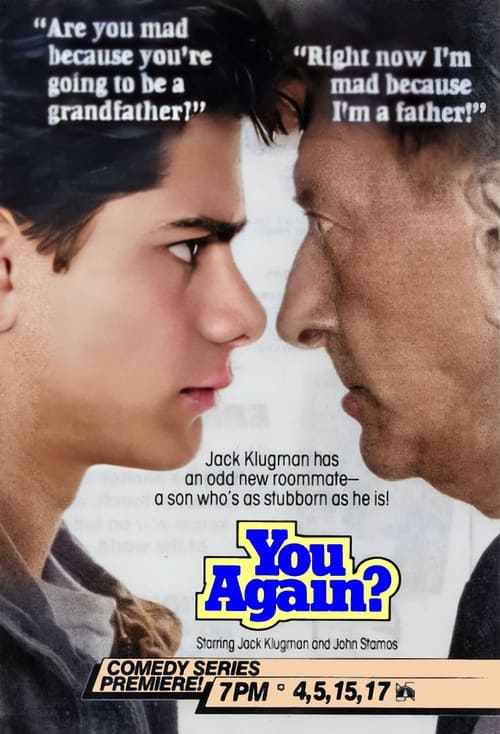
You Again? is an American situation comedy based on the British sitcom "Home To Roost" that was broadcast by NBC from February 27, 1986, to March 30, 1987, for two seasons. When Matthew Willows (John Stamos) was 10 years old, his parents got divorced, and Matthew chose to live with his mother. Now, seven years later, he's on his father's doorstep—and his dad, Henry Willows (Jack Klugman), is not thrilled. This kid is less than a model teenager: he drinks, he smokes, he curses, he lies. Not that Henry, a grouchy old bird, is any prize himself. But Matt moves in "temporarily." Henry makes him drop most of those bad habits, and Matt brings a little youthful exuberance into the Willows household, which includes Enid (Elizabeth Bennett), the part-time housekeeper.
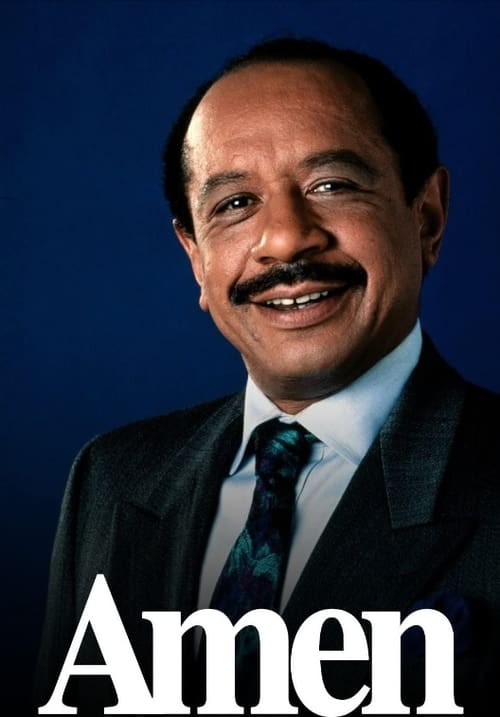
Amen is an American television sitcom produced by Carson Productions that ran from September 27, 1986 to May 11, 1991 on NBC. Set in Sherman Hemsley's real-life hometown of Philadelphia, Amen stars Hemsley as the deacon of a church and was part of a wave of successful sitcoms on NBC in the 1980s which featured entirely or almost-entirely black casts. Others included The Cosby Show, A Different World, and 227.
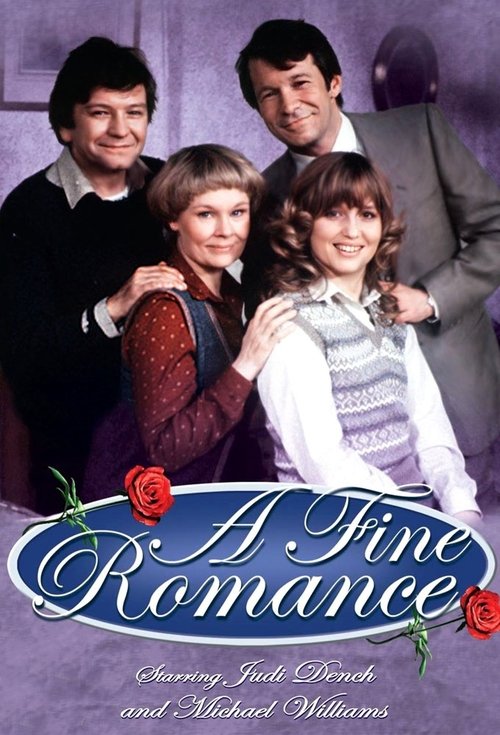
A Fine Romance is a British situation comedy starring husband-and-wife team Judi Dench and Michael Williams. Dench's sister was played by Susan Penhaligon. It was produced by London Weekend Television and written by Bob Larbey. It was first broadcast on 8 November 1981. It lasted for 26 episodes over four series; the final episode being broadcast on 17 February 1984. The series takes its name from a song in the 1936 film Swing Time, starring Fred Astaire and Ginger Rogers, which Dench recorded as the theme music. The series was nominated for nine BAFTA British Academy Television Awards and a winner of two, both for Dench's performance in 1982 and 1985.
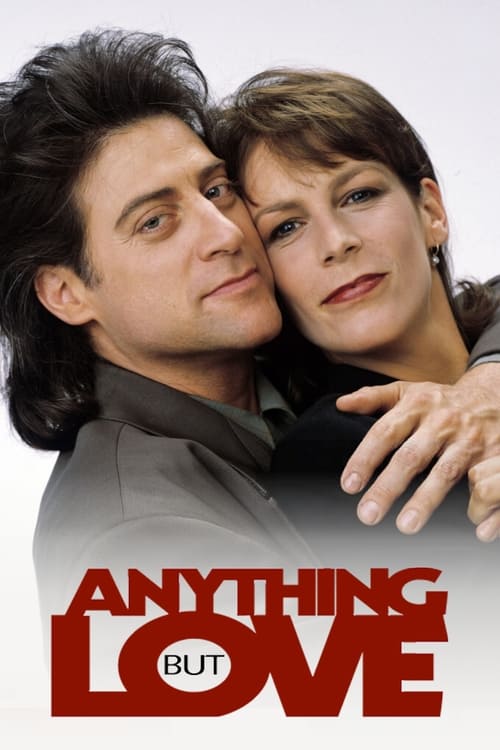
Anything But Love is an American television sitcom, which aired on ABC from March 7, 1989 to June 3, 1992, spanning four seasons and 56 episodes. The show starred Richard Lewis as Marty Gold and Jamie Lee Curtis as Hannah Miller, coworkers at a Chicago magazine with a mutual romantic attraction to each other, who struggled to keep their relationship strictly professional. The series, from creator Wendy Kout and developers Dennis Koenig and Peter Noah, was produced by Adam Productions in association with 20th Century Fox Television.
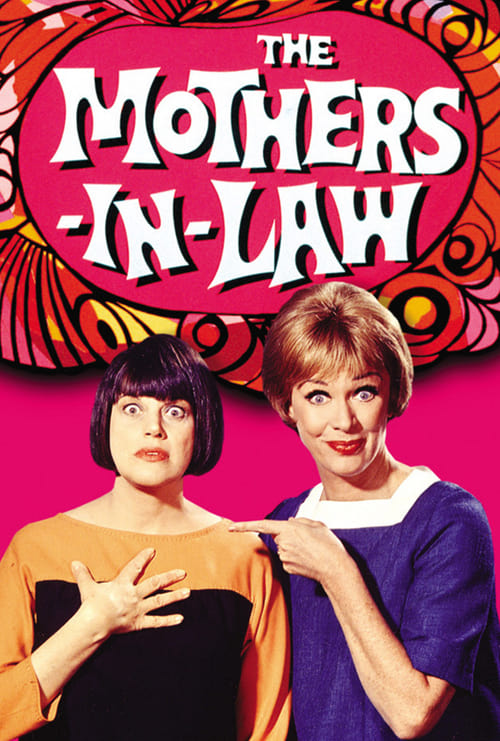
The Mothers-in-Law is an American sitcom starring Eve Arden and Kaye Ballard as two matriarchs who were friends and next-door neighbors whose children's elopement rendered them in-laws. The show aired on NBC from September 1967 to April 1969. Produced by Desi Arnaz, the series was created by Bob Carroll, Jr., and Madelyn Davis.
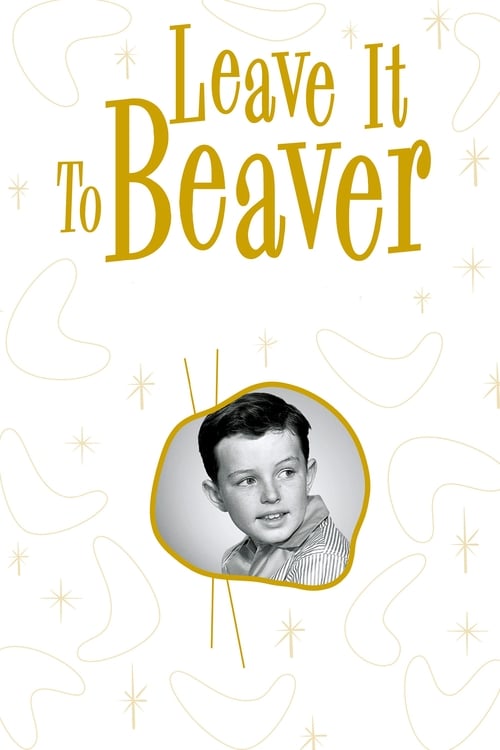
An inquisitive and often naïve boy, Theodore 'The Beaver' Cleaver, has adventures at home, in school, and around his suburban neighborhood. The show also starred Barbara Billingsley and Hugh Beaumont as Beaver's parents, June and Ward Cleaver, and Tony Dow as Beaver's brother Wally. The show has attained an iconic status in the US, with the Cleavers exemplifying the idealized suburban family of the mid-20th century.