


Loading titles…
Documentary / News
Data Sources goes beyond the official version in search of the truth: human rights violations, institutional failures, affairs of state, abuses of power and the criminal exploitation of the planet... ARTE’s digital investigative magazine takes you beyond the headlines.
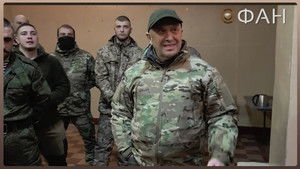
An exclusive investigation into the Russian paramilitary organisation Wagner, headed by oligarch Yevgeny Prigozhin. 2,500 documents were leaked from Prigozhin’s servers by anti-Putin hackers, shedding light on this secretive group of mercenaries, a key element in the war in Ukraine.
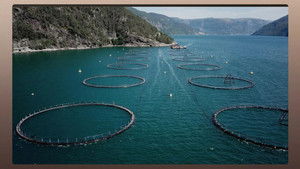
More than 80% of the salmon consumed in Europe comes from fish farms. Salmon farming is a speciality of northern countries, with Norway being the main producer. These farms are promoted as a sustainable alternative to wild-caught salmon, but in reality, they are fed with fishmeal and fish oil that require tonnes of other fish species to be caught, depleting the ocean's fish stocks. This overfishing occurs far away from Europe, in Mauritania.

Thanks to analysis of videos on Telegram, social media posts, and articles and statements from Russian authorities, this episode of Sources tracks how Ukrainian children were forcibly taken from their parents or orphanages. Taken to Russia under the guise of keeping them safe from the conflict, these children were supposed to be temporarily relocated. But instead they are indoctrinated, given foster families, and even offered for adoption. This action has led to charges against Vladimir Putin and Maria Lvova-Belova, the Russian Commissioner for Children's Rights, by the International Criminal Court.
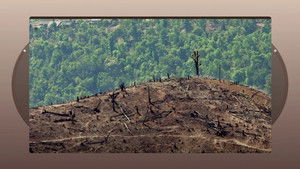
It is banned in the European Union and yet Burmese teak is still imported. How is that possible? Data Sources goes on the trail of the illegal trade in teak from Myanmar.

Indonesia is the second largest producer of plastic waste in the sea with the situation set to get worse. Environmental protection organisations collect and analyse plastic waste found on beaches, in mangrove forests and in rivers in order to shame the worst polluting companies.

The Xinjiang region in China is the historical homeland of the Uighurs, a persecuted Muslim minority. Open data reveals how Chinese influencers are convincing people from across the country to colonise this province.
No cast information available.

The Howard Years was a documentary series about the prime ministership of John Howard produced by the Australian Broadcasting Corporation. It was divided into four one-hour episodes - one episode for each term Howard served as Prime Minister of Australia - and originally broadcast on ABC1 from 17 November to 8 December 2008.

Nightline, or ABC News Nightline, is a late-night news program that is broadcast by ABC in the United States, and has a franchised formula to other networks and stations elsewhere in the world. Created by Roone Arledge, the program featured Ted Koppel as its main anchor from March 1980 until his retirement from the program in November 2005. Nightline airs weeknights at 12:37 a.m. Eastern Time, after Jimmy Kimmel Live!. It previously ran for 31 minutes, but in 2011, the program was reduced to 25 minutes. When the program moved to 12:37 a.m. ET, the program was expanded to 30 minutes. In 2002, Nightline was ranked 23rd on TV Guide's 50 Greatest TV Shows of All Time.

The specter of drug trafficking haunts Europe. Struggling with ultra-violent criminal groups that control the vast majority of cocaine trade, European police forces are overwhelmed. The epicenter of all this trafficking: the Netherlands. A nation at the forefront of international trade and drug policy. This two-part film delves into the origins of European drug trafficking through the unique history of the Kingdom of the Netherlands.

Exploring the history and use of psychedelic plants. Psychedelica examines; Sacred Healing ,Integrating Shamanic, Wisdom, Treating Illness with Plant Medicines, Set, Setting, & Psychotropic Experiments, Expanding Human Consciousness, Shadow Side of Psychedelics, Indigenous Medicine of the Mind, and The Holy Mushroom Theory. Psychedelica is an original series streamed on Gaia. 2018

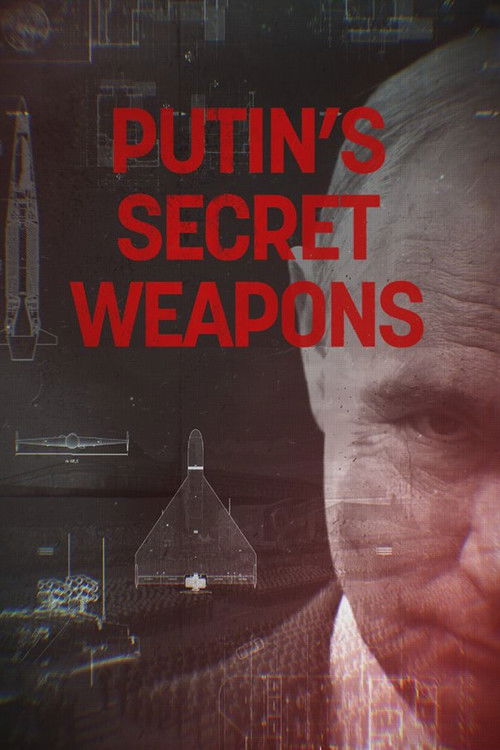
The Russian army has no shortage of weapons despite sanctions: With an arsenal mixing old Soviet stocks and modern hypersonic weapons, the country could strike Europe in minutes. An opaque network of spies, shell companies and oligarchs ensures its war capacity through the arms trade, technology theft and state-organized policy of terror.