
Loading titles…
Drama / War & Politics
A structure-free, four-part examination of the rise and fall of the Third Reich. Each part explores a different topic, from Hitler's cult of personality in propaganda to how said propaganda was associated with pre-Nazi German cultural, spiritual, and national heritage to the…
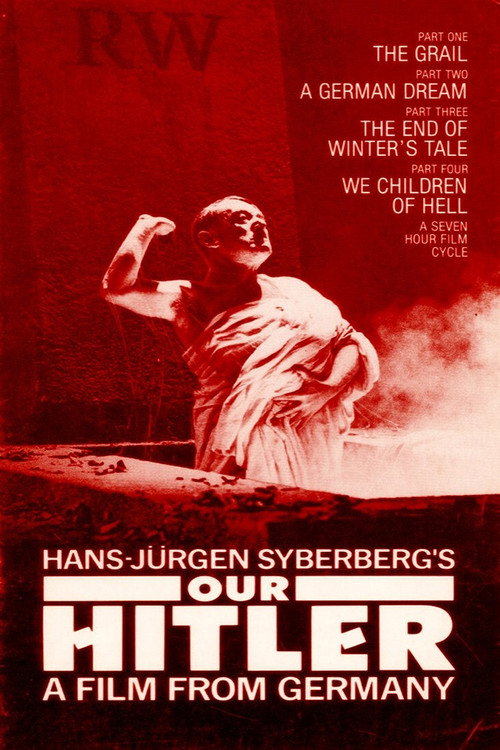
A look at Hitler's cult of personality in Nazi propaganda.
Focuses on how Nazi propaganda associated with pre-Nazi German cultural, spiritual, and national heritage.
Recounts the Holocaust and the ideology behind it, particularly from Himmler's point of view. A ventriloquist dummy of Hitler monologues about his legacy and its lasting effect on society.
André Heller reads unfilmed script segments, climaxing in Heller discussing with a Hitler puppet on how he completely destroyed Germany spiritually, combined with a satire on former Nazis who, after the war, profited from the era by running a Nazi tourism and entertainment industry for foreigners.

Narrator (voice)

Adolf Hitler / Heinrich Himmler

Joseph Goebbels

Self / Junger Ellerkamp
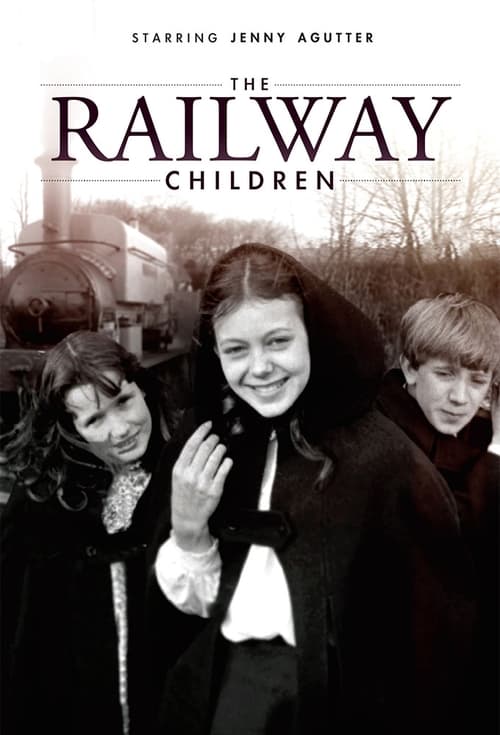

William Masters and Virginia Johnson are real-life pioneers of the science of human sexuality. Their research touched off the sexual revolution and took them from a midwestern teaching hospital to the cover of Time magazine and multiple appearances on Johnny Carson's couch. He is a brilliant scientist out of touch with his own feelings, and she is a single working mother ahead of her time. The series chronicles their unusual lives, romance, and unlikely pop culture trajectory.
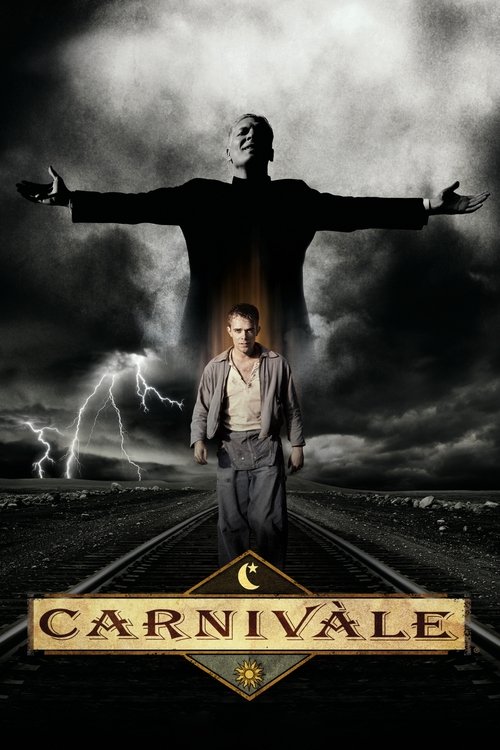
Carnivàle is an American television series set in the United States during the Great Depression and Dust Bowl. In tracing the lives of two disparate groups of people, its overarching story depicts the battle between good and evil and the struggle between free will and destiny; the storyline mixes Christian theology with gnosticism and Masonic lore, particularly that of the Knights Templar.


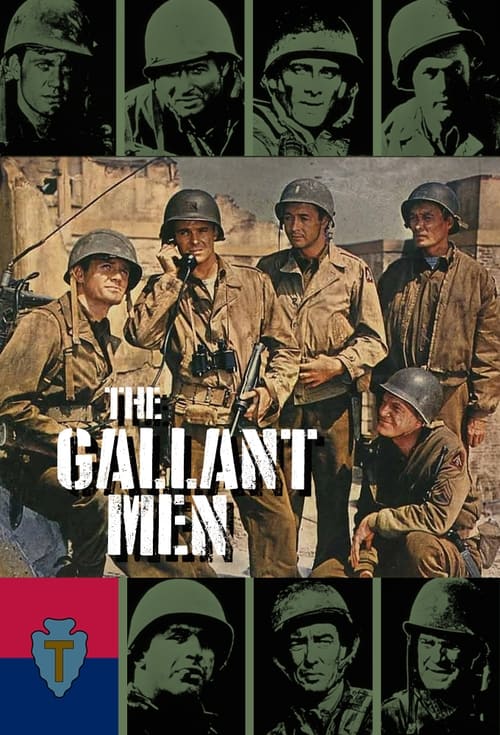



In a heady tale of revenge and obsession, the outlaw Zastrozzi, assisted by courtesan, Matilda, abducts his half-brother, Verezzi, and torments him into believing his lover, Julia, has been murdered. His campaign of vicious psychological abuse signals a grisly bloodbath of greed, envy, betrayal, retribution, and eternal damnation.