


Loading titles…
Documentary
For the 1994 World Cup, Germany entered as the favorite and defending champion, but was eliminated in the quarterfinals. Internal conflicts, media campaigns, and public criticism of coach Berti Vogts led the so-called "eleven friends" – players like Lothar Matthäus, Jürgen…

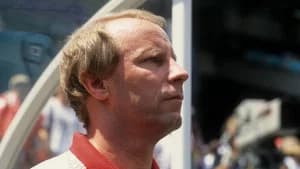
Berti Vogts was already under pressure during the World Cup preparations – living in the shadow of his predecessor, Franz Beckenbauer. If he was the “iconic figure,” Vogts was the honest worker who clung to traditional ideals. But in the 1990s, those ideals were outdated – instead of community and cohesion, the “me-first” mentality had entered professional football. Because Vogts refused to cooperate with the BILD newspaper, it painted him as a loser and a failure – an image that also took hold in the public eye. Vogts therefore retreated into pragmatic optimism, promising the title.

Franz Beckenbauer monitors the performance of both the team and the coach for a TV network, keeping in touch in the U.S. with “his World Champions,” especially Lothar Matthäus. This increases the pressure on Vogts and stirs unrest within the squad, which increasingly splits into three factions: the veteran World Champions around captain Matthäus, the younger players around Effenberg, and the former East German players, Sammer and Kirsten. Additional conflicts arise from players’ wives, who, much to Vogts’ annoyance, seek closeness with their husbands. With Stefan Raab’s mocking song, the players increasingly lose respect for their coach.

Vogts tries to prevent the team’s disintegration by giving the players more freedom, but control begins to slip from his hands. He loses trust in captain Matthäus and has to constantly put out fires. When Effenberg shows the middle finger to fans during the match against South Korea, Vogts removes him from the squad. The team turns against him, and the media start discussing Beckenbauer as a possible replacement. The Round of 16 match against Belgium becomes a crucial test for Vogts, and Germany wins convincingly. Some already see a semifinal against Italy, but first, Bulgaria awaits.
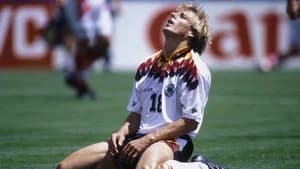
Certain of victory over Bulgaria, Germany suffers a stunning quarterfinal defeat and crashes out of the 1994 World Cup. As the players struggle to come to terms with the loss, the media intensify their attacks on Berti Vogts. Ready to step down, he is convinced by Chancellor Helmut Kohl to continue. Vogts responds by rebuilding the national team from the ground up ahead of Euro 1996. With Matthäus gone and Klinsmann and Sammer taking on greater responsibility, Germany finally becomes a team in his image - and is rewarded with the European title. Yet despite his redemption, Vogts' tenure ultimately comes to an end in 1998.

Self

Self

Self
Self

Self
Self
Self

Self

A true-crime series examining the most shocking murder investigations and toughest trials in Texas history - all told with Kelly's unique insight and unparalleled access. As Chief of Special Crimes in the busiest courthouse in the Lone Star state, Kelly Siegler battled to get killers into courtrooms to face their formidable defense attorneys. With her own firsthand accounts, alongside investigators and victims' families, Kelly reveals what really happened beyond the newspaper headlines to bring Texas-style justice.

English football's famous 'fallen giant' Leeds United is at the start of a journey: to win promotion back to the Premier League. New owner Andrea Radrizzani has recruited a world-class head coach, Marcelo Bielsa, to lead the team back to the promised land. This will be one of the most dramatic seasons in the club's history as fans, players and a city start to dream of a return to the top flight.

Nightline, or ABC News Nightline, is a late-night news program that is broadcast by ABC in the United States, and has a franchised formula to other networks and stations elsewhere in the world. Created by Roone Arledge, the program featured Ted Koppel as its main anchor from March 1980 until his retirement from the program in November 2005. Nightline airs weeknights at 12:37 a.m. Eastern Time, after Jimmy Kimmel Live!. It previously ran for 31 minutes, but in 2011, the program was reduced to 25 minutes. When the program moved to 12:37 a.m. ET, the program was expanded to 30 minutes. In 2002, Nightline was ranked 23rd on TV Guide's 50 Greatest TV Shows of All Time.
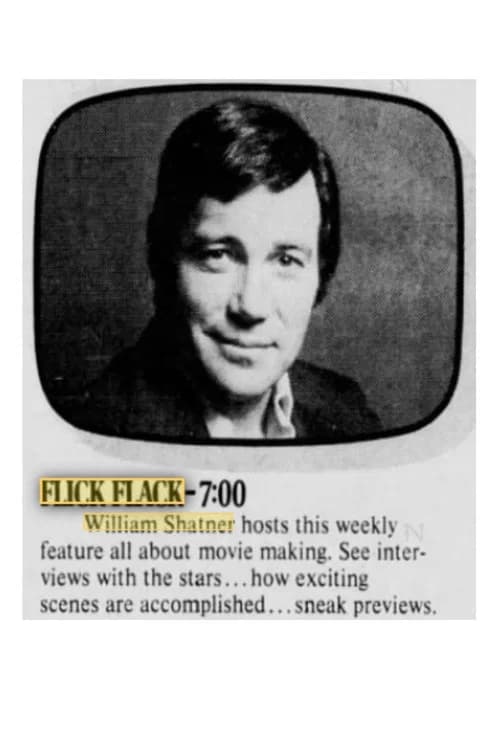
Flick Flack was a Canadian television series broadcast by Global Television Network in 1974. The series featured interviews with motion picture industry personalities combined with excerpts from films. William Shatner was the regular series host. "It was a TV show produced for Canadian TV. A handful of shows that aired every fortnight for a few months in the 70’s." @WilliamShatner · Sep 15, 2020


Self
Self

Self
Self


