
Loading titles…
Documentary
The Blues (2003) is a seven-part documentary series produced by Martin Scorsese that explores the history and influence of blues music. Each episode, directed by a different filmmaker, traces a unique aspect of the genre’s evolution—from its African roots to its global impact.…


Director Martin Scorsese pays homage to the Delta blues. Musician Corey Harris travels through Mississippi and on to West Africa, exploring the roots of the music. The film celebrates the early Delta bluesmen through original performances (including Willie King, Taj Mahal, Otha Turner, and Ali Farka Toure) and rare archival footage (featuring Son House, Muddy Waters, and John Lee Hooker).

The film explores the musical careers of blues musicians Skip James, Blind Willie Johnson and J. B. Lenoir.

The film follows the career of Blues musician B.B. King. It features performances by B.B. King, Bobby Rush, Rosco Gordon and Ike Turner, as well as historical footage of Howlin' Wolf and Rufus Thomas.

Director Charles Burnett presents a tale about a young boy's encounter with his family in Mississippi in the 1950s, and intergenerational tensions between the heavenly strains of gospel and the devilish moans of the blues.

Director Marc Levin travels to Chicago with hip-hop legend Chuck D (of Public Enemy) and Marshall Chess (son of Leonard Chess and heir to the Chess Records legacy) to explore the heyday of Chicago blues as they unite to produce an album that seeks to bring veteran blues players together with contemporary hip hop musicians. Along with never-before-seen archival footage of Howlin' Wolf, Muddy Waters and the Paul Butterfield Blues Band, are original performances by Koko Taylor, Otis Rush, Magic Slim, Ike Turner, and Sam Lay.
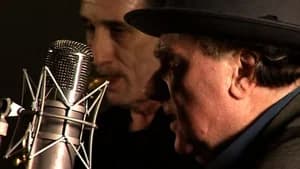
Director Mike Figgis joins musicians such as Van Morrison, Eric Clapton, Jeff Beck, and Tom Jones, performing and talking about the music of the early sixties British invasion that reintroduced the blues sound to America.
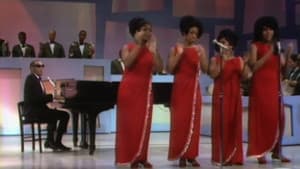
The film features interviews and live performances of piano players Ray Charles, Dave Brubeck, Dr. John and Marcia Ball. Eastwood interviews artists as Ray Charles, Dr. John, Marcia Ball, Pinetop Perkins, Dave Brubeck, Jay McShann, Henry Gray and shows archival performances of Fats Domino, Otis Spann, Art Tatum, Albert Simmons, Pete Johnson, Jay McShann, Big Joe Turner, Nat King Cole, Martha Davis, Professor Longhair, Charles Brown and Duke Ellington. Remarkable are two early performances of the Chess Records houseband with Otis Spann, Willie Dixon and, probably, Fred Below.
No cast information available.


Myths die hard, and the history of the 20th century is no exception to this rule. Even today, we hold popular beliefs that we take for Evangelical truths. Thus, we believe that Hiroshima caused Japan to surrender, that the Marshall Plan saved Europe, that Adolf Hitler was a military genius, or that Mao Zedong was a necessary evil for China’s modernization. Of course, these judgements contain some truth; but, too broad-stroked to be accurate, they contradict the historical reality by denying its complexity. What if the truth was slightly different? Through an exploration of great national or international myths, this full archive documentary collection revisits the key moments of the 20th century with a new perspective in order to provide a new, smarter and more subtle interpretation, bringing elements to light that have been forgotten or sometimes overshadowed.

For centuries, explorers have searched for the Bible’s most sacred religious artefacts. One of the most mysterious of these objects is the famed Ark of the Covenant. The gold-plated wooden chest – one of the most instrumental symbols of faith and God's presence – was believed to house the two tablets bearing the Ten Commandments. The Ark’s exact whereabouts has long puzzled scholars. Where did it go? And why has it remained such a mystery?


One of the most important historical investigations carried out by Rai, signed by the great Sergio Zavoli with the collaboration of Luciano Onder and Edek Osser and the scientific consultancy of Alberto Aquarone, Gaetano Arfé, Renzo De Felice, Gabriele De Rosa, Gastone Manacorda and Salvatore Valitutti. The six-part series, broadcast for the first time in the autumn of 1972, represented, half a century after the "March on Rome", a significant assessment of the years of the advent of the Mussolini regime, recalled with the rigor of the best television journalism (Saint-Vincent Award 1973) and through the direct testimonies of over fifty protagonists of the time, both fascists and anti-fascists.

Tutankhamun, Ramses the Great, Cleopatra, Khufu…these legendary pharaohs built the wonders of Karnak, Luxor and the pyramids of Giza before their civilization faded into obscurity. But in 1798, Napoleon Bonaparte’s expedition to Egypt reopened the doors to a forgotten world and ignited a fascination with Ancient Egypt that continues to this day. Bold explorers, such as Jean-François Champollion and Giovanni Battista Belzoni, risked everything to unearth these wonders. Archaeology became a conquest, and Egypt’s heritage was plundered by tomb raiders - until Auguste Mariette laid the foundations of modern Egyptology. This immersive series reveals the splendor of the pharaohs and the feats of the explorers.


Une Dose 2 Metal is a musical show dedicated to metal music, designed by Jean-Sébastien Ventura and broadcast and produced by Enorme TV between 2012 and 2016. For 90 minutes, Stéphane Buriez, leader of the French thrash group Loudblast, Caroline Barel or Pierre Janaszak welcomes the big names in international Metal music for lives, clips, news, crazy sections and saturated anecdotes exclusively dedicated to to the Metal scene.


