

Loading titles…
Documentary / War & Politics
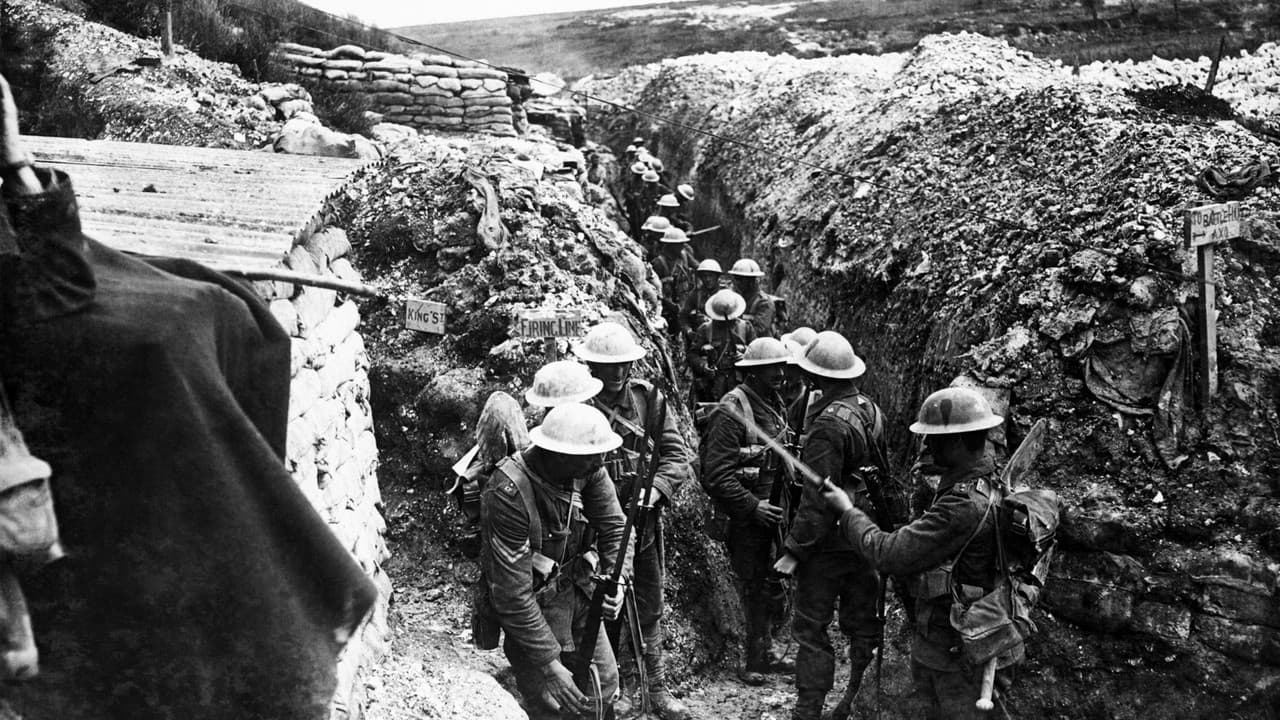
This ten-part docuseries tells the comprehensive story of the First World War, featuring excerpts written by Winston Churchill, Karen Blixen, Georges Clémenceau, David Lloyd George, Siegfried Sassoon and Rudolf Hess.


The First World War shaped the twentieth century. It sparked the Russian Revolution, and it launched America as a world power. The fault-line from its failed peace settlement led to a second terrible world war barely twenty years later.

The first months of the war on the Western Front were mobile, fast and dangerous; casualty rates were higher than with later trench warfare. The Germans were halted by the Allies at the Battle of the Mame, fell back to high ground and dug in. The Allies followed suit.

War for Europe meant war for the world. Germany gambled that Britain might risk everything to protect her Empire - even victory on the Western Front. So, to divert British resources, maverick German commanders led the British a dance; across the Pacific, Africa and the Middle East.

The Ottoman Empire, Germany's ally, summoned all Muslims to Jihad - holy war - to overthrow Allied power in the Middle East. They proved a formidable foe, as the Allies found to their cost at Gallipoli and in the Middle East.

As the Germans and Austrians clashed with The Russians on the bitter Eastern Front, Italy became embroiled in a terrible slaughter.
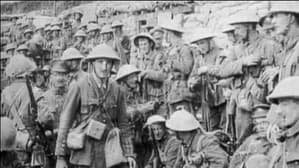
Attrition, "lions led by donkeys", the slaughter only ceasing for a brief truce one Christmas - old, mistaken views of the war on the Western Front. In fact there was constant tactical evolutions; hundreds of generals died in action; some men adopted a system of "Live and Let Live", with countless informal local truces.

The war at sea was every bit as bitter as the war on land. The battle at Jutland proved inconclusive but the U-Boat menace threatened Britain as never before. Meanwhile, America entered the war.

The effect of the Great War shattered nations, inspired mass mutinies by desperate troops, caused great upheaval on the home front and changed the world forever.

Over one million German troops were committed to Kaiserschlacht - the last great offensive of the war - while conflict still raged on many other fronts.
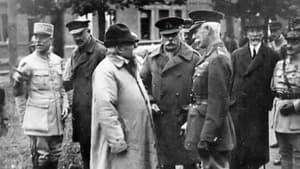
The dramatic Allied victory at Amiens led to victory in just 100 days - and the signing of a bitterly-resented peace, while other nations stumbled towards their own ceasefire agreements.
Self
Self

Self (archive footage)
Self - Narrator

Based on real characters and events, this haunting drama focuses on the personal sacrifice of a Prague history student, Jan Palach, who set himself on fire in protest against the Soviet occupation of Czechoslovakia in 1969. Dagmar Burešová, a young female lawyer, became part of his legacy by defending Jan's family in a trial against the communist government, a regime which tried to dishonour Palach’s sacrifice, a heroic action for the freedom of Czechoslovakia.


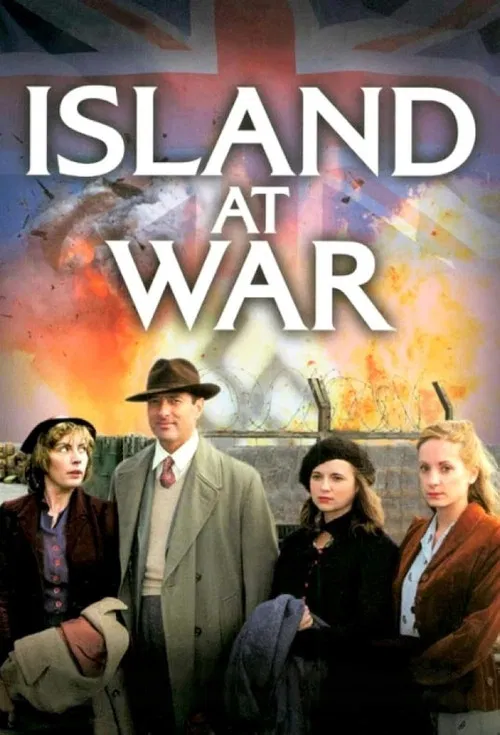
Island at War is a British television series that tells the story of the German Occupation of the Channel Islands. It primarily focuses on three local families: the upper class Dorrs, the middle class Mahys and the working class Jonases, and four German officers. The fictional island of St. Gregory serves as a stand-in for the real-life islands Jersey and Guernsey, and the story is compiled from the events on both islands. Produced by Granada Television in Manchester, Island at War had an estimated budget of £9,000,000 and was filmed on location in the Isle of Man from August 2003 to October 2003. When the series was shown in the UK, it appeared in six 70-minute episodes.

Putin, Russia and the West is a four-part British documentary television series first shown in January and February 2012 on BBC Two about the relationship between Vladimir Putin's Russia and the West. The series is produced by Norma Percy, whose previous series include The Death of Yugoslavia, Israel and the Arabs: Elusive Peace, and Iran and the West. The documentary was criticized by some dissidents for being an apology for Putin's regime.


