
Loading titles…
Documentary
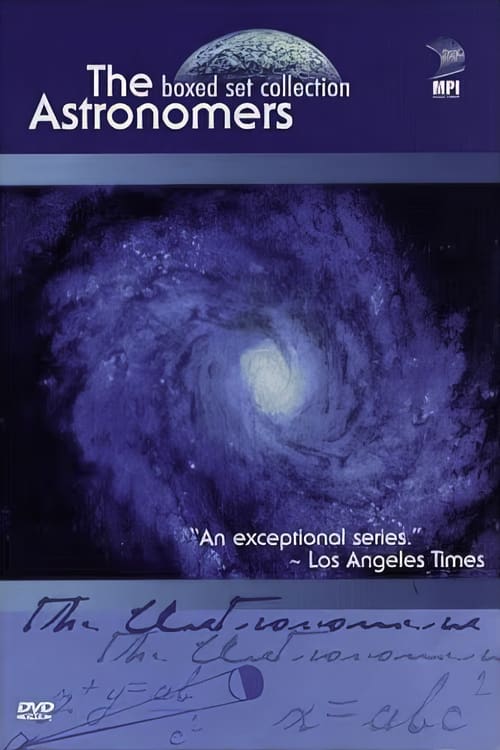
This series explores the lives and work of noted modern-day astronomers, taking the viewer into the farthest reaches of outer space in search of black holes, quasars, dark matter, gravity waves, stars and evidence of planets outside our solar system. Intriguing celestial…
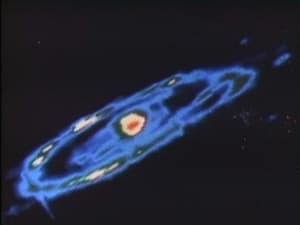
Astronomers believe the universe contains at least ten times as much mass as can be seen and accounted for. How are they able to detect this missing mass and to discover more about it are the subjects of this episode. Astronomers Vera Rubin and Tony Tyson describe their search for dark matter, material invisible to us but whose gravity affects the motion of the stars and can alter the light reaching us from distant galaxies. In addition, John Dobson, a self-proclaimed "sidewalk astronomer," shares his knowledge with people he encounters.
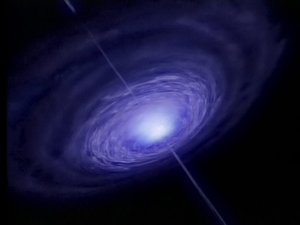
At the center of galaxy NGC 1275, some 200 million light years from Earth, there might be a supermassive black hole. In a attempt to map the galaxy and look deep into its heart, an international team of astronomers has linked radio telescopes throughout Europe and America in order to produce a picture of NGC 1275. Jessie Greenstein, the co-discoverer of quasars, and Italian radio astronomer Tiziana Venturi appear.
American and Japanese astronomers are followed as they seek to measure cosmic background radiation, the heat remaining from the Big Bang, by launching rockets and satellites above the Earth's atmosphere. Their results contribute to research into the origins of the universe. Also shown are two astonomers who are mapping the universe in 3D and discovering that galaxies have formed into gigantic groups.
Gravity waves, as yet undetected but predicted by Albert Einstein, may contain the answers to many questions about the universe. Soviet scientist Leonid Grishchuk and American scientist Kip Thorne describe their attempts to prove the existence of the waves. The episode also visits a gravity-wave detector prototype and describes the three-mile-long full-scale version, planned for construction in the late 1990's. Grishchuk and scientist Stephen Hawking meet.
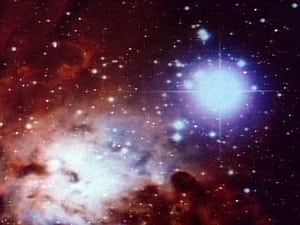
The deaths of stars allow human lives to come into being. This episode explains how and looks at the complete life cycle of the stars that make up our galaxy. Two American scientists are shown researching the forces that bring gas and dust together with such intense pressure that nuclear fusion results and a star is born. Hans Bethe, the first scientist to explain in detail how stars are fueled, appears. Three Australian scientists look into the death of a star by studying the remains of the supernova explosion of 1987.
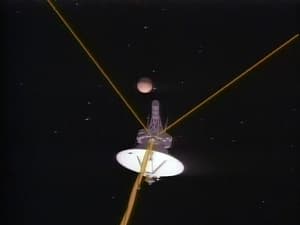
Efforts to discover other planetary systems and to learn more about the planets of our own solar system are examined. Images are shown that have been sent back to Earth by Voyager, the space probe exploring the outer edges of the solar system.
Narrator
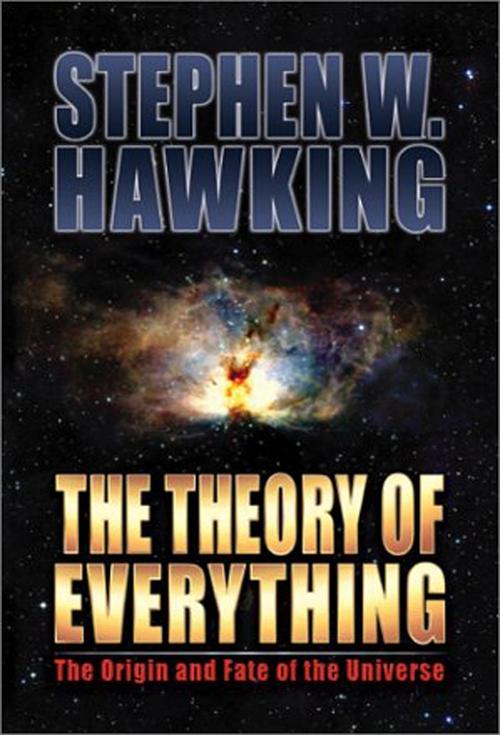
Join Stephen Hawking and other renowned thinkers as they explore the revolutionary new ideas that have evolved since the publication of his blockbuster book. Besides interviews, this stimulating documentary uses computer graphics and simple, easy-to-understand demonstrations to explain complex concepts. Topics include black holes, string theory, supersymmetry, dimensions beyond our perception, and the mysterious M force; all potential keys to unlocking the elusive "theory of everything" that seems so tantalizingly close.
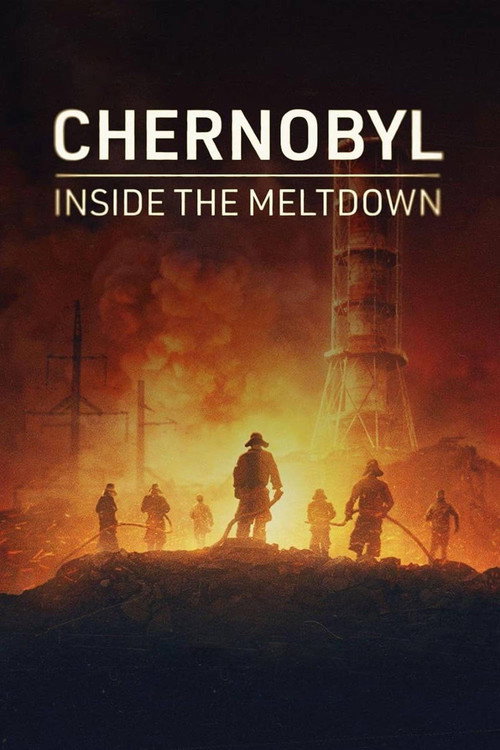
Featuring revealing interviews with survivors speaking publicly for the first time, alongside rare insight into the CIA and Soviet responses, this series exposes a web of secrecy, miscalculation, and human cost. Astonishing new footage from inside the nuclear exclusion zone reveals how this scarred landscape is once again under siege as war encroaches on one of the most dangerous places on Earth.
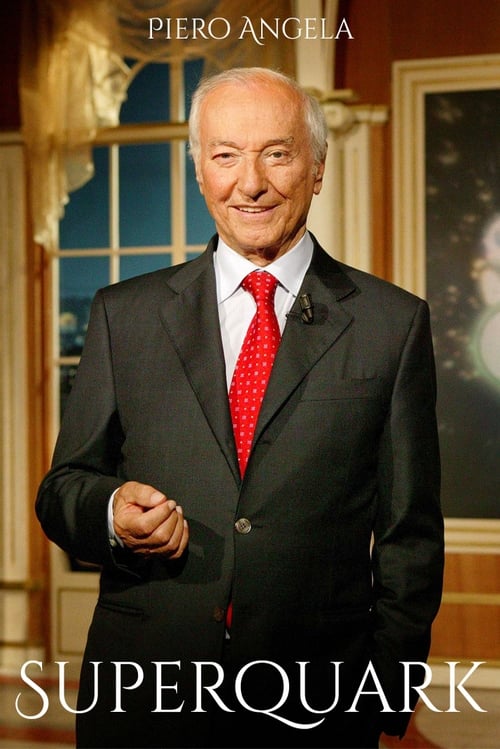

Seven episodes explore the fascinating adventure of the universe. Scientific rigor is complemented by spectacular images created with the aid of cutting-edge technology and special effects, films, animated fact sheets, and astronomical instruments. Piero Angela connects with a replica of himself in space, AstroPiero. A second correspondent, Alberto Angela, connects with the study from astrophysics laboratories and observatories around the world.