
Loading titles…
Documentary
Stephen Hawking’s Science of the Future investigates the very latest game changing innovations. Each episode takes one area of progress and sends five top scientists out to actively test the inventions and breakthroughs that are driving it. The team explore human upgrades,…

Stephen Hawking and his team investigate how reality is being increasingly stretched as people become less dependent on the physical world and more involved with the virtual electronic world. In this episode, a remarkable 3D virtual training program for the military is investigated, a new system is tested that can map places inaccessible to GPS and Sat Nav, bio-printing, where designs created on computers are turned into three dimensional living tissues is examined and a new wave of sci-fi technologically is revealed; a computer that can read people's minds.
Aarathi Prasad road-tests Boston Dynamics' incredible animal-inspired robots.
Experts examine how scientists are fighting for our survival by battling the world's biggest killer diseases.
Stephen Hawking and his team investigate how science is on the cusp of making urban living not just a richer experience, but more fun too.
Stephen Hawking and his team investigate how breakthroughs in technology are being applied to human beings, not only for more effective repairs and replacement body parts, but also for upgrading the brain.
Stephen Hawking and his team investigate the dawning of a new age where machines talk to machines, where previously isolated sciences come together to form new disciplines.

Self - Host

Geologist Iain Stewart explain in three stages of natural history the crucial interaction of our very planet's physiology and its unique wildlife. Biological evolution is largely driven bu adaptation to conditions such as climate, soil and irrigation, but biotopes were also shaped by wildlife changing earth's surface and climate significantly, even disregarding human activity.

Tales of the Unexpected is a new strand of provocative, confronting and thoroughly entertaining science documentaries. Each episode reveals a fascinating, sometimes awkward, and frequently unsettling world where peculiar ideas are put to the test. Come with us to where nothing is quite as it seems, where diseases are diagnosed by palm-readers, where paternity uncertainty drives the mating game, and where breasts are a toxic health hazard.
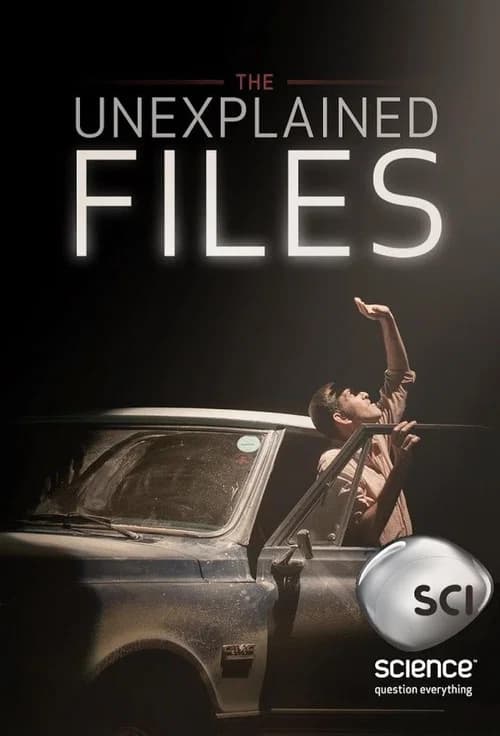
From strange abductions, to mutated species, to bizarre occurrences, there are some phenomena that science cannot - or will not - explain. This summer Science Channel unveils some of these shocking and mind-boggling cases from around the world in the world premiere series THE UNEXPLAINED FILES. From mysterious disappearances and UFO encounters, to unidentified fanged predators and reported curses, THE UNEXPLAINED FILES investigates actual, inexplicable occurrences that have confounded scientists and inspired legends. Science Channel invites viewers on a mystifying journey that will challenge disbelief with THE UNEXPLAINED FILES.


In the series, "Wallace will take a light hearted and humorous look at the real-life inventors, contraptions, gadgets and inventions, with the silent help of Gromit. The series aims to inspire a whole new generation of innovative minds by showing them real, but mind-boggling, machines and inventions from around the world that have influenced his illustrious inventing career" (the BBC press statement). Peter Sallis reprised his role as the voice of Wallace. The filmed inserts are mostly narrated by Ashley Jensen, with one in each episode presented in-vision by Jem Stansfield. John Sparkes also voices a portion in the unseen character of archivist Goronwy.

Glittering facades, vibrant life, and people facing the daily struggle for survival. ZDF correspondents each profile a megacity within their reporting area. How do people celebrate, laugh, and love in such a city? How are problems like housing shortages, food supply, transportation, and climate change solved – in metropolises with over ten million inhabitants?

From cafes to craft fairs, glamping to ghosts, join Dame Penelope Keith as she meets the owners of Britain’s historic country houses struggling to keep their homes intact. Featured properties include Ashby Manor in Northamptonshire, Chillingham Castle in Northumberland, and Mapperton House in Dorset. As these estates turn to innovative ventures to stay afloat, Keith offers insight into the challenges of maintaining these grand homes in 2025. Will their creative solutions be enough to save their history?

A century ago, the world experienced a revolution in mobility. Cities like Berlin grew rapidly, with the Graf Zeppelin soaring over the city in 1928, sparking excitement for airship travel. These majestic airships made ocean crossings faster and more luxurious, and even enabled polar expeditions. At the same time, automobiles and motorcycles became staples for many, although streets became congested. Women like Amelia Earhart and Elly Beinhorn broke barriers in aviation, inspiring new possibilities for both genders in the field of technology. While air travel grew in popularity, trains remained the main long-distance transport. The era also saw an explosion of new mobility options, with faster, cheaper ways to travel across the globe, making the world seem smaller and more connected. However, this golden age of mobility would be cut short by the outbreak of World War II.

