


Loading titles…
Documentary
Coast Australia follows renowned Scottish archaeologist and historian Neil Oliver on his very first trip to Australia, as he and a diverse group of co-hosts gather stories about our spectacular coastline: the history, the people, the archaeology, the geography and the marine…


In the pristine Kimberley of Western Australia, Neil Oliver discovers Broome’s dark pearling history and the delicate science of their cultivation. Tim Flannery walks in primeval tracks along the legendary Dinosaur Coast. Xanthe Mallett explores a unique maritime war grave. Brendan Moar learns the art of Indigenous raft making and Emma Johnston investigates the lush, protected habitat of migratory shorebirds. Neil Oliver wrestles the southern hemisphere’s biggest tides at the surging Horizontal Falls, and finally experiences the dreaming stories through a little sacred maintenance on some ancient rock art at Freshwater Cove.

Across the glittering waters of Sydney, Neil Oliver explores the network of fortification to protect "Fortress Sydney", and discovers how close the city came to being taken in WW2. Xanthe Mallett learns how to make lime as the convicts did in her quest to understand the importance of oysters in building the early colony. Tim Flannery reveals the geological secrets of the city's vast and sprawling harbour and unlocks the riddle of the rivers that had Captain Philip baffled in 1788. Brendan Moar examines an international icon in engineering and design, and reveals the story of those who made the greatest sacrifice. Emma Johnston hunts for tropical fish in Sydney's temperate and diverse harbour.

Neil Oliver begins this stunning journey through the world's largest coral reef in the wake of James Cook, and in the hands of the Australian Navy's hydrography team. Brendan Moar discovers an Australian community overcoming wretched beginnings by renewing island family ties. Tim Flannery is granted rare access to a scientific research zone to examine coral history. Xanthe Mallett dives a spectacular wreck in search of answers about its calamitous sinking. On an idyllic island, Neil Oliver uncovers a bloody tale of cultural misunderstanding. Finally, at the southern end of the Great Barrier Reef, Emma Johnston heads underwater with Google to take the reef into homes around the world.

In the tranquil south-east of Tasmania, Neil Oliver probes Port Arthur’s harsh penal history. Brendan Moar examines the dramatic grip of lighthouse life on a remote Island. Emma Johnston dives into an underwater battleground to see how science and industry are saving the marine neighbourhood. Neil joins the southern hemisphere’s largest wooden boat festival. Tim Flannery investigates Hobart’s long and illustrious role in Antarctic exploration. Finally, Xanthe Mallett delves into the violent history of whaling, and the legacy that helped build a colony.

On Australia’s shiny holiday coast, Miriam Corowa investigates the engineering behind the 1970s Florida-style canal system of the Gold Coast. Neil Oliver heads to Peel Island to see the remains of a bleak chapter in history. Xanthe Mallett scours a WW2 fortification at what could have been Australia’s front line, and discovers what life was like waiting for the war to arrive. Brendan Moar dives headlong into a dangerous current to investigate first hand the science of rips. Emma Johnston joins a scientific hunt for dugongs, in the hope of saving them. Finally, Tim Flannery travels to Fraser Island to investigate what’s at the end of the line for the longest sand drift system in the world.

Along this historic stretch of coast, Neil Oliver explores Cape Otway and the beacon that helped birth a nation. Tim Flannery scours the water for evidence of the marine mega fauna that roamed ancestral Port Phillip Bay. Brendan Moar uncovers the history of the Great Ocean Road, and, armed with his pick, grasps the challenges of building a now world famous coastal road in the 1920s. Emma Johnston hunts for the delicate Weedy Seadragon and discovers a tragic tale of one artist much captivated by its vivid beauty. On the historic Loch Ard wreck, Xanthe Mallet dives for clues about how and why disaster struck, with only two lives saved, while Miriam Corowa discovers why the coast at Bells Beach keeps pumping out the perfect waves.

Tim Flannery begins this Top End adventure at Victoria Settlement and its tragic history in the struggle to colonise Australia’s northern frontier. Neil Oliver examines the ferocious bombing of Darwin and a remarkable story of reconciliation between former enemies. Miriam Corowa confirms that not all Hollywood dreams come true especially along this unforgiving coast. Xanthe Mallett goes on patrol with Australian Customs & Fisheries to hunt for killer ghost nets. And no Top End story would be complete without a crocodile – Emma Johnston draws blood in the name of science.

On this wind-swept coast, Neil Oliver investigates why no one survived the attack on HMAS Sydney in its dramatic battle with a German raider in 1941. Xanthe Mallett heads to the Houtman Abrolhos islands and unearths the gruesome tale of the Dutch Batavia murders of 1629. In Shark Bay Tim Flannery finds 3 billion year old life, while Neil Oliver explores why Carnarvon's jetty was once the life-blood of the Gascoyne region. Emma Johnston witnesses why the world's largest fish keeps returning to the crystal waters of Ningaloo Reef, and Brendan Moar catches up with coastal nomads off the grid, on the edge of the continent.

Self - Presenter
Self - Presenter

Self - Presenter
Self - Presenter
Self

The astounding story of the Chinese province of Guangdong – and the local people protecting its extraordinary wildlife from the modern world. Lying on the Tropic of Cancer, what should be desert is a wonderland of mountain forests, river deltas and coastal ecosystems, with over 1,000 species of animals. But with a booming economy, Guangdong is also the most densely populated province in China, home to over 126 million people. This beautiful, dramatic and epic natural history documentary celebrates not only the wildlife of Guangdong, but also reveals how its people cherish and protect it from the modern world.

The Earth’s continents are instantly recognizable. These iconic landmasses seem permanent and unchanging, yet they are merely the wreckage of a much larger long-lost supercontinent – Pangaea. In this stunning four part series Professor Iain Stewart uncovers the evidence for this ancient past. He reveals how the world around us is full of clues – in the rocks, the landscapes and even the animals. All of which tell us how the land we live on was created.


Few countries in South America can boast to have such contrast and variety as Argentina. Diverse habitats such as Patagonia's bleak steppe, soaring Andean snowcaps, vast salt pans, lush rainforest around Iguazu Falls, steamy marshlands of Ibera, and grasslands of the Pampas support an astonishing range of wildlife - from penguins, whales and seals to condors, armadillos and guanacos.

A thrilling expedition across Bolivia in search of the most venomous snakes in this remote country. The main goal is to discover a new species unknown to science: a large pitviper that has not been classified yet. It will be tracked down and filmed alive for the first time. Spanish herpetologists Juan Timms and Jairo Cuevas embark on a perilous expedition across remote Bolivia, determined to capture the country's most venomous snakes. Their ultimate prize? Discovering a new, unclassified species of massive pitviper, known only from a single photograph.
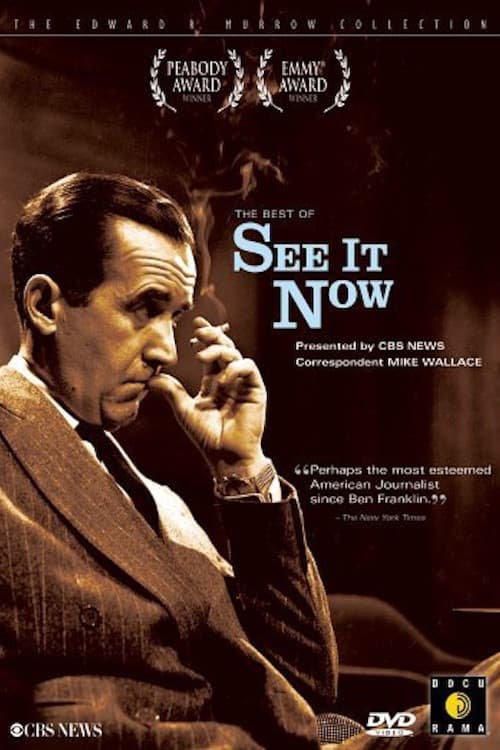
See It Now is an American newsmagazine and documentary series broadcast by CBS from 1951 to 1958. It was created by Edward R. Murrow and Fred W. Friendly, Murrow being the host of the show. From 1952 to 1957, See It Now won four Emmy Awards and was nominated three other times. It also won a 1952 Peabody Award, which cited its

Australian host Steve Irwin and his wife Terri run a wildlife refuge. Their shared passion is educating the world about wildlife, including the much feared crocodile and numerous venomous snakes. Steve's specialty is the capture and relocation of crocodiles. No animal appears too threatening to Steve, his true respect for animals is the foundation for everything he does.

Islands can be home to the most extreme examples of life and the some of the most dramatic landscapes. Natural selection fuels evolution in the most extraordinary way. Isolated for hundreds of thousands of years, pockets of individuals survive, thrive and adapt to fill all available niches fuelling a rapid development of new species. Wildest Islands, a stunning five-part series featuring the world’s most spectacular island locations. Dive into the crystal clear waters of the Caribbean; journey through the lush forests of Zanzibar; discover the unspoilt environs of the Hebrides; and uncover the enduring wonders of the Galapagos Islands as Wildest Islands investigates the rich history of these pristine paradises.