

Loading titles…
Documentary
Behind every great genius was a great rival - an unstoppable adversary whose incredible vision, determination, and ambition is their match. Out of their struggles came the world's most brilliant inventions, the spoils of the heated battle between competitors.


In the 1980s, Bill Gates and Steve Jobs break out in a heated battle to bring the personal computer to the masses.

The Wright Brothers build and fly the world’s first airplane, but they keep it a secret, leaving an opening for motor designer, Glenn Curtiss, to swoop in and compete to be the first to fly in public.

A young Midwestern farm boy creates an innovation that forever changes the future of communication, only to have it stolen away by one of America's greatest media moguls.

The newspaper redefined the way America tells its stories, but its rise to prominence was born out of a bitter rivalry between a man who built himself up from nothing and the wealthy son of a business tycoon. Follow William Hearst and Joseph Pulitzer as they push the limits of journalism in unthinkable ways, forever changing the media landscape.

America and the Soviet Union, deadlocked in the Cold War, set their sights on the final frontier — space. Go inside the more than decadelong struggle between the two superpowers as they both set out to conquer the moon. German scientist Werner Von Braun leads the charge for the U.S. and Sergei Korolev for the Soviets, but in the race to space, only one side can get there first.

Samuel Colt and partners Edwin Smith & Daniel Wesson become locked in the first true “arms” race, as they compete to perfect the world’s first revolver.
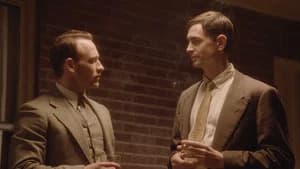
J. Robert Oppenheimer and Werner Heisenberg are in the world's largest arms race to build the first atomic bomb.

Celebrated inventor Thomas Edison goes to war with his former assistant, Nikola Tesla, to determine who will power the world with electric light.

Self - Narrator (voice)


A 3-chapter documentary about the stories we tell ourselves around creativity. Using a plethora of studies from anthropology, psychology and neuroscience, the film tries to demystify the way we use our brains to create, to make art and science. The products of our minds are extraordinary, but the process in which they are brought about are in fact, quite ordinary. Shakespeare copied. Mozart copied. Picasso copied too. But we're still obsessed with originality. We're living in the most creative time in humanity's existence, so maybe it's time to rethink our preconceptions about creativity.

In the series, "Wallace will take a light hearted and humorous look at the real-life inventors, contraptions, gadgets and inventions, with the silent help of Gromit. The series aims to inspire a whole new generation of innovative minds by showing them real, but mind-boggling, machines and inventions from around the world that have influenced his illustrious inventing career" (the BBC press statement). Peter Sallis reprised his role as the voice of Wallace. The filmed inserts are mostly narrated by Ashley Jensen, with one in each episode presented in-vision by Jem Stansfield. John Sparkes also voices a portion in the unseen character of archivist Goronwy.

Every time we switch on a light or boil a kettle we rely on power - but most people don't stop to think about the inventions and discoveries that allow us to live the way we do. In an exciting new four-part series for BBC Two, The Genius of Invention reveals the fascinating chain of events behind inventions that make everyday life possible.


Frank Lloyd Wright tells the story of the greatest of all American architects. Wright was an authentic American genius, a man who believed he was destined to redesign the world, creating everything anew. Over the course of his long career, he designed over eight hundred buildings, including such revolutionary structures as the Guggenheim Museum, the Johnson Wax Building, Fallingwater, Unity Temple and Taliesin. His buildings and his ideas changed the way we live, work and see the world around us. Frank Lloyd Wright’s architectural achievements were often overshadowed by the turbulence of his melodramatic life. In ninety-two tempestuous years, he fathered seven children, married three times, and was almost constantly embroiled in scandal. Some hated him, some loved him, and in the end, few could deny that he was the one of the most important architects in the world.