



Loading titles…
Reality / Drama
Port Protection is home to the few who have left behind normal society and chosen a different life in a remote Alaskan community, where survival of the individuals and community cannot sustain without the other. The stakes are high. The land is rugged and unforgiving and the…


Resourcefulness is key to survival in Port Protection and for 56-year resident Sam that means making the most of what he’s got. He sets out to extend the wear of his boots using mink oil — but first he must find and trap the minks. Gary heads to the shore to forage for sustenance, but extreme tides come only twice a month, so he must act quickly in order to find his dinner. Meanwhile, couple Hans and Timbi are determined to turn their property into a working farm, but recent injuries create a setback and they must rely on others in the community for help.
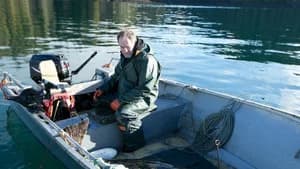
Winter’s end is approaching and the change of season brings new opportunities while closing the door on others. Sam has heard from other fishermen that halibut have been caught nearby. After months of living off of frozen food, he’s eager to catch some of the savory fish. Meanwhile trapping season is coming to a close and that means Gary is losing one of his main sources of income. He sets out for one last trapping trip in an effort to get enough fur to help meet his expenses for the year. Curly gets word that a massive tree is threatening a local house, and Mary sets out on the inexhaustible hunt for firewood.

The residents of Port Protection deal with the forces of nature, yet again. Curly decides to support the community and take on pesky beavers. Sam finds it’s time to start his garden and encounters bad soil so he has to search the surrounding area for the necessary ingredients to sweeten it up. Rough weather and high winds complicate Timbi’s situation when she suspects she has a life-threatening blood clot and can’t leave the island. Meanwhile, Gary sets out to do some king salmon fishing and encounters another competitor, which jeopardizes his attempts to catch a fish.

Spring has come to Port Protection and with it a host of chores and opportunities. Mary Miller takes advantage of bear season and heads into the nearby woods to hunt her first black bear. Gary Muehlberger sets out to trap a beaver in the hopes of teaching Port Protection’s newest resident, Amanda Makar, how to skin and treat it for its fur. And Hans and Timbi Porter overcome their recent surgeries and hike up a nearby mountain for firewood to an astonishing patch of land known as “the blow down.”
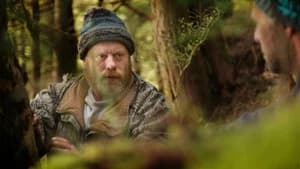
The spring season progresses and the residents of Port Protection encounter tasks and challenges. When Curly tries to be a good neighbor by helping his friend Jiggy with a rotten tree that threatens to fall on his house, he finds his experience and determination tested. Mary passes the torch of knowledge to Amanda, teaching her the finer points of how to hunt and track game, to provide her with the tools to survive on her own. Sam readies the fire patrol boat, staging a fire drill with other community members, which involves setting a real fire.

Spring has arrived, and in Port Protection that means there is work to be done despite erratic bursts of rain, sleet and snow. Hans and Timbi set out to put up a greenhouse in order to grow fresh vegetables and herbs for the year, but they’ll have to make it with supplies they can piece together on the island. Sam scours the burned-out wreckage of Jack’s old warehouse for materials to build a portable hunting stove. Mary must travel to town through brutal weather to acquire supplies she needs for the spring hunting season. And Curly takes Amanda out for a grueling lesson in dropping trees and collecting much-needed firewood.

Timothy “Curly” Leech and Amanda Makar set out to catch halibut with some borrowed equipment. Gary Muehlberger decides to test his mettle — and age — by returning to some old hunting grounds to catch a “hooter” and see if he’s still “got it.” Resident inventor and all-around DIY’er Sam Carlson tries to cobble together a vertical access wind turbine out of junk and scrap metal from an old shipyard. And Hans Porter sets out to test the pH levels of the town’s water supply, only to discover a dead-standing tree threatening the town’s pipeline.

The community of Port Protection encounters tasks and challenges as Gary goes shrimping, something he hasn’t done for a while. Meanwhile, Timbi searches for a natural remedy for Hans’ aches and pains. Curly tries to pull a tree from the forest, and Sam takes a camping trip into the island’s wilderness to hunt bear.

Spring has arrived and the residents of Port Protection complete essential builds and chores. Hans and Timbi take a giant step in realizing their dream of owning a working farm, by constructing a large duck pen. Sam forges staples, a small but critical tool, before heading out on his skiff to harvest firewood from the beaches surrounding Port Protection. Across the island, Mary reaches a remote mountain lake in order to catch freshwater trout, but a late spring squall has put the trip in jeopardy. Using milled wood from local trees, Curly attempts to breathe new life into his old truck by building a new flatbed, one that will provide the community with more firewood during the long, cold winter ahead.

Gary makes a supply run to Wrangell, Alaska, and is asked by Hans and Timbi to bring back some very precious cargo — ducks — that the whole community is counting on. Meanwhile, Hans and Timbi call on their neighbors, Mary and Amanda, to help them finish the duck barn in time for the Gary’s return. Curly, needing meat for the summer, sets out on a solo bear hunt. Sam and his friend Stuart try to solve the mystery of the town’s water shortage.
No cast information available.

Relationship coach Marin Frist knows what to look for, what to avoid and what will make her happy. As the many fans of her two bestselling books could tell you, we're all in charge of our own happiness. But like many people full of advice, she fails to apply it to herself. On her way to a speaking engagement in Alaska, she learns that her fiancé has cheated on her. Slapped in the face with personal failure, a snowstorm then leaves her stuck in a small town full of the one thing she really doesn't need—available men.

Viewers go deep into an Alaskan winter to meet six tough and resilient residents as they try to stay one step ahead of storms and man-eating beasts to make it through to spring. The closest neighbor to Sue Aikens is more than 300 miles away. Eric Salitan subsists solely on what he hunts and forages. Chip and Agnes Hailstone catch fish for currency in bartering for supplies, and Andy and Kate Bassich use their pack of sled dogs for transportation.

Deep in the Alaskan wilderness lives a newly discovered family who was born and raised wild. Billy Brown, his wife Ami and their seven grown children – 5 boys and 2 girls – are so far removed from civilization that they often go six to nine months of the year without seeing an outsider. They’ve developed their own accent and dialect, refer to themselves as a "wolf pack," and at night, all nine sleep together in a one-room cabin. Simply put, they are unlike any other family in America. Recently, according to the Browns, the cabin where they lived for years was seized and burned to the ground for being in the wrong location on public land.


Centers on the Kilcher family and their community outside Homer, Alaska. Begun by patriarch Yule Kilcher who immigrated from Europe during WWII, and currently led by his sons, Otto and Atz Kilcher (singer Jewel's father) the family have lived on their land for four generations. The show also features the homesteaders who live nearby and interact with the Kilchers.


Following an elite crew of workers-- brakemen, engineers, construction crews, mechanics and train drivers – Railroad Alaska illustrates the battle against ferocious weather and treacherous terrain to keep the State of Alaska’s critical 500-mile long railroad rolling to deliver life sustaining supplies. From controlled avalanches to prevent catastrophe, to fascinating characters, like Jim James, the one-handed handy man, learn what it takes to keep this train on track.

In Alaska is a region known as the Triangle - 200,000 unforgiving miles where more people go missing per capita than anywhere else on earth. ALASKA MONSTERS follows a team of native outdoorsmen as they take on the challenge of exploring the Triangle's treacherous terrain to prove native monsters are linked to these disappearances.

In 1980, the U.S. government banned new human occupation in the Arctic National Wildlife Refuge in Alaska, a protected area, home to thousands of native animals and pristine terrain spanning roughly the size of South Carolina. Currently, only a handful of families spread across seven permitted cabins are allowed to remain in the refuge. Within less than 100 years, all remaining permits will reach expiration, and there will be no human presence left.
