

Loading titles…
Drama
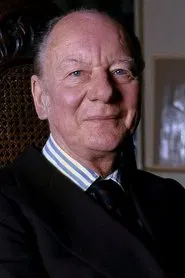
Sir John Gielgud is joined by an outstanding repertory of actors in this pioneering, imaginative series demonstrating the immense variety and emotional impact of English-language poetry, from the fourteenth century to the contemporary era.

This introductory programme establishes the continuity and variety of poetry over six centuries, touching on different genres by using extracts from some of the many poems featured in the series - from Chaucer to Ted Hughes.
A look at the poetry composed between the mid-seventh century and the Norman Conquest, including Julian Glover's reading of part of his own adaptation of the heroic epic Beowulf.
Chaucer was the first great named poet in English. This programme focuses on The Canterbury Tales, with a reading of the introduction by Gary Watson and a detailed exploration of The Pardoner's Tale.
This programme explores the late Medieval period leading into the Renaissance, discussing poems dealing with love, death and ambition by Skelton, Wyatt, Raleigh, Marlowe and Shakespeare.
A chronological look at Shakespeare's dramatic genius, using extracts from eight plays: Romeo and Juliet, Henry V, Twelfth Night, Hamlet, King Lear, Antony and Cleopatra, Cymbeline and The Tempest.
The vigour and audacity of John Donne's love poetry is contrasted with his equally powerful devotional works. The programme then explores the work of Donne's disciple George Herbert, and Andrew Marvell.
Milton's dedication, his humanity and his blindness are all given illustration in Ian Richardson's reading of the sonnet to his dead wife, Katharine, while his eloquence is highlighted in Richardson's spectacular readings from Paradise Lost.
An overview of the great age of satire: among the works featured are Rochester's 'A Satire Against Reason and Mankind', Dryden's 'Absalom and Achitophel' and the mock-heroic 'MacFlecknoe', and Pope's masterpiece of mordant wit, 'The Dunciad'.
This programme features excerpts from Jonathan Smart's 'Jubilate Agno', written in Bedlam, five poems by Blake, Coleridge's 'Kubla Khan', and Wordsworth's 'The Solitary Reaper' - a fine example of "emotion recollected in tranquillity".
'Upon Westminster Bridge', 'Daffodils', 'A Slumber Did My Spirit Steal', and an extract from Book I of 'The Prelude' are among the poems read by Julian Glover; all were filmed in Wordsworth's native Lake District.
Among the poems featured are Shelly's 'Ozymandias', 'The Mask of Anarchy' and 'Adonais'; Keats' 'La Belle Dame sans Merci' and 'To Autumn'; and part of Byron's 'Don Juan'.
The Victorian period of richly represented with extracts of poems by Alfred, Lord Tennyson, Emily Bronte, Christina Rossetti, Robert Browning, Matthew Arnold and Agernon Charles Swinburne.
Lee Remick reads Julia Ward Howe's 'The Battle Hymn of the Republic' along with poems by Edgar Allen Poe and Emily Dickinson; Stacy Keach reads poems by Walt Whitman and Herman Melville; John Gielgud recites Robinson's 'Miniver Cheevy'.
This programme covers verse of the late Victorian period and the early twentieth century, with poems by Thomas Hardy, Gerard Manley, A.E. Houseman and Rudyard Kipling.
Wilfred Owen's 'Anthem for Doomed Youth' and Edward Thomas' 'Old Man' are among the featured poems, while Cyril Cusack reads a selection of poems by W.B. Yeats, and Ian Richardson and Isla Blair give voices to an excerpt from Eliot's 'The Waste Land'.
Anthony Hopkins reads two of Dylan Thomas' most widely known poems, and Stacy Keach reads Robert Lowell's 'For the Union Dead'; poetry by Philip Larkin and Ted Hughes close the series.
Self - Presenter

"Dear Sami" is a romantic drama with elements of fantasy, where the hero is able to travel back in time from the 1840s to the present day, where he sees how man has changed and how the attitude and perception of women has changed 180 degrees. A large number of actors are involved in this project, as well as the actors of the Gyumri Drama Theater. The main characters are played by Inna Khojamiryan and Sos Janibekyan.

Khun Kham and Khut Sut, concubines of the Prince of the Front Palace, are both concealing feelings that go beyond that of friendship for one another. They can merely care for one another from a distance until the Front Palace passes and Sut was sought for service in the grand palace of Princess Vilas, the elder sister of Prince Sang. It's only Kham who's left adrift and ultimately has to return to her hometown of Amphawa with her father Khram.

In 1947, a year heavily tinged by the scars of war, Kitazawa Taro, Mitamura Kiichi, Arikawa Nobuo and other fellow poets who would play a central role in post-war Japan’s modern poetry movement gathered for the launch of the poetry magazine ‘Arechi’. 28 years later in 1975, a 53-year-old Kitazawa works at a newspaper’s proofreading department as he continues scrape by composing poetry. Although he is not prolific as a poet, he cherishes ordinary happiness every day surrounded by his wife Haruko and their daughter Yuko and son Sho. But a big turning point comes for Kitazawa one day. He develops frequent contact with Akiko, the wife of his good friend Mitamura. Falling in love with her, he abandons his job and leaves his wife Haruko and two children behind. As he starts to live with Akiko who has also left home, he recovers an unprecedented passion and “words”. Each of them start to live the life of the “wasteland”. --JDramas Weblog

Story follows a group of physical therapists, nurses, radiological technologists and trainees. Ye Jae-Wook works as a physical therapist and also teaches in the same field. He begins to work as a team leader at a hospital. Woo Bo-Young has been working as a physical therapist for 3 years. She wanted to become a poet, but due to her poor family background she studied to become a physical therapist. Shin Min-Ho is a trainee, but he isn't interested in physical therapy. His grades weren't good enough for medical school and his parents, who are both doctors, made him study physical therapy.

The BBC Television Shakespeare is a series of British television adaptations of the plays of William Shakespeare, created by Cedric Messina and produced by BBC Television. It was transmitted in the UK from 3 December 1978 to 27 April 1985 and spanned seven series. Development of the series began in 1975 when Messina saw that Glamis Castle would make a perfect location for an adaptation of Shakespeare's play As You Like It. On returning to London, he envisioned an entire series devoted exclusively to the dramatic works of Shakespeare. After encountering numerous problems trying to produce the series, Messina eventually pitched the idea to the BBC’s departmental heads and the series was greenlighted. The series as a whole received generally negative reviews from critics.


What would it be to be just 15 cm tall?... The answer is in each episode of The Tiniest Man, a formal and serious guy that is only a bit taller than the height of a shoe, that lives in the real world, in a real size house, using mostly normal size objects, ignoring its real condition. Along 53 episodes x 1 minute, The Tiniest Man faces daily tasks, like taking a bus, drinking coffee, going to the cinema, or planning holidays. Of course, everything becomes a big adventure to him. He will deal to solve his scale issues in very unusual ways, stressing the comedy and the wit of the series.
A story of Sato Hachiro, poet in the Showa period who is known for his lyric poems and songs for children. Despite the delicate and sensitive style of his works, he and his family spent a life full of ups and downs. Based on a novel by his half-sister Sato Aiko, the drama describes the thrilling life of the poet who played an important role in the popular culture of the Showa era by focusing on his love and hate relationship with his family. (Source: DramaWiki)

La Grande Librairie is a 90-minute literary program, launched by François Busnel in September 2008 and presented by Augustin Trapenard since 2022, broadcast live every Wednesday on France 5. A direct successor to Bernard Pivot's Apostrophes, it is the only literary program scheduled in prime time and is considered the most influential program on book sales, thanks to its connection with small bookstores, which attest to the return of readers in many French cities.