
Loading titles…
Documentary
The very first submarine, which legend claims lurked beneath New York Harbor during the American Revolutionary War. The small ships that rescued thousands from Dunkirk. The destroyer that forced the easing of the Cuban Missile Crisis. Over the centuries, conflicts have prompted…


At the start of the 20th century, the battleship was the key naval vessel, escorting convoys and overpowering the enemy. But over the course of two world wars, technology raced ahead, drastically changing their role from flagships of the fleet to floating artillery vessels. Revisit some of the mighty battleship's greatest triumphs and tragedies and witness tales of heroic acts and daring missions, from the Battle of Jutland to the sinking of the HMS Royal Oak to the D-Day invasion.

It began with a barrel-shaped submersible that patrolled New York Harbor during the American Revolutionary War. Since then, the submarine has evolved into a vital weapon of war. Dive in as we track its history, from the 1775 Turtle to the 1879 Resurgam to the mighty German U-boats and nuclear subs of today. Rare archival footage, visits to surviving decommissioned subs, and interviews with crewmembers help explain how these machines became such a powerful symbol of naval supremacy.

In 1944, the fate of Europe depended on an Allied plan to land over 150,000 troops in just 24 hours on the beaches of Normandy. They would arrive on a remarkable armada of vessels, some experimental, some simply dangerous. Join us as we examine the D-Day invasion from the sea, tracing the critical naval operation that transported the troops to shore. We explore the technology behind the diverse and ingenious ships that bravely crossed the English Channel and present firsthand accounts from those who were part of the historic invasion.

In the 1850s, warships moved from metal engines to metal armor. It was the beginning of a groundbreaking era that changed ship design forever. Join us as we examine the rapid evolution of the ironclad ship, from the most fearsome naval weapon ever built, Britain's HMS Warrior, to the Civil War showdown between the Monitor and the Virginia to the rise of the dreadnought. Through archival photos, in-depth interviews, and visits to the surviving ships, journey to the experimental years that transformed naval combat and defined a new world order.

In the late 1800s, the invention of the self-propelled torpedo incited a revolution in ship design. Navies needed new vessels to fire them and to defend against them. Enter torpedo boats--fast, lightweight ships that would play a big role in both World Wars. Examine some of these sophisticated speedsters, from the German S-boats, which turned one D-Day rehearsal into a very real battle, the MTB 102, the smallest vessel to ever serve as a Royal Navy flagship, and the PT 109, which made a hero of a young JFK.

The Cold War was an era of espionage, treachery, and the flexing of military muscle. Over four decades, the naval capabilities of East and West threatened assured mutual destruction, which helped maintain a tense but stable peace between the superpowers. Witness stories of remarkable humanity and bravery as we examine the period's most fearsome warships and subs and their operations in Cuba, Vietnam, and Soviet waters.

In the past two centuries of combat, ships have played a major role in rescuing thousands of people--some injured, some in need of transport, and others fleeing for their lives. Board some of history's most remarkable rescue ships, from the USS Constellation, which hunted down illegal slave ships to the most unlikely rescue ship of World War II, a tiny workboat that saved hundreds of Danish Jews from Nazi terror.

For centuries, small vessels have made immense contributions in times of war, thanks to the expertise, bravery, and sheer willpower of their designers and crews. Witness David and Goliath stories involving the tiny combat vessels that took on massive battleships and deadly subs. From the short-lived but legendary USS Philadelphia to the gunboat M33, see how ships of war don't have to be large to make history.

Voyage back to the age when wooden warships were the ultimate fighting machines. From the Mary Rose, one of the first great combat ships, to the HMS Victory, which tattered Napoleon's plans of invading Britain in 1805, celebrate history's brave commanders and crews who rode these wooden wonders into battle. Witness how technological advancements in Europe and America led to longer, faster, and more heavily armed vessels.
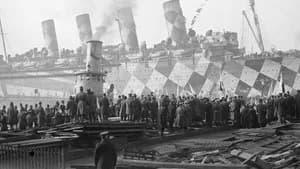
Explore the dark side of naval warfare--a world of deception, double-dealing, and disguised vessels--throughout the first half of the 20th century. See how Britain's Royal Navy attempted to fool German U-boats through the technique of "dazzle painting," then look at the ingeniously designed Gizmo, an American spy vessel that never made it beyond American waters.
No cast information available.

Myths die hard, and the history of the 20th century is no exception to this rule. Even today, we hold popular beliefs that we take for Evangelical truths. Thus, we believe that Hiroshima caused Japan to surrender, that the Marshall Plan saved Europe, that Adolf Hitler was a military genius, or that Mao Zedong was a necessary evil for China’s modernization. Of course, these judgements contain some truth; but, too broad-stroked to be accurate, they contradict the historical reality by denying its complexity. What if the truth was slightly different? Through an exploration of great national or international myths, this full archive documentary collection revisits the key moments of the 20th century with a new perspective in order to provide a new, smarter and more subtle interpretation, bringing elements to light that have been forgotten or sometimes overshadowed.

Blueprints of War will strive to encompass the most famous military conflicts, leaders and weapons throughout time. From the beaches of Normandy to the fields of Gettysburg and the minefields of Vietnam, Blueprints of War will traverse the battlefields of the globe telling the story hour-by-hour and minute-by-minute


Mount Kologet, Goldsboro, Palomares, Thule… Four nuclear accidents, four stains on the history of the Cold War. Four names that are now forgotten. These events lay undiscovered for years having been classified as official secrets. Now published, the files show how the relentless standoff between the two superpowers spiraled out of control and led us to the brink of obliteration.

For two weeks, the aircraft carrier strike group Carrier Strike Group 8 is conducting one of the toughest exercises in the US Navy. The tactical cooperation of several crews from three different nations is paramount in this training exercise. The 7,000 sailors on board are repeatedly subjected to gunfire and attacks. Fires are extinguished and evacuations are practiced.

Hell Below is an event-based series charting the stealth game of sub sea warfare, tracking the dramatic narrative from contact to attack of the greatest submarine patrols of World War II. From the rise of the Wolfpack to the drive for victory in the Pacific, we profile the strategic masterminds and the rapid evolution of technology and tactics, as the threat of undersea warfare brings every sailor's worst nightmare to life. Expert analysis and stock footage are woven with narrative driven re-enactments filmed on authentic Second World War era submarines to place the characters at the heart of the action.

During the second world war, the Nazis looted everything they could get their hands on, including an estimated 600 tons of gold, thousands of pieces of artwork, and millions of priceless artifacts. While some of these items have been found, much of it remains missing. Treasure hunter Darrell Miklos believes some of these stolen riches were loaded into specially modified U-Boats that are currently lying at the bottom of the Caribbean Sea. His evidence: two top-secret documents acquired over 40 years of research.


