

Loading titles…
Documentary / Crime / War & Politics
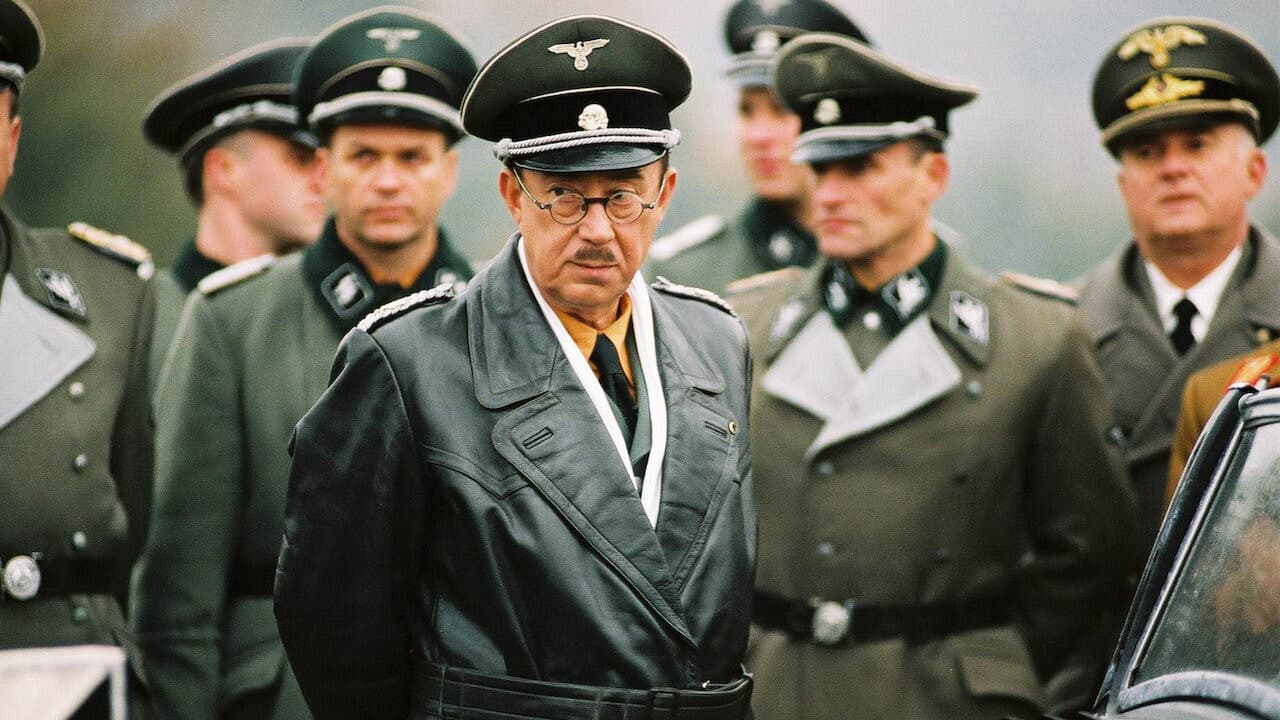
This documentary series tackles one of history's most horrifying subjects: the Holocaust and the infamous Auschwitz-Birkenau concentration camp.

This episode sets the stage for the series and examines the radical increase in violence against all opponents of the Nazi state. In particular, it explores the German army's invasion of the Soviet Union during the summer of 1941 and connects this campaign to the first gassing experiments in Auschwitz, Poland, which were aimed at Russian prisoners of war, not Jews.
Laurence Rees continues his documentary history, marking the 60th anniversary of the liberation of Auschwitz, with an account of how the Nazis developed their ""Final Solution"". By 1942, Rudolf Hess had established the camp as a place to murder thousands of Jews, Slavs, Roma Gypsies.
The Nazis' marshalling of Jews from across Europe - including the Channel Islands- gained momentum in 1942. Unable to cope with the huge influx, Auschwitz and Treblinka were modified with bigger gas chambers and crematoria. But inspirational stories of courage and compassion could still be found among this appalling catalogue of inhumanity, including that of German officer Albert Battel, who risked his life to save detainees.
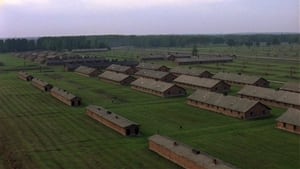
By 1943, life was good for many of the SS. Eyewitness accounts recall how those in power at Auschwitz lined their pockets with wealth stolen from Jewish inmates while also engaging in illicit affairs.
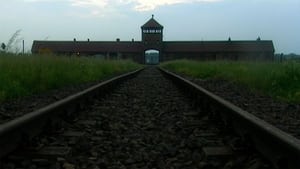
SS Lieutenant Colonel Adolf Eichmann ordered the deportation of Hungary's Jews following occupation in 1944, precipitating the most intensive period of slaughter in Aushwitz's history. The Allies, meanwhile, faced dilemmas: should they divert valuable resources to bomb transport routes to the camp? And should they consider Eichmann's offer of one million Jewish lives in exchange for certain provisions - the ""Blood for Goods"" deal?
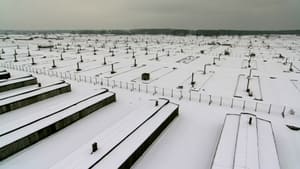
The reality of life in the concentration camps was revealed upon the liberation of Auschwitz-Birkenau and Bergen-Belsen in 1945. But what was the fate of the remaining prisoners and the SS garrisons? The final days of the war and its immediate aftermath is a story as shocking as it is surprising, with Jewish survivors facing appalling treatment in their home countries and large numbers of SS perpetrators remaining hidden.

Cast

Narrator

Narrator
Narrator
Rudolph Höss
Captain Bill Cross

A true-crime series examining the most shocking murder investigations and toughest trials in Texas history - all told with Kelly's unique insight and unparalleled access. As Chief of Special Crimes in the busiest courthouse in the Lone Star state, Kelly Siegler battled to get killers into courtrooms to face their formidable defense attorneys. With her own firsthand accounts, alongside investigators and victims' families, Kelly reveals what really happened beyond the newspaper headlines to bring Texas-style justice.



Sharpe is a British series of television dramas starring Sean Bean as Richard Sharpe, a fictional British soldier in the Napoleonic Wars. Sharpe is the hero of a number of novels by Bernard Cornwell; most, though not all, of the episodes are based on the books. Produced by Celtic Films and Picture Palace Films for the ITV network, the series was shot mainly in Turkey and the Crimea, although some filming was also done in England, Spain and Portugal. The series originally ran from 1993 to 1997. In 2004, as part of ITV's new set of drama, ITV announced that it intended to produce new episodes of Sharpe, in co-production with BBC America, loosely based on his time in India, with Sean Bean continuing his role as Sharpe. Sharpe's Challenge is a two-part adventure; part one premiered on ITV on 23 April 2006, with part two being shown the following night. With more gore than earlier episodes, the show was broadcast by BBC America in September 2006.

Nightline, or ABC News Nightline, is a late-night news program that is broadcast by ABC in the United States, and has a franchised formula to other networks and stations elsewhere in the world. Created by Roone Arledge, the program featured Ted Koppel as its main anchor from March 1980 until his retirement from the program in November 2005. Nightline airs weeknights at 12:37 a.m. Eastern Time, after Jimmy Kimmel Live!. It previously ran for 31 minutes, but in 2011, the program was reduced to 25 minutes. When the program moved to 12:37 a.m. ET, the program was expanded to 30 minutes. In 2002, Nightline was ranked 23rd on TV Guide's 50 Greatest TV Shows of All Time.