


Loading titles…
Drama
After hitting rock-bottom from his own addictions during the birth of his twins, William Banks strikes a tentative deal with God. In exchange for a second chance, he vows to kick his addictions and dedicate his life to helping others. Now, along with his unconventional team, he…

William tries to help Zach, a once-promising high school athlete who has fallen victim to meth addiction.
A mother thinks her teen daughter is involved with drugs though her drug test comes back negative. The mother enlists the help of William to prove this theory one way or another.

You never know where drug rings may show up. In this ongoing episode a wife, from the suburbs, involves herself with a drug ring. Her husband enlists the help of William to crack the ring.
A mathematics professor uses cocaine to help him publish his research in time. His girlfriend and colleague requests William's help. William tries to stop the professor before he loses everything--his career, personal life, and even his immigrant parents' diner. Meanwhile, William's son discovers a used needle in their house after a dinner party. William realizes that the needle belongs to his former sponsor and must decide whether to cut his sponsor out of his life.
A teenage boy needs William's help with his father, who once went to prison because of William's past efforts. The man is back on the streets and using meth again.
William is determined into searching for the former partner of an FBI agent; the missing man is found in a tent city of meth manufacturers, William then realizes that he's has been told lies about the real reason why the FBI agent is looking for her old partner.

William's friend needs help with a student who is abusing heroin and prescription drugs. The boy's father causes problems for the crew. William thinks the boy might be attempting suicide.
The gambler notices his favourite jockey is using a lot of drugs to meet weight and asks William to step in.

The original interventionist brings William in after his intervention with a woman goes wrong and she ends up on the streets. The original interventionist considers William a "Thug" making William question his own motivation for finding the woman.
A teenager pianist turns to meth in order to cope with the pressure, the father of the teenage girl asks William's crew for help, but they are stonewalled by the girl's mother.

The brother of an striving actress discovers his sister cocaine addiction and tries to get William's crew to help. Akani races to find Sweton after he mysteriously goes missing.
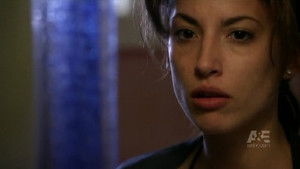
William rescues a team member, while the others go undercover at a sorority house to get information about a drug dealer.

William devises an extreme intervention when a couple's alcoholism endangers their daughter.

William Banks

Akani Cuesta

Arnie Swenton
Melissa Banks

Notorious Los Angeles defense attorney Sebastian Stark becomes disillusioned with his career after his successful defense of a wife-abuser results in the wife's death. After more than a month trying to come to grips with his situation, he is invited by the Los Angeles district attorney to become a public prosecutor so he can apply his unorthodox-but-effective talents to putting guilty people away instead of putting them back on the street.
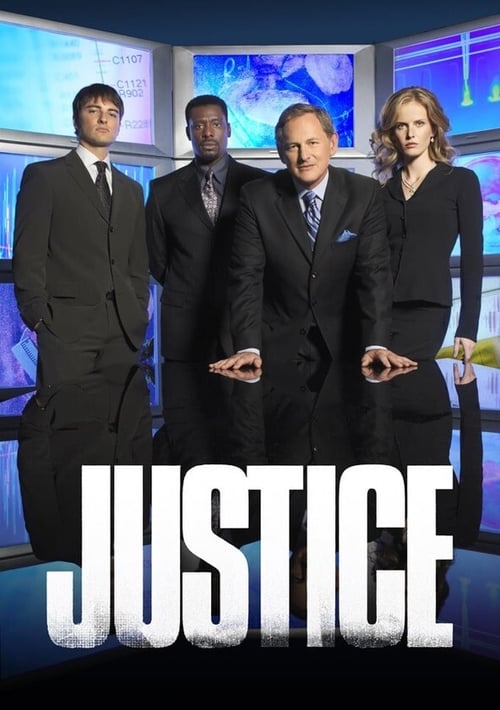
Justice is an American legal drama produced by Jerry Bruckheimer that aired on Fox in the USA and CTV in Canada. The series also aired on Warner Channel in Latin America, Nine Network in Australia, and on TV2 In New Zealand. It first was broadcast on Wednesdays at 9:00 but, due to low ratings, it was rescheduled to Mondays at 9:00, in the hope viewers of the hit series Prison Break would stay tuned. On November 13, 2006, the show was put on hiatus, but two days later the network announced it was shifting it to Fridays at 8:00 to replace the canceled Vanished. Fourteen episodes of the series were ordered, of which 13 episodes were produced. Twelve of the episodes of Justice have aired in the United States with the final episode airing in Mexico, the UK and Germany.


L.A. Law is an American television legal drama series that ran for eight seasons on NBC from September 15, 1986, to May 19, 1994. Created by Steven Bochco and Terry Louise Fisher, it contained many of Bochco's trademark features including a large number of parallel storylines, social drama and off-the-wall humor. It reflected the social and cultural ideologies of the 1980s and early 1990s, and many of the cases featured on the show dealt with hot-topic issues such as abortion, racism, gay rights, homophobia, sexual harassment, AIDS, and domestic violence. The series often also reflected social tensions between the wealthy senior lawyer protagonists and their less well-paid junior staff. The show was popular with audiences and critics, and won 15 Emmy Awards throughout its run, four of which were for Outstanding Drama Series.
United States is a short-lived half-hour comedy-drama that NBC added to its Tuesday primetime schedule in March 1980. Larry Gelbart, the show's executive producer and chief writer, said the name United States was not a reference to the country but rather to "the state of being united in a relationship". Gelbart envisioned a series that would be "a situation comedy based on the real things that happen in my marriage and in the marriages of my friends". Episodes tackled such topics as marital infidelity, household debt, friends who drink too much, death within the family, and sexual misunderstandings. United States focused on Richard and Libby Chapin, an upwardly mobile couple who lived in a Los Angeles suburb. Beau Bridges played Richard, and Helen Shaver played Libby. Gelbart reverted to black-and-white script for the show's titles. He said that was to convey the mood of "a sophisticated '30s film." Gelbart also avoided use of background music and a laugh track. Scripts featured dialogue such as, "Just for once I'd like to be treated like a friend instead of a husband," and "Maybe you and Bob can go out and get yourselves one redhead with two straws." United States premiered at 10:30 p.m. on March 11, 1980. NBC pulled it from the schedule within two months, after only six of 13 episodes had aired. The remaining episodes were not broadcast until 1986, when the A&E cable channel aired United States.
