


Loading titles…
Documentary / War & Politics
When ancient war tactics became overwhelmed by powerful new weapons like tanks, air attacks, weapons of mass destruction and submarines, a pivotal game-changing moment in history occurred. History is delving into the background of each weapon explaining the how and why they were…

Tanks were the first armored fighting machine to be used on the battlefield. These "land ships", as they were first called, were championed by Head of the British Admiralty Winston Churchill. Adapted from an American tractor with caterpillar tracks, the machine was designed in secrecy to break through the heavily fortified trenches and offer protection for troops that were being mowed down by heavy artillery.
While most people think the Blitz originated in WWII, the truth is that the first Blitz happened during WWI. Bombs were delivered from giant airships designed by Count Ferdinand von Zeppelin, who got his inspiration when he was a Germany Army observer in the US during the Civil War and rode in a hot air balloon for the first time. These lighter than air superstructures, two times longer than the Statue of Liberty is high, measured their flights in hundreds of miles when pioneering aviators measured their success in hundreds of yards.
The Germans, ignoring international treaties they signed, were first to weaponize a chemical. In this case it was chlorine–a highly toxic ingredient used in the manufacture of chemical dyes of which they had a huge supply. Their action unleashed an escalation of poison gas weapons as both sides developed different chemicals and more effective counter measures. Their use of culminated in a bold British plan that unfolded beneath the battlefield at Messine Ridge. British mining and explosive experts planted 450 tons of high explosive hidden in a network of tunnels under Messine ridge. When ignited, they created the biggest land mine in history–killing 10,000 German soldiers. The explosion rattled windows at 10 Downing St., 140 miles away and registered as an earthquake in Switzerland.
The Atlantic became a killing field as German submarines took on the might of the dominant British Navy. The stealth and silent killers were able to sink 5,200 ships by war's end, and nearly brought Britain to its knees. But in their frenzy of attacks, the Germans sink the US passenger liner Lusitania, killing nearly 2,000 on board. American outrage helped President Wilson get Congress to finally agree to enter the war. In the end, the Allied Atlantic blockade forces Germany to surrender, but the submarine was established as an effective military weapon.

Various
Himself

Host

Based on real characters and events, this haunting drama focuses on the personal sacrifice of a Prague history student, Jan Palach, who set himself on fire in protest against the Soviet occupation of Czechoslovakia in 1969. Dagmar Burešová, a young female lawyer, became part of his legacy by defending Jan's family in a trial against the communist government, a regime which tried to dishonour Palach’s sacrifice, a heroic action for the freedom of Czechoslovakia.


Putin, Russia and the West is a four-part British documentary television series first shown in January and February 2012 on BBC Two about the relationship between Vladimir Putin's Russia and the West. The series is produced by Norma Percy, whose previous series include The Death of Yugoslavia, Israel and the Arabs: Elusive Peace, and Iran and the West. The documentary was criticized by some dissidents for being an apology for Putin's regime.

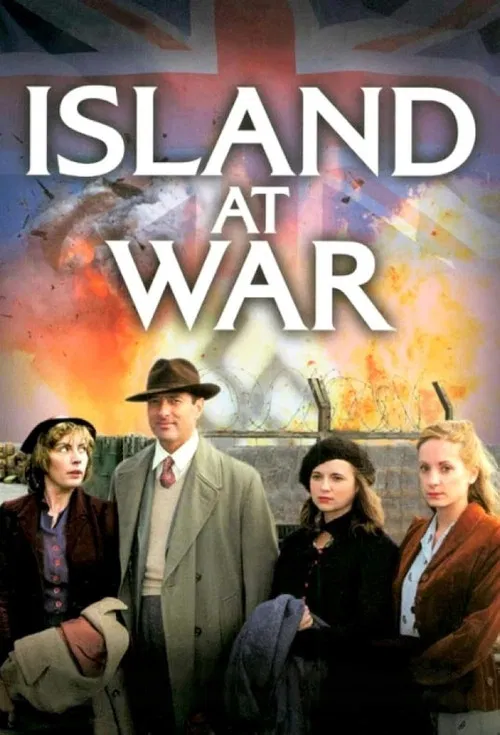
Island at War is a British television series that tells the story of the German Occupation of the Channel Islands. It primarily focuses on three local families: the upper class Dorrs, the middle class Mahys and the working class Jonases, and four German officers. The fictional island of St. Gregory serves as a stand-in for the real-life islands Jersey and Guernsey, and the story is compiled from the events on both islands. Produced by Granada Television in Manchester, Island at War had an estimated budget of £9,000,000 and was filmed on location in the Isle of Man from August 2003 to October 2003. When the series was shown in the UK, it appeared in six 70-minute episodes.


