Loading titles…
Documentary
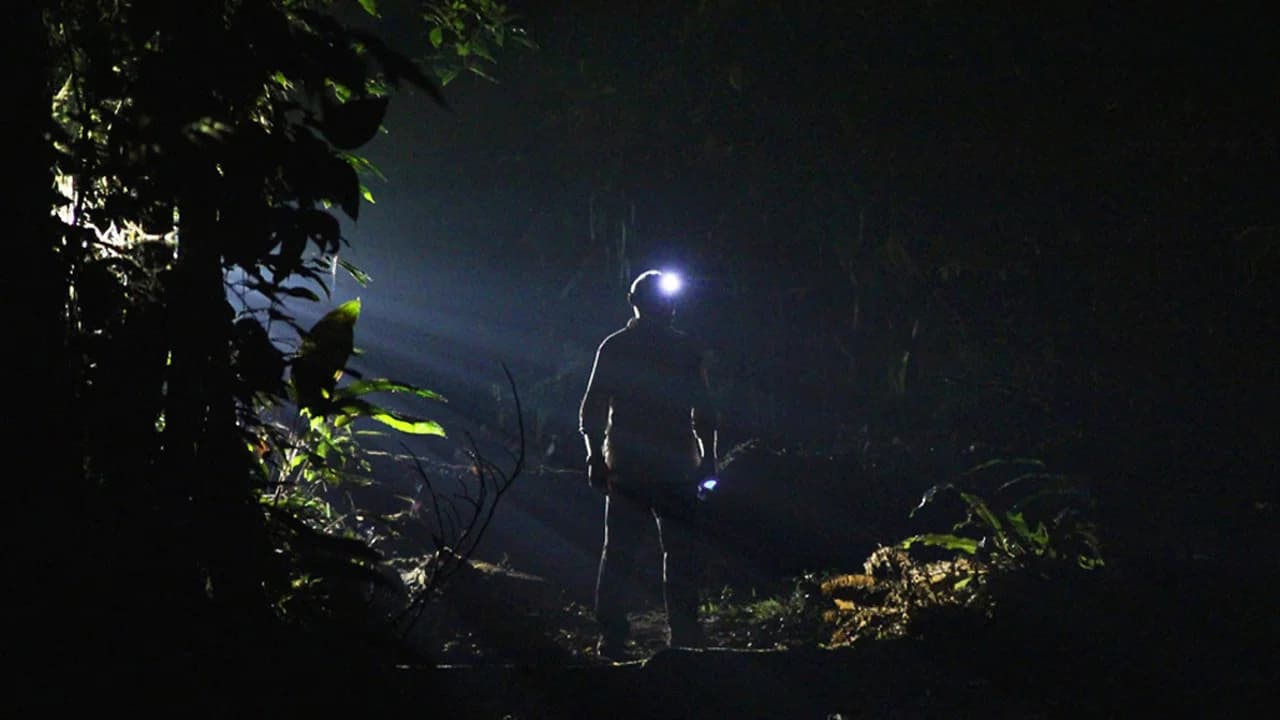
A new perspective on wildlife at night. A team of biologists and specialist camera crew explore the length of South and Central America to find out how animals have adapted to life in the dark.

This illuminating natural history series reveals a totally new perspective on wildlife at night. Over six months, a team of biologists and specialist camera crew explore the length of South and Central America to find out how animals have adapted to life in the dark. The expedition starts in the jungles of Costa Rica where the team are after some of the most frightening nocturnal predators. Alone in the dark, nighttime camera specialist Justine Evans has an exceptionally close encounter with a large male jaguar. Biologist Dr. George McGavin is on the trail of the most ingenious predator of the jungle - the net casting spider. And cameraman Gordon Buchanan finds ruined temples deep in the jungle as he searches for the bizarre creatures that rule the jungle canopy at night.
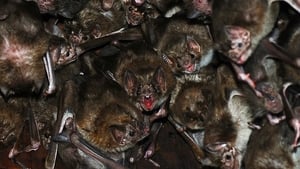
Natural history series revealing a totally new perspective on wildlife at night. Now the expedition travels south to a flooded forest in the heart of the Amazon. Large mammal expert Bryson Voirin encounters a curious sloth whilst camerawoman Sophie Darlington spends stormy nights precariously perched high in the jungle canopy, attempting to film the only nocturnal monkey in the world. Further south, Gordon Buchanan heads to the largest wetland on earth in search of giant anteaters and enters a strange deserted house that's been taken over by vampire bats. And Dr. George McGavin abseils deep into the perpetual darkness of a giant cave system - cut off from the light for millions of years. Deep inside, he and the team discover species new to science.
Natural history series about wildlife at night culminates at the wild and windswept tip of South America. Coming face to face with the widest-ranging cat in the Americas - the puma - camerawoman Justine Evans attempts to film their nocturnal hunting behaviour for the first time. Even further south, Gordon Buchanan dives into the icy waters of the Strait of Magellan to solve a mystery - scientists have heard humpback whales moving close to the shore at night, but have no idea what they could be doing. And Dr. George McGavin attaches a miniature tracking device to a vampire bat's back to discover whose blood it is feeding on.

Self - Presenter

Self - Presenter

Self - Presenter
Self - Presenter

Self - Presenter

Self - Narrator

Sky One introduces the start of a new ongoing documentary series that highlights the potential extinction of some of the world's most famous species. Working with Tiger Aspect Productions, the series follows a team of experts assisted by a wellknown personality. Each documentary will highlight the plight of the world's most endangered animals including the tigers of India, Aye-Ayes and Gorillas. Presenters include Sanjeev Bhaskar, Bill Bailey, Miranda Richardson and Joe Simpson. Each of the presenters will draw on the expertise of local teams campaigning to save the endangered species and work with conservationists to develop and implement strategies to help in their fight for survival.
Geologist Iain Stewart explain in three stages of natural history the crucial interaction of our very planet's physiology and its unique wildlife. Biological evolution is largely driven bu adaptation to conditions such as climate, soil and irrigation, but biotopes were also shaped by wildlife changing earth's surface and climate significantly, even disregarding human activity.

All In Earth's 4 billion year history, nature has solved all of lifes problems, from the highest mountain to the deepest ocean. Evolution is the ultimate inventor and many of mans most clever engineering solutions have exact counterparts in nature. In three amazing episodes, NatureTech views our world with fresh eyes, where nature and technology stand hand in hand.
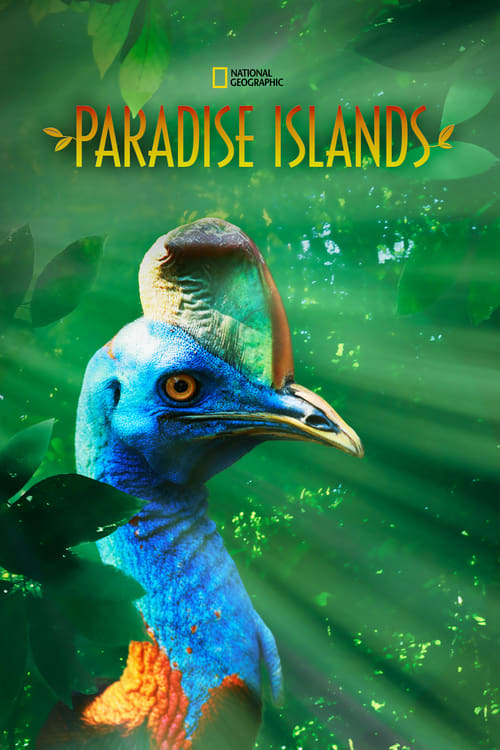
The tropical islands that lie between Asia and Australia are among the biologically richest on earth, and home to a vast number of plants and animals. From tree kangaroos to tarsiers, manta rays to mudskippers, the region abounds with life. But why? The answer lies deep in time, due to the many millions of years these islands have existed - and the power of the earth, the sun and the moon.