Loading titles…
Drama
Series about the life of Renaissance anatomist, scholar and politic Johannes Jessenius. Already legendary series today, was produced by Czechoslovak Television Bratislava, directed by Slovak director Miroslav Luther in the first half of 80's in Barrandov Studios in Prague. The…
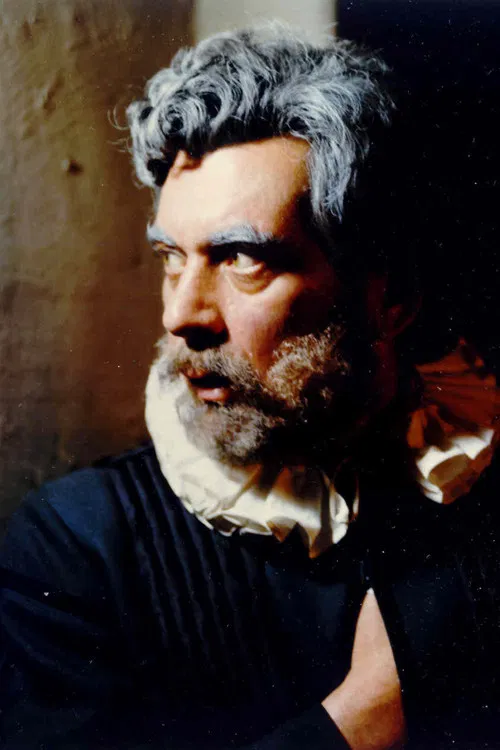
Young Johannes Jessenius started studies and met Johannes Kepler. As a field surgeon he took part in war with Turks. Afterwards, he became professor of surgery and anatomy on Vittemberg University, where he met his wife.
Jessenius came to Prague. He was granted an audience with king Rudolf II. He managed to make the first public autopsy in the town. A body for the autopsy had got from hesitating executioner Mydlář. Jessenius became resident in Prague, and thereafter his wife came also to Prague.
Jessenius became physician in Carolinian University and personal physician of king Rudolf II. The plague stroke the town Prague. His healthy wife had been murdered throughout this time. He treated ill king Rudolf, and after his death, he embalmed him.
Jessenius had been dismissed by the new king Matthias. He spent next winter with woman Flora. After her death, he took care of their common daughter. He became rector of the Carolinian University. After Prague defenestration and outbreak of the Bohemian revolt, he had been appointed as a delegate of revolting side and got into Hungary.
The Jessenius’ mission failed. As the next new king, Frederick V had been elected. After Battle of White Mountain, the Bohemian revolt had been defeated. Jessenius with other 26 noblemen, knights and burgenses was executed on the Old Town Square in Prague by his acquaintance executioner Mydlář. Thirty Years’ War had begun…
No cast information available.

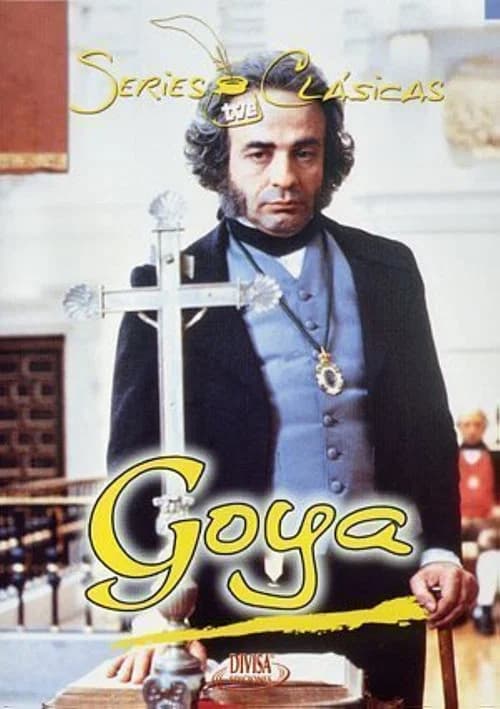
This three-part production about the life, work, and times of Slovak literary classic Jozef Gregor Tajovský focuses on Tajovský's childhood. Jozef Gregor Tajovský was born in Tajov in 1874 and died in Bratislava in 1940. A large part of the life of the prose writer and playwright Jozef Gregor Tajovský is connected with his native Tajov, Banská Bystrica, and the surrounding villages of Pohorelá, Lopej, Horná Lehota, and Podlavice. He spent his childhood in Tajov with his grandparents. He speaks of it as the most beautiful period of his life. After completing elementary school in Tajov, he studied at a grammar school in Banská Bystrica and at a teacher training college in Kláštor pod Znievom. He was particularly attached to Tajov, to which he returned throughout his life.

In 17th century France, young D'Artagnan wants to join the King's Musketeers, but instead befriends three legendary musketeers—Athos, Porthos, and Aramis—and together, they become embroiled in the political intrigue surrounding King Louis XIII and his adversaries, particularly the powerful Cardinal Richelieu.

GBH was a seven-part British television drama written by Alan Bleasdale shown in the summer of 1991 on Channel 4. The protagonists were Michael Murray, the Militant tendency-supporting Labour leader of a city council in the North of England and Jim Nelson, the headmaster of a school for disturbed children. The series was controversial partly because Murray appeared to be based on Derek Hatton, former Deputy Leader of Liverpool City Council — in an interview in the G.B.H. DVD Bleasdale recounts an accidental meeting with Hatton before the series, who indicates that he has caught wind of Bleasdale's intentions but does not mind as long as the actor playing him is "handsome". In normal parlance, the initials "GBH" refer to the criminal charge of grievous bodily harm - however, the actual intent of the letters is that it is supposed to stand for Great British Holiday.

It tells the story of the first generation of leaders of the Communist Party of China represented by Mao Ze Dong. When the country is in crisis, the first congress of the Communist Party of China was held to establish the Communist Party of China and lead the Communist Party to explore the great course of maturity. The story takes Mao Ze Dong’s “one major representative” as the perspective, starts from the main contradictions in Chinese society after 1919, and takes the party’s development context as the foundation. The arduous struggle opened up an unprecedented revolutionary road and finally won a great victory.