


Loading titles…
Documentary
My Journey Through French Cinema (2017), Bertrand Tavernier’s César-nominated three-and-a-half-hour tour through French film history, was too short to introduce audiences to all that he wanted to share. In this new eight-part series (8x55min), the acclaimed director of such…


In the first episode of this expansive series, Bertrand Tavernier discusses the directors who have both influenced him personally and impacted French Cinema at large. The journey begins with Jean Grémillon, whose film LE CIEL EST À VOUS (1944) Tavernier first saw at age 17 and was immediately smitten. Still under-appreciated outside of France, Tavernier extols the virtues of Grémillon’s emotional realism and stakes out a place for him in the canon as an unsung master. Next, he surveys the ouevre of Max Ophüls—from his American-made titles THE EXILE and THE RECKLESS MOMENT to beloved classics like LA RONDE and LOLA MONTES - before concluding with a discussion of Henri Decoin, whom Tavernier admires for his feminist-leaning narratives like LA VERITÉ SUR BÉBÉ DONGE and his noteworthy collaborations with composers.

In part two of his discussion of influential filmmakers, Tavernier explores the formal and thematic approaches of Sacha Guitry, Marcel Pagnol, Jacques Tati, and Robert Bresson. The first two directors were introduced to Tavernier through the writings of Francois Truffaut, who championed their style as modernist despite the naysaying of the majority of critics at the time. Tavernier notes the ways in which Guitry’s playful self-reflexivity in particular paved the way for the New Wave. Despite their differences in style and tone, Tavernier is a great admirer of both Bresson and Tati. Using clips from THE DIARY OF A COUNTRY PRIEST, A MAN ESCAPED, MR. HULOT’S HOLIDAY, PLAYTIME and more, he draws parallels between the ways the two filmmakers utilize space in the frame, and manage to balance realism and fable.

Tavernier dissects the importance of music in French Cinema with palpable enthusiasm, highlighting French actors who came from music hall backgrounds (Jean Gabin, Magali Noël, and Jean Gabin, among others), and the oft-overlooked contributions of directors to the process of songwriting itself. Surveying the work of René Clair, Sacha Guitry, Jean Boyer and more, Tavernier treats us to a feast of joyous clips from beloved classics like Agnès Varda’s CLEO FROM 5 TO 7, Louis Malle’s VIVA MARIA!, and Jacques Demy’s THE YOUNG GIRLS OF ROQUEFORT, before honing in to focus on prolific director Julien Duvivier, whom he admires for his austere formal rigor, technical precision, contributions to songwriting, and creative use of sound.

Discussing the artistic and political atmosphere during the German occupation, Tavernier explores the ways in which French cinema was enriched by foreign talent as many directors, cinematographers, and technicians forced to leave their native countries for political reasons settled in France. Using a selection of illuminating clips, Tavernier illustrates how the majority of films made during this period upheld a powerful spirit of resistance against the anti-Semitic Vichy regime and dealt with difficult topics head-on. Filmmakers discussed include Viktor Tourjanski, Robert Siodmak, Jean-Paul Le Chanois, Albert Valentin, and André Cayatte.

As a postscript to his survey of moviemaking in France under German occupation, Tavernier takes a deep dive into how that period of history impacted films by three essential directors—Claude Autant-Lara, René Clément, and Henri-Georges Clouzot—all the way through their post-WWII work. They had completely different métiers, but each can be seen as ahead of his time and as part of a New Wave even before the one formally labeled as such. Availing himself of archival interviews with the subjects and their colleagues, Tavernier marvels at Lara’s proto-feminist narratives (the Woman in White films, Le Mariage de Chiffon); Clément’s brio with performers and framing detail (Forbidden Games, Purple Noon); and Clouzot’s novelistic eye that is loving but never sentimental (The Raven, The Wages of Fear).

In seeking to upgrade his own outmoded perspective on several filmmakers, Tavernier credits critic/programmer Patrick Brion and other writers for early and often championing directors who—decades after their heyday—were finally restored the respect they deserve. Tavernier revisits the oeuvres of Maurice Tourneur, whose crime tales were both bemusedly observational and authentic; Anatole Litvak, who stunned with his dynamic camera choices; Raymond Bernard, who made the groundbreaking 1932 epic Wooden Crosses on real-life WWI battlefields; René Clair, warmly chronicling a now-vanished working-class Paris; and — encoring after Episode 3 — comedy and musical specialist Jean Boyer, whose additional career as lyricist in collaboration with popular composer Georges van Parys make for tuneful rediscoveries.

Continuing to spotlight names that might be unfamiliar even to ardent film buffs, Tavernier unveils glorious restored footage from one of France’s first-ever color films, 1936’s La Terre qui meurt. The latter’s director, Jean Vallée, is given his due, as are Pierre Chenal, Henri Calef (previously Chenal’s assistant)—and trailblazing women directors including Jacqueline Audry (Olivia), Nelly Kaplan (A Very Curious Girl), and Agnès Varda (Cléo from 5 to 7), whose emergence in the 1950s Tavernier hails as “a thunderclap.” Tavernier is joined by Cannes Film Festival director Thierry Frémaux for an annotated discussion of director Gilles Grangier’s many teamings with iconic actor Jean Gabin that is rich in production anecdotes and histories.

Closing out his “exercise in admiration and gratitude” from an even more personal perspective, Tavernier recounts firsthand experiences from his 10 rewarding years as press attaché to and with legendary producer and publicist Pierre Rissient. Through the turbulent 1960s, the duo promoted American filmmakers while also shoring up French ones. Tavernier shares with us epiphanies he had with directors including but not limited to Eric Rohmer (narrating 1962’s La Boulangère de Monceau); the intensely loyal Jacques Deray; the gone-too-soon Philippe Fourastié; Pierre Granier-Deferre, who provided invaluable insight into how to direct actors; and Alain Resnais, whom Tavernier had idolized since seeing Hiroshima mon amour three times at age 18 and was proud to later count as a friend. Concluding the series in style, Tavernier surprises us by excerpting one final film that he cherishes...
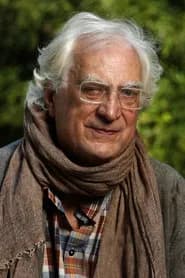
Self

Myths die hard, and the history of the 20th century is no exception to this rule. Even today, we hold popular beliefs that we take for Evangelical truths. Thus, we believe that Hiroshima caused Japan to surrender, that the Marshall Plan saved Europe, that Adolf Hitler was a military genius, or that Mao Zedong was a necessary evil for China’s modernization. Of course, these judgements contain some truth; but, too broad-stroked to be accurate, they contradict the historical reality by denying its complexity. What if the truth was slightly different? Through an exploration of great national or international myths, this full archive documentary collection revisits the key moments of the 20th century with a new perspective in order to provide a new, smarter and more subtle interpretation, bringing elements to light that have been forgotten or sometimes overshadowed.

For centuries, explorers have searched for the Bible’s most sacred religious artefacts. One of the most mysterious of these objects is the famed Ark of the Covenant. The gold-plated wooden chest – one of the most instrumental symbols of faith and God's presence – was believed to house the two tablets bearing the Ten Commandments. The Ark’s exact whereabouts has long puzzled scholars. Where did it go? And why has it remained such a mystery?


Thailand is not just a vacation destination, it is a wealth of culture and beauty. From the dramatic mountains of the North to the very tip of the Malay Peninsula in the South, travel the length and breadth of Thailand in this unique aerial adventure. Discover glimmering coastlines, hidden Khmer temples, luscious mangrove forests, and the traditional majesty of Thailand's historic capital.


In the sixties, Swedish filmmaker Ingmar Bergman (1918-2007) built a house on the remote island of Fårö, located in the Baltic Sea, and left Stockholm to live there. When he died, the house was preserved. A group of very special film buffs, came from all over the world, travel to Fårö in search of the genius and his legacy. (Released in 2013, edited and abridged, as Trespassing Bergman.)

