


Loading titles…
Documentary / News
Making sense of the present by revealing the past. Journalists Celeste Headlee and Masud Olufani connect the present to the past through four distinct and varied stories, and New Yorker humorist Andy Borowitz adds his signature wit.


Learn social media's addictive power. Discover NFL protests’ ties to 1968. See how Wall Street women fought harassment, and a python invasion. Andy Borowitz compares politics ads to cigarettes.

Uncover crime evidence pulled from DNA websites. See how drug rules stem from a pill’s side effects. Learn how a screen addiction cure is rooted in the past and why Americans are ambivalent about robots. Andy Borowitz objects to “no news.”

Learn why crime witnesses fail to act. Meet a Naval officer who transformed the military. Psychedelic drugs like LSD are back in the lab. Follow the voyage of a trash barge that persuaded us to recycle. Andy Borowitz highlights lunar hoaxes.

Hear how President Trump is taking on the press with a time-tested strategy. Learn the origins of vaccine fears. Discover the story behind free agency, and a law that was meant to rescue wild horses. Andy Borowitz bemoans the no-apology apology.
Learn how texting could reduce suicides. See why surrogate parenthood is still being shaped by Baby M. Shine a light on lead, banned but not gone. Climate help may come from the Cold War. Andy Borowitz recalls a flaming river.
Discover the lessons from a 1970s public housing experiment. Understand the roots of newborn testing. Explore head injuries in pro sports. See why too few people, not too many, is a problem. Andy Borowitz takes on Space Force.
Understand immigration controversies that echo the past. Learn the truth about a lawsuit over hot coffee. Uncover the origin of special ops. See how risks are measured after Challenger. Andy Borowitz looks at Anita Bryant’s unintended influence.
Discover how sex ed programs are informed by past failures. Debunk a myth about crime. Uncover the story behind new AIDS hot spots. Learn the legacy of Napster. Andy Borowitz tackles TV bullying.

Herself

Himself

Himself


Nick News with Linda Ellerbee is an educational children's and teenagers' television show on Nickelodeon that has been shown since 1992. Nick News takes the form of a highly rated and recognized news program for children and teenagers alike, discussing important social, political and economic issues in a format intended for both children and adults. The show is famous for allowing normal teenagers to speak out on their own personal opinions on a number of past and current worldwide issues and topics, including events such as Black History Month.

The sparkling notes of a trumpet fanfare and the familiar logo of the sun alert viewers that it's time for CBS's Sunday morning staple. Journalist Jane Pauley helms the show, taking over hosting duties from Charles Osgood, who spent 22 years on the job. A morning talk show, this program airs at a different pace and focuses much of its attention on the performing arts. After a quick update of the day's news and national weather, correspondents offer longer-length segments on a variety of topics, from architecture to ballet to music to pop culture to politics.
Dateline is an Australian television current affairs program broadcast on SBS One. Since its debut at 8:00 pm on Friday 19 October 1984, it has focused largely on international events, often in developing or warring nations. Since 2000, Dateline reporters have travelled by themselves without a camera crew or sound engineers. It remains the longest-running international current affairs program in Australia.


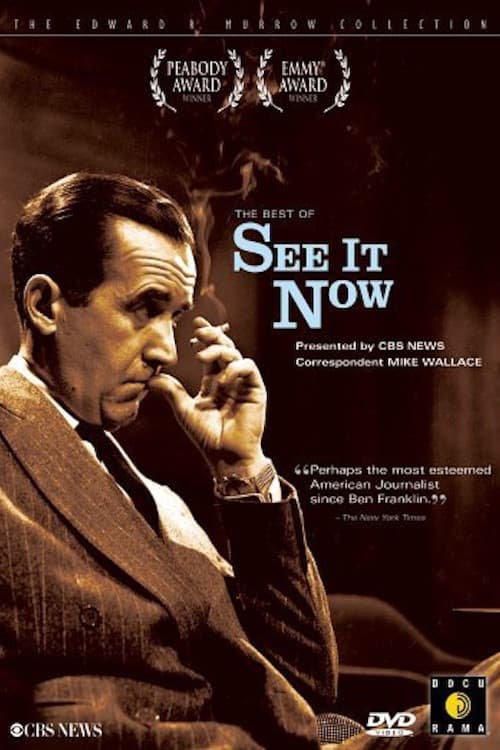
See It Now is an American newsmagazine and documentary series broadcast by CBS from 1951 to 1958. It was created by Edward R. Murrow and Fred W. Friendly, Murrow being the host of the show. From 1952 to 1957, See It Now won four Emmy Awards and was nominated three other times. It also won a 1952 Peabody Award, which cited its

60 Minutes, an Australian version of the U.S. television newsmagazine 60 Minutes, airs on Sunday nights on the Nine Network and is presented in much the same way as the American program on which it is based. The New Zealand version of the show has also featured segments of the Australian version. Gerald Stone, the founding executive producer, was given the job by Kerry Packer and was told: "I don't give a f... what it takes. Just do it and get it right." After the first episode was broadcast on 11 February 1979, Packer was less than impressed, telling Stone: "You've blown it, son. You better fix it fast." Over the years, Stone's award winning 60 Minutes revolutionised Australian current affairs reporting and enhanced the careers of Ray Martin, Ian Leslie, George Negus, and later Jana Wendt. Since it was first broadcast, 60 Minutes has won five Silver Logies, one Special Achievement Logie, and received nominations for a further six Logie awards.


