Loading titles…
Documentary / Crime / Reality
The individual stories of previously convicted child offenders sentenced to mandatory life terms, without parole, who are now seeking resentencing on the heels of a recent United States Supreme Court ruling. While some may be resentenced to life, others could be immediately…


On January 31, 2011, 14-year-old Aaron shot his neighbor, 14-year-old Alana, in her home in Harlem, Georgia. Aaron was sentenced to life without parole at 15, but now 21-year-old Aaron is appealing his sentence.

On April 10, 1995 in Aurora, Colorado, 15-year-old Curtis was one of four teens involved in the death of Christopher as they attempted to steal his car. Curtis was sentenced to life in prison without parole. After 23 years in jail, Curtis has been granted a resentencing and could soon be released.
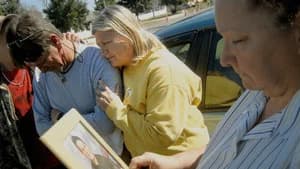
On March 4, 2010, 17-year-old Preston was one of three teens involved in the murder of Christopher during an attempted robbery in Fort Walton Beach, Florida. Along with the other teens, Preston was sentenced to life without parole. Now at the age of 25, he has been granted a resentencing hearing.

On March 7, 1992, 15-year-old Bobby shot girlfriend Krissi's mother and father as they slept in their home in Frisco, Texas. Roz was killed, but her husband Buz survived. Bobby was sentenced to life despite claims he was manipulated into committing the murder. He now hopes to appeal his sentence.

On August 21, 2001, a group of teens, including 15-year-old Brandon, kidnapped and raped Melissa, a 21-year-old college student in Youngstown, Ohio. Brandon was tried as an adult and sentenced to 141 years in prison without parole. Seventeen years later the Ohio Supreme Court agreed that Brandon's sentence is the equivalent of life without parole and therefore unconstitutional. He has been granted the opportunity for a new sentence.

On November 24, 1990, 15-year-old James killed his stepmother and three young brothers with a shotgun, and then set their rural Wyoming home on fire. It was a crime the small town of Thermopolis would never forget. Twenty-seven years later, James' legal team is arguing that his original sentence is unconstitutional and that he should be resentenced.
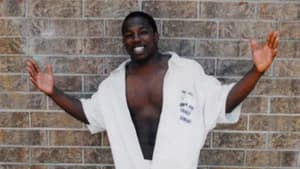
On March 31, 1998 in Albany, Georgia, 16-year-old Otis broke into Valerie's home and allegedly tried to rob her. During the attempt, Valerie and her 16-year-old daughter, Valene, were shot. Valerie died weeks later and although her daughter Valene miraculously survived, she was left disfigured. Otis was sentenced to life without parole. Otis has been granted a re-sentencing hearing, and hopes he can someday be released.

On February 2, 1999, 17-year-old Ronald and two other teens sought to retaliate against Cordell for an alleged sexual assault ultimately burning him alive in the woods of Fort Walton Beach, Florida. Ronald, with the aid of his 16-year-old girlfriend Kristel, brutally tortured and murdered Cordell, and both were sentenced to life without parole. Ronald is now 36 years old, and has been granted a resentencing hearing.

In this special episode, we learn the final rulings for convicted murderers Otis Daniels, Ronald Bell, and Kristel Maestas. Otis' attorney works to strike a deal to make him eligible for parole. Kristel has a resentencing hearing for her role in the 1999 murder of Cordell, while his family testifies against her. Kristel's co-defendant, Ronald, learns his fate.
No cast information available.

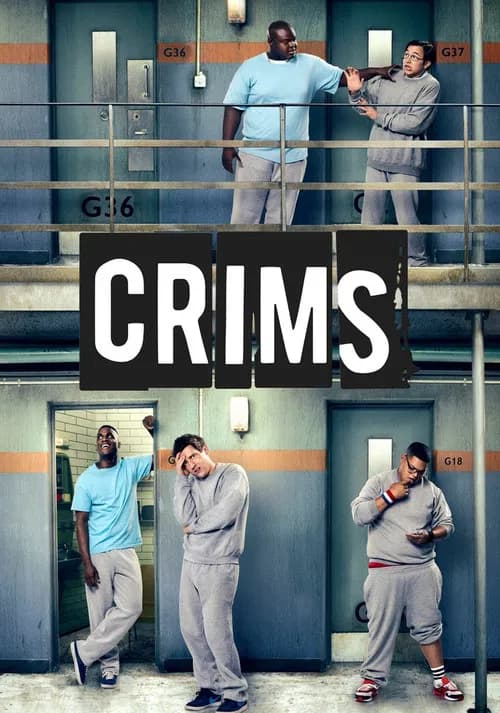
Straight-laced Luke inadvertently gets into trouble when his girlfriend's brother, Jason, decides to rob a bank. The duo are sentenced to the Sunnybrook Young Offender Institution. Once there, Luke finds himself in difficult situations and becomes reliant on Jason's street knowledge; unfortunately, Jason's advice proves useless. Under the watchful eye of prison officer Dawn and her colleague, Greg, the lads adjust to life on the inside.


Driven was a motoring television programme launched by Channel 4 in 1998 as a rival to the successful and long-running BBC series Top Gear. The style was similar to its rival, but with additional features such as the "Driven 100", a road test of three cars in the same class, where each car would be given marks for qualities such as practicality, desirability and cost of ownership. The car with the highest total score would be the winner. The programme launched with the concept that the presenters should interact with each other rather than present items on their own, as was then the case on Top Gear. The first series also featured a "headquarters", a racing team truck, set on a former air force base at which cars were put through their paces. These concepts resurfaced in the reborn Top Gear soon after.