


Loading titles…
Documentary / Drama / Music
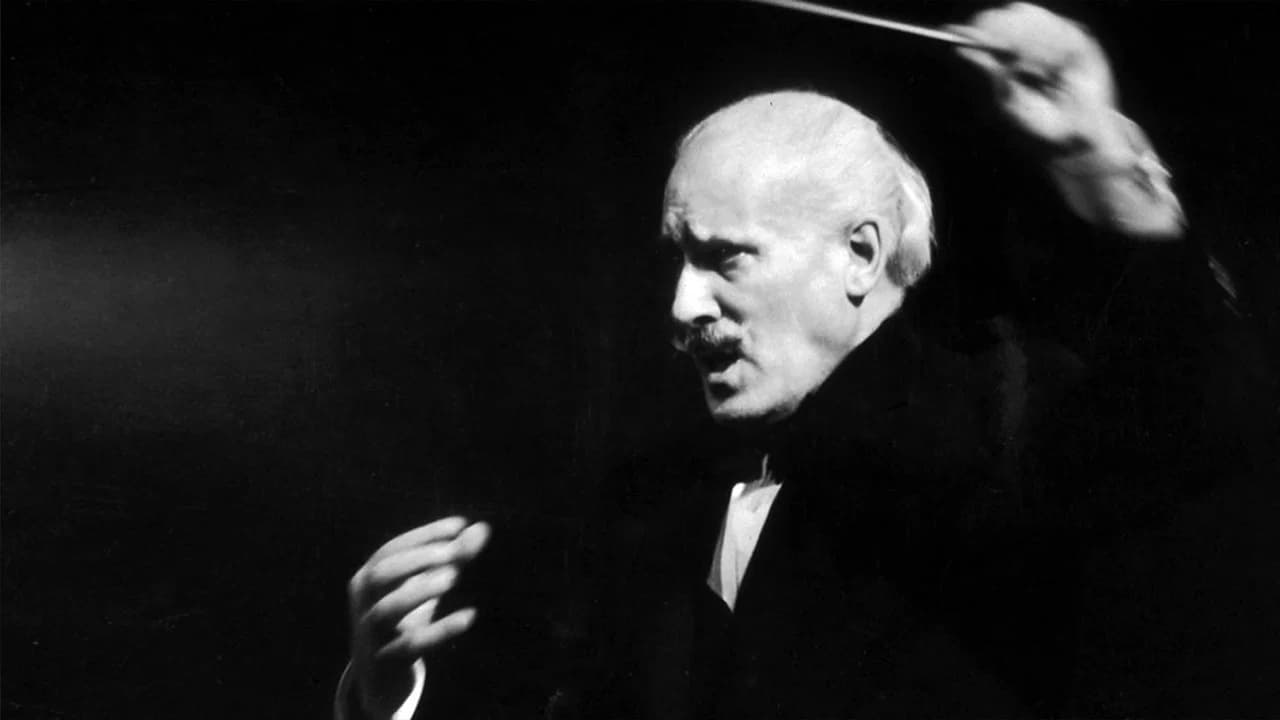
This film is a docufiction on the great Toscanini directed by well-known filmmaker Larry Weinstein; who pushes the boundaries of conventional documentary storytelling by borrowing tools from fiction films; including dramatic reconstructions and historical cinematic stylings.

Wilfrid Pelletier

Arturo Toscanini
Self (archive footage)

Iris Cantelli
Wally Toscanini


The first film adaptation, and most faithful, of Noel Coward's 1929 operetta Bitter Sweet. This tells the story of Sarah Linden's romance, the tale begins with Sarah, now older, reminiscing about her first love. As a young girl Sarah falls in love with Carl, a musician, and runs off with him to Vienna. They are happily wed and Carl earns a living conducting a small orchestra. Enter a certain Captain who sets his eye on Sarah and proceeds to shower her with his attentions, much to her dismay.

Diana Damrau and Vittorio Grigolo are opera’s classic lovers in Gounod’s lush Shakespeare adaptation. Director Bartlett Sher’s “brilliant and inspired new production … is a revelation” (Huffington Post), and has already won acclaim for its vivid 18th-century milieu and stunning costumes during runs at Salzburg and La Scala. Emmanuel Villaume conducts the sumptuous score.

The legendary Plácido Domingo brings another new baritone role to the Met under the baton of his longtime collaborator James Levine. Liudmyla Monastyrska is Abigaille, the warrior woman determined to rule empires, and Jamie Barton is the heroic Fenena. Dmitri Belosselskiy is the stentorian voice of the oppressed Hebrew people.

Prince Abesalom runs into an orphaned Eteri while hunting, falls for her and brings the woman to his palace as his fiancé. The Prince’s aid Murman loses his self-control at Eteri’s beauty and gives her a spelled necklace as a wedding gift. Eteri contracts a mysterious disease that only Murman is capable to heal.
A concert performance of the most famous parts of Dvořák's opera Rusalka in the park of Liteň Castle, directed by the Caban brothers with multimedia elements and original choreography... The year 2021 marks an important milestone in the history of Dvořák's opera Rusalka, which premiered in 1901, 120 years ago. At the same time, the non-profit organization Liteň Castle and the Jarmila Novotná Festival are celebrating ten years of activity. Its mission is to popularize the name of the legendary diva, actress, patriot, and important personality Jarmila Novotná and to care for the cultural monuments on the grounds of Liteň Castle—and on the occasion of both anniversaries, it did so with an extraordinary performance of the opera Rusalka in the picturesque surroundings and magical summer atmosphere of Liteň Castle.

It took Anna 10 years to recover from the death of her husband, Sean, but now she's on the verge of marrying her boyfriend, Joseph, and finally moving on. However, on the night of her engagement party, a young boy named Sean turns up, saying he is her dead husband reincarnated. At first she ignores the child, but his knowledge of her former husband's life is uncanny, leading her to believe that he might be telling the truth.

Deep in a forest where druids and warriors seek revenge against the conquering Romans, Norma is scorned by the Roman proconsul Pollione, with whom she has two children. Her kindness turns to fury when she discovers that Pollione has taken Adalgisa, a novice priestess, as his new lover. When Pollione loses his high rank in the army and is offered as a sacrifice, Norma promises him freedom under one condition.

After the acclaimed Met premiere of Thomas Adès's "The Tempest" in 2012, the composer returned with another masterpiece, this time inspired by filmmaker Luis Buñuel's seminal surrealist classic "El Ángel Exterminador", during the 2017–18 season. As the opera opens, a group of elegant socialites gather for a lavish dinner party, but when it is time to leave for the night, no one is able to escape. Soon, their behavior becomes increasingly erratic and savage. The large ensemble cast tackles both the vocal and dramatic demands of Adès's opera with one riveting performance after another. Tom Cairns, who also penned the work's libretto, directs an engrossing and inventive production, using a towering wooden archway to trap the characters onstage. And Adès himself takes the podium to conduct the frenzied score, which features a host of unconventional instruments, including the eerie electronic ondes Martenot.
