Loading titles…
Self
Self
Self
Self
Self
Self

A documentary in which retired industrial workers reflect on the promises and anxieties of retirement. Beginning with the Budd Company’s “Retirement Ceremony” in Philadelphia, the film explores how leaving work can mean the loss of routine, identity, and a sense of accomplishment, even as it marks a long-anticipated milestone.
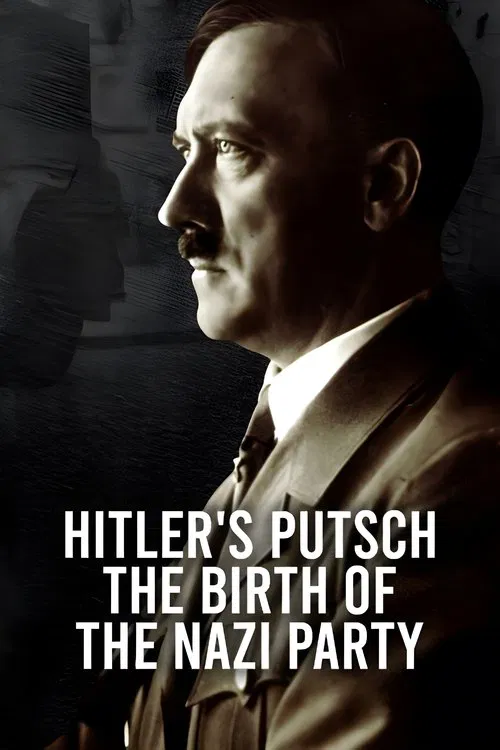
The night of November 8, 1923, is arguably the most significant and transformative in the history of the twentieth century. A localised uprising in the Bavarian capital of Munich, led by a small man with a toothbrush moustache and a poisonous yet compelling grandiloquence, would have repercussions that would lead to the political shackling of an entire nation, the most abhorrent crimes of the century and a world war. You might say, Adolf Hitler came of age amid the smell of sweat and sawdust of a Munich beer hall. In the political chaos of 1923, he was a local irritant, gaining popularity among workers and soldiers, the ethos of his Nazi Party spreading like a virus. His first attempt at attaining true power came with an attempted putsch on the already separatist government of Bavaria, which left him imprisoned.

Marzena Sowa is a quintessential contemporary European: independent, aware of how the world works—or should work—and single. After her mother’s death, she is consumed by longing and sets off for her distant homeland, a Polish village where her beloved aunt Niuszka—an embodiment of joie de vivre and peace with herself—lived her entire life under the heavy weight of patriarchy. The film becomes a collision of social models, resolved with an open ending.

Explration of today’s East German identity, shaped by history, hopes, and upheaval. Through multimedia storytelling, it explores lives between the Elbe and Oder, intergenerational socialization, and self-perception three decades after reunification. Are the new Länder lost to nostalgia and extremism or still salvageable?
Early summer 1990: West German money transporters carrying billions of Deutschmarks roll towards the former GDR. From the inner-German border, the People's Police and the heavily armed National People's Army take over guarding the transports. Over 25 billion Deutschmarks are transferred from West to East within a few weeks. On July 1, 1990, the German-German monetary union takes place. The citizens of the former GDR were to hold the D-Mark in their hands from this point onwards, but a huge amount of work had to be done before this could happen. 441 million banknotes had to be printed and 102 million coins minted. This is because the organizers of the Bundesbank barely had time to prepare for the largest money transport in history. Many contemporary witnesses describe their experiences in the documentary, which gives an insight into the exciting months before monetary union, the consequences of which still have an impact today.

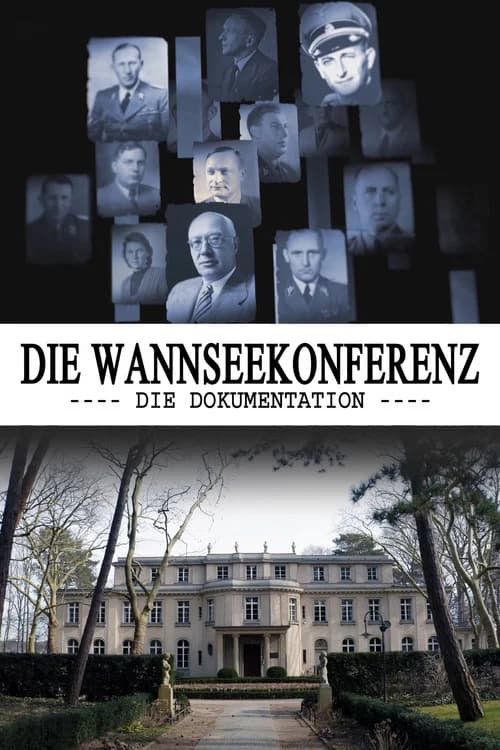
It was arguably the deadliest conference in human history. The topic: plans to murder 11 million Jews in Europe. The participants were not psychopaths, but educated men from the SS, police, administration and ministries. The invitation to the meeting at Wannsee came from Reinhard Heydrich, head of the Reich Security Main Office. The Wehrmacht's campaigns of conquest in Eastern Europe marked the beginning of the systematic murder of Jews in Poland and the Soviet Union. In mid-September 1941, Hitler made the decision to deport all Jews from Germany to the East. Although there had been transports before, Hitler's order represented a further escalation in the murderous decision-making process. Persecution and discrimination had been part of everyday life since 1933. But as a result, the living conditions for the Jews in the Third Reich became even more difficult, among them the Berlin Jew Margot Friedländer, born in 1921, and the Chotzen family.