Loading titles…
Documentary
Shows how the spectroscope, radio and optical telescopes are used to provide information about the origin of comets, meteors and planetoids. Special effects show the meteor shower of 1833, the approach of Halley's comet and the movements of planetoids.
No cast information available.
214 million years ago a gigantic meteorite broke up and impacted Earth. 65 million years ago, the impact that killed the dinosaurs occurred where the country of Belize stands today. 200 thousand years ago early humans were walking and died when they were hit by a 40 meter wide meteorite hit South Africa creating a 1.4 km wide crater. This meteorite fragment, the largest ever found hit Namibia 80 000 years ago and more recently a major impact occurred in Toungouska, Russia in 1908. Every year 10 000 tons of meteoritic matter fall onto Earth in much smaller but not necessarily less influential pieces. This film will explore how the impact of these meteorites big and small through the ages have changed our world and what they brought from outer space with them that may have been the seed of life itself on Earth.
Imagine a time when Earth was a molten, volcanic wasteland, constantly bombarded by colossal asteroids. We’ve long feared these cosmic impacts as destroyers of life – just ask the dinosaurs – but what if they were the key to our very existence? Explore a revolutionary new theory suggesting that these violent collisions provided the essential ingredients – water, minerals, and energy – needed for life to ignite on our planet. Discover how scientists are unearthing evidence from lunar rocks and ancient impact craters, revealing that the very objects once thought to extinguish life might have actually sparked it.

The film features amazing scenes of places never before seen gathered by key space missions that culminated with groundbreaking discoveries in 2015. It features a spectacular flight though the great cliffs on comet 67P, a close look at the fascinating bright "lights" on Ceres, and the first ever close ups of dwarf binary planet Pluto/Charon and its moons.
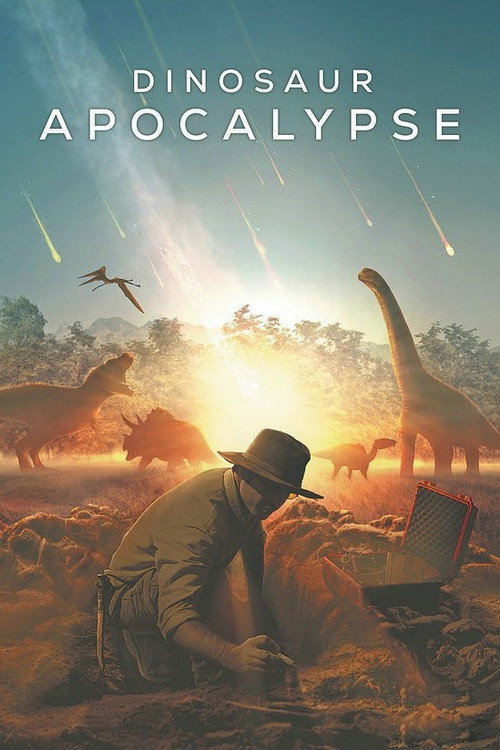
In the Badlands of North Dakota, a team of scientists think they might have found the fossilized remains of animals killed on the day an asteroid struck Earth 66 million years ago. The evidence points to a catastrophic event, with a jumble of rare fossils, including a pterosaur embryo still in its shell and a well-preserved patch of triceratops skin, mixed in with tiny spheres of clay and glass that could be the fallout from the massive asteroid impact. Sir David Attenborough guides us on a search for clues that could give an unprecedented snapshot of what happened in the dinosaurs’ final moments on Earth.
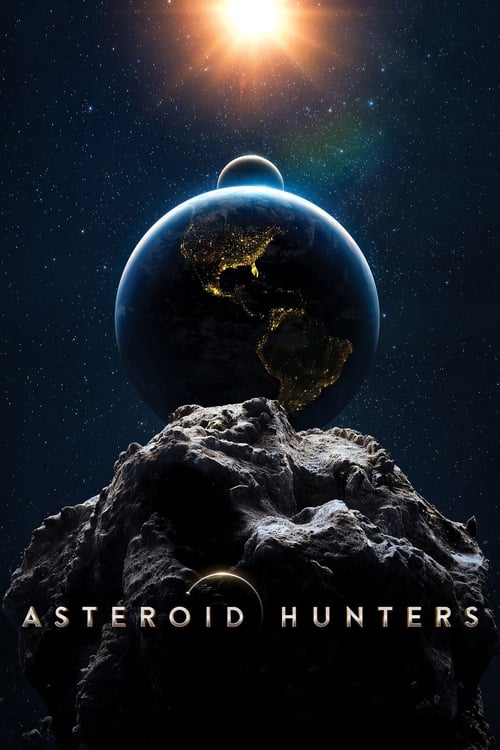
Venture into deep space for a fascinating look at asteroids, their cosmic origins and the potential threat they pose to our world. Written and produced by Phil Groves, produced by Jini Durr and directed by W.D. Hogan, Asteroid Hunters introduces asteroid scientists – the best line of defense between Earth and an asteroid’s destructive path – and reveals the cutting-edge tools and techniques they use to detect and track asteroids, and the technology that may one day protect our planet. The effects of an asteroid impact could be catastrophic and while the current probability of an event in our lifetime is low, the potential consequences make the study of asteroids an incredibly important area of scientific research. Witness the latest in planetary defense and how science, ingenuity and determination combine to explore the world’s most preventable natural disaster.
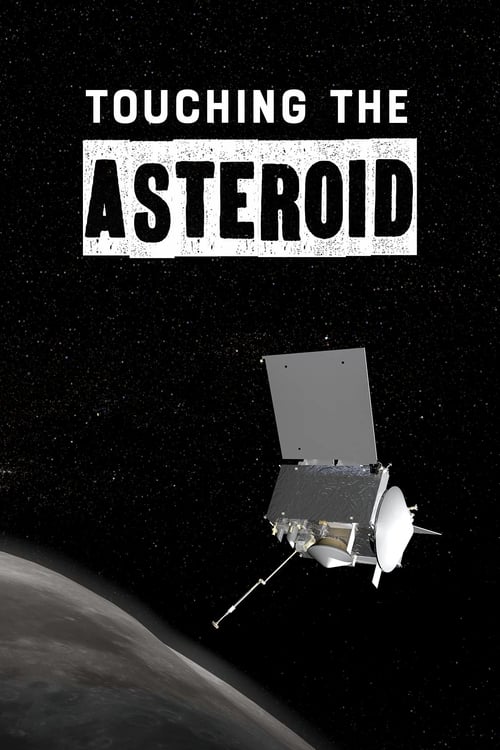

The asteroid that exploded over Siberia, injuring more than 1,000 and damaging buildings in six cities, was a shocking reminder that Earth is a target in a cosmic shooting range. From the width of a football field to the size of a small city, these space rocks have the potential to be killers. In a collision with Earth, they could set off deadly blast waves, raging fires and colossal tidal waves. But some audacious entrepreneurs look up at asteroids and see payday, not doomsday. Some asteroids are loaded with billions of dollars’ worth of elements like iron, nickel and platinum. NASA is planning an ambitious mission to return samples from a potentially hazardous asteroid, and would-be asteroid miners are dreaming up their own program to scout for potentially profitable asteroids. Will asteroids turn out to be our economic salvation or instruments of extinction?