Loading titles…
No cast information available.

Sex reassignment surgery is now almost a commonplace procedure, but back in the early 20th century, it was seen as 'science fiction surgery'. When the news broke of a successful first attempt, it was a sensation. This is the gripping story of three extraordinary people: the world's first person to undergo a female to male transition; the former Spitfire pilot who became Britain's first to transition from male to female; and the daring advanced plastic surgeon who carried out these surgeries in the 1940s. Michael Dillon - previously named Laura - had persuaded the brilliant Sir Harold Gillies, the founding father of plastic surgery, to carry out the female-to-male operation that no surgeon in the world had ever attempted. Both then helped former race car driver and wartime pilot Robert Cowell undertake their own transition.
The daughters of Title IX discover that pervasive gender-based stereotypes and discrimination persist within the high stakes professional world of surgery - a workplace designed for and and still controlled by men. Since 2003, half of medical students in the US have been women. Women remain in the minority in most surgical fields but their proportion is increasing. Leadership and culture in surgery remain disproportionately and persistently male despite ample evidence that women are just as good (and possibly better) at delivering care. Systemic barriers to success for women surgeons must be confronted and addressed for the surgical workforce to stay healthy and for patients to stay safe. We’ve interviewed dozens of surgeons who are women about their experiences, hopes, dreams and careers. This is a group of extraordinarily dedicated physicians who work every day to improve the health and lives of others despite untold challenges.
In this inspirational documentary we witness the contributions of nine remarkable women to the island of Aruba. Driven by their love of family and a passion for making a difference, they strive relentlessly to improve the socio-economic and cultural landscape of their beloved homeland. All without expecting anything in return.
It used be that everyone knew what it meant to be a man. A man was rugged and reliable and got the job done. But then came the worst recession in 80 years. So what happens now that the job is gone? The End of Men is a compelling new documentary that takes a profound look at how men are coping with the evolving role of masculinity in today's world, where the old rules no longer apply.
A Woman's Place is the first film about the UK women's liberation movement. Crockford and her co-producers Ellen Adams and Tony Wickert document the movement's first national conference and march and examine its demands. The film records impassioned discussions and speeches, as well as the humour of the marchers. It also includes interviews with members of the public who give their perspective on women's liberation Crockford made the film as an attempt to see 'whether other people could be engaged by what I believed in'.
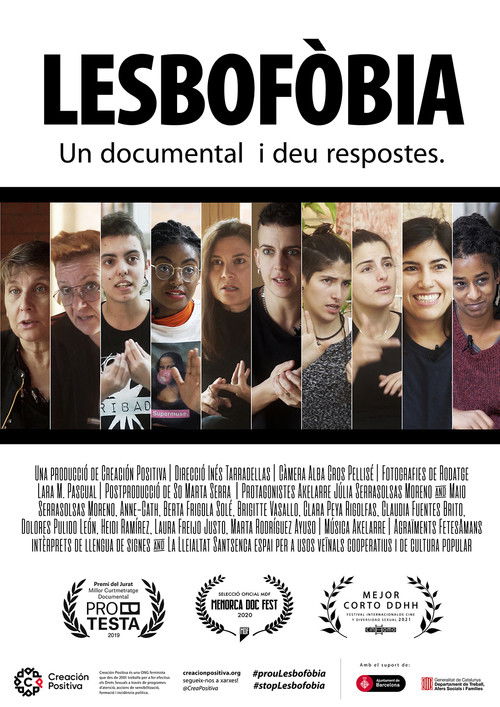
What situations of violence do lesbians experience today? How do they face them? What are the underlying problems? What reality permits them to keep happening? What answers and strategies can we produce and put into practice as a society to do away with this and other forms of discrimination? Ten individuals explain their experiences and points of view, building a choral testimonial to bring male sexist violence against lesbians into the light, analyze the underlying problems, and seek responses and strategies to put an end to lesbophobia in conjunction with other types of violence.

For a long time, the Bonn Republic was a smoke-filled place with heavy leather armchairs occupied by old men. Women were largely excluded from the “men’s sport” of politics. In *THE UNYIELDING*, the leading female politicians of that era now recount how they fought for a voice and power in the face of all opposition—throughout, and indeed especially during, the major crises and debates of the Bonn Republic. “Women, if we do nothing today, we will live tomorrow as we did the day before yesterday.” Annemirl Bauer, 1988
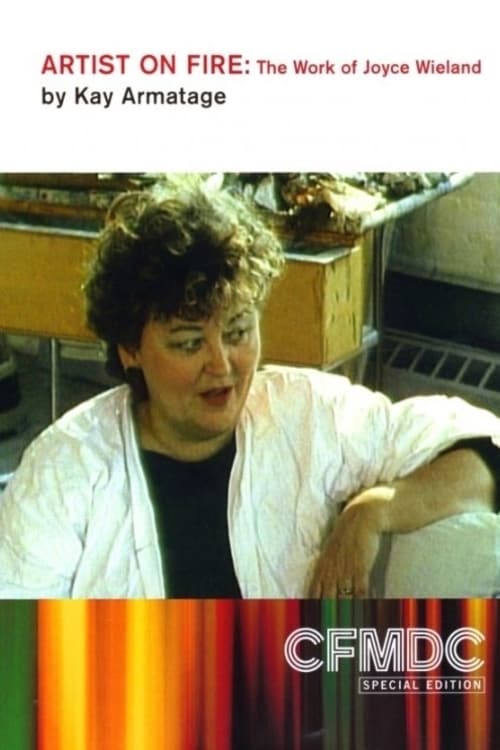
Considered one of Canada's most important women artists of the second half of the 20th century, Joyce Wieland's art embodies the essence of her homeland, feminism, and ecology. Artist on Fire: Joyce Wieland captures the vibrant spirit of this painter, collagist, quilt maker, and filmmaker. In the early '70s, Wieland was involved in filmmaking, producing movies with a political message. In her 30-year career, she worked in a variety of mediums, including cloth, pastels, colored pencil, oils, bronze, and watercolor. Her works and her influence are examined in this detailed video portrait.