


Loading titles…
Documentary
What happens when subcontracted precarious workers turn into podcast DJ. Subcontracted precarious workers at the SK Broadband, Inc. began a podcast titled ‘Workers Have Changed!’ to broadcast the story about their strike for job security. The podcast studio becomes a theater of…
No cast information available.


A Mauritanian worker, Sidi, works in France. Like most immigrant workers, he is employed to do the most difficult and dangerous jobs. Sidi and his comrades are exploited systematically and permanently, as much by their employers as by their own countrymen who are constantly able to offer false working papers, slums where immigrants buy at high cost their right to sleep. But faced with racism and economic exploitation, immigrant workers communicate, organise...

In the late 1960s and early 1970s, girls aged 12 to 16 began working at Pyeonghwa Market. Running sewing machines, they also study the Labor Standards Act under the tutelage of Jeon Taeil. On September 9, 1977, they were imprisoned fighting against the government that closed labor classes, shouting, “The next Jeon Taeil will be a woman!” Now the middle-aged girls recall the memories of the life of female workers, social contempt, and stigma. Watching the sunrise in the East Sea, they admire, ‘How fair it is because everybody can see it.’ Sewing Sisters rewrites the history of maledominated Korean labor struggles in the 1970s with news interviews of female workers belonging to the Cheonggye Clothes Union.


Auguste Lumière directs four workers in the demolition of an old wall at the Lumière factory. One worker is pressing the wall inwards with a jackscrew, while another is pushing it with a pick. When the wall hits the ground, a cloud of white dust whirls up. Three workers continue the demolition of the wall with picks.

A film about non-territorial office space, multi-mobile knowledge workers, Blackberries and Miles&More. A road movie discovering the working world of tomorrow. This documentary will take you on a journey through the post-industrial knowledge and services workshops, our supposed future working place. In this new world work will be handled more liberally. Time clocks cease to exist. Attention is not compulsory any more. The resource “human“ comes into focus. The film closely follows the high-tech work force – people who are highly mobile and passionate to make their work their purpose in life. Further episodes resume this topic and lead into the world of modern office architecture and into the world of Human Resource Management.
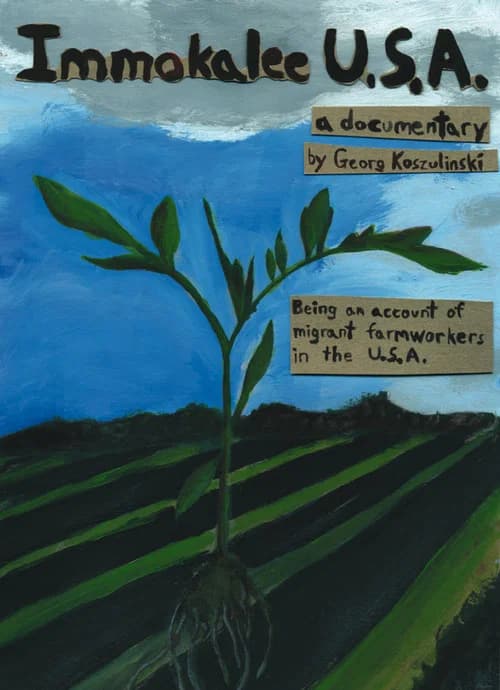
Every season, tens of thousands of migrant farmworkers converge on small communities like Immokalee, Florida where they plant and harvest the food that Americans consume. A vast majority of these workers are undocumented, leaving them at the mercy of the large agribusinesses who hire them, the crew leaders who contract them and the landlords and businesses that profit from the seasonal arrival of migrant workers. Their "undocumented" legal status allows for a system of exploitation that leaves workers and their families to endure conditions and wages that rarely meet international human rights standards. Immokalee U.S.A. documents these daily experiences, leading the viewer to examine their own role in the issues migrant workers face in the U.S.A.
In 1977, the workers of the INAVE vehicle assembly company went on strike. This strike was declared legal, one of the few registered in the country. This strike was also a strike that demanded great sacrifice from the workers. It lasted more than three months, more than three months without pay and in constant struggle, until the strikers finally achieved their victory.


The drastic economic development in South Korea once surprised the rest of the world. However, behind of it was an oppression the marginalized female laborers had to endure. The film invites us to the lives of the working class women engaged in the textile industry of the 1960s, all the way through the stories of flight attendants, cashiers, and non-regular workers of today. As we encounter the vista of female factory workers in Cambodia that poignantly resembles the labor history of Korea, the form of labor changes its appearance but the essence of the bread-and-butter question remains still.