Loading titles…
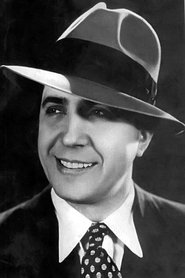
Carlos Acuña
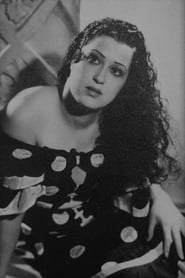
Rosario Aguilar
Juanita

González
Esteban Márquez
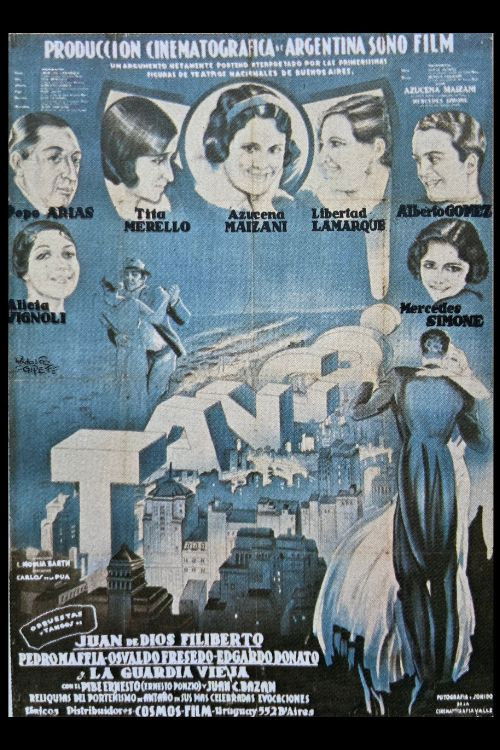
¡Tango! follows a formula established by Carlos Gardel with films such as Luces de Buenos Aires (The Lights of Buenos Aires, 1931) in which a melodramatic story is interspersed with tango songs. However, the film had less dialog and more music, making it more like a musical revue. This format would be copied by many subsequent films. The plot is derived from tango songs. Many of these songs tell of the seduction of an innocent slum girl by a rich man who promises her a glamorous life, but who abandons her when her looks fade. The stylized and sentimental plot of ¡Tango! revolves around a young man who is abandoned by his girlfriend for an older rich man and is heartbroken. The film follows his misfortunes.


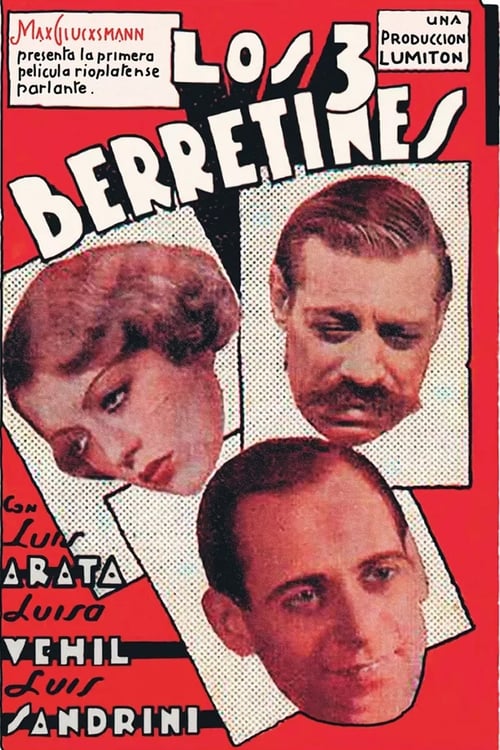
The members of a Buenos Aires family have three hobbies — "berretines" in Buenos Aires slang — that keep them apart of their duties. Because of that, the family business is going down, and the only one who is concerned is the father, who hopes for his fourth son, an architect, to save the situation.
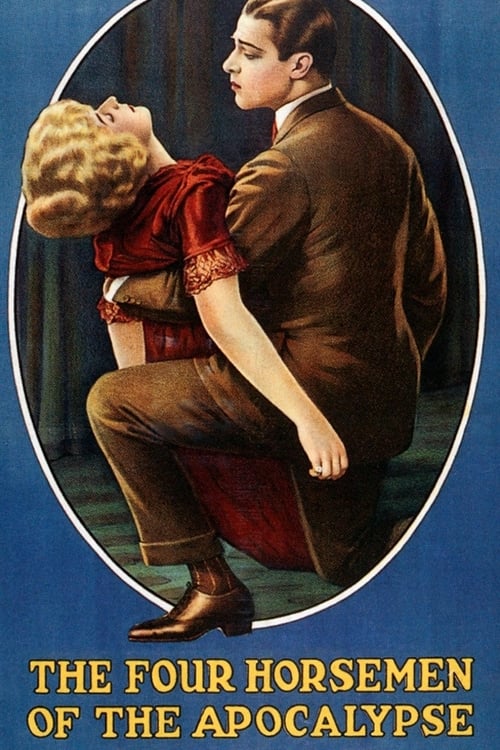
Set in the years before and during World War I, this epic tale tells the story of a rich Argentine family, one of its two descending branches being half of French heritage, the other being half German. Following the death of the family patriarch, the man's two daughters and their families resettle to France and Germany, respectively. In time the Great War breaks out, putting members of the family on opposing sides.
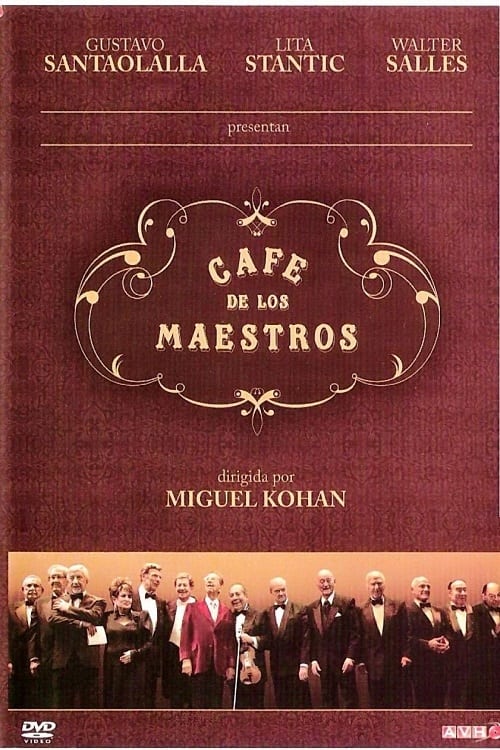
Coffee Masters is a documentary by Miguel Kohan, produced by Lita Stantic, Gustavo Santaolalla and Walter Salles. It tells the story of great tango of the old guard who, summoned by a rock musician, proposing a record to demonstrate its validity. This adventure, full of memories, humor and poignant moments, culminating with a presentation of the Masters at the Teatro Colon.
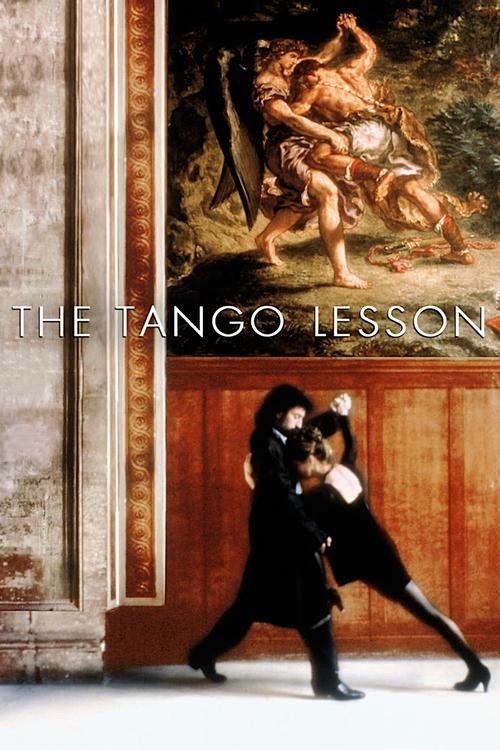
On a trip to Paris Sally meets Pablo, a tango dancer. He starts teaching her to dance then she returns to London to work on some "projects". She visits Buenos Aires and learns more from Pablo's friends. Sally and Pablo meet again but this time their relationship changes, she realises they want different things from each other. On a trip to Buenos Aires they cement their friendship.

Five young dancers are obsessed with tango, far from its homeland Argentina: in the Black Forest. Helena, Susanna, Christian, Joscha and Ruben are all single. Their all-consuming passion is a dance with rigid gender roles and hierarchical rules. How does this conflict with modern, everyday life? How are relationships and the longing for a partner affected by the tango life? "Tango on a Visit" unmasks the unique subculture and the emotional conflicts which are normally hidden behind the elegant spectacle of the erotic dance.