Loading titles…
No synopsis available.
No cast information available.

The two brothers Jean and Pierre Ravier have opened almost all the "classic" (difficult) routes in climbing and mountaineering in the Pyrenees. Roped together at the waist using a few flat knots and little equipment, the two twin brothers achieved more than 200 firsts across the entire massif. A unique style and commitment, a state of mind made up of adventure, literature, inventiveness and friendship. Unclassifiable and outgoing, after 60 years of Pyrenees, their desire for the mountains is intact. When does a race start? How does the idea, the desire, come about? What sense does it make to only achieve firsts? And what is the role of the Pyrenees themselves in this reciprocal and endless game of attraction?
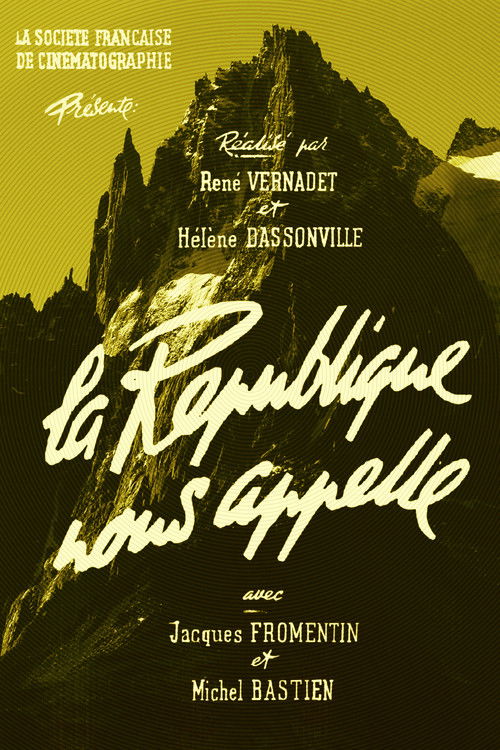
The story of the ascent of the Aiguille de la République by mountaineers Jacques Fromentin and Michel Bastien. The Aiguille de la République, in the Mont-Blanc massif, culminates at an altitude of 3,305 meters among the Aiguilles de Chamonix group of summits. In the Fontainebleau forest, children learn mountaineering techniques on the bouldering climbing site. In 1954, rock climbing was also practiced in the Chamonix valley. The Montenvers train crosses the viaduct taking tourists or athletes to the Mer de Glace viewpoint. The two climbers take an approach step and reach the Envers des Aiguilles refuge. They then climb this steep and smooth wall, progressing along the ridge. On the platform, a rope throw allows them to climb up and sit at the top to dominate the panorama. Then the return: abseiling from the summit block.
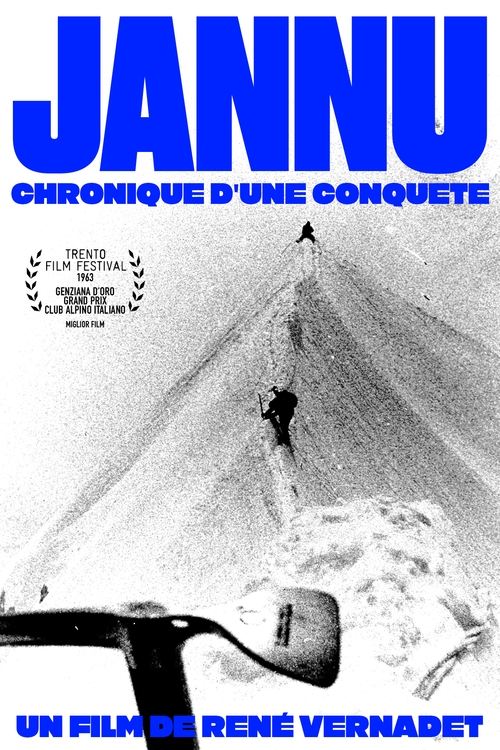
Three years after the 1959 expedition, abandoned 350m from the summit, Lionel Terray leads a new assault on Jannu, one of the most demanding peaks in the Himalayas. At the base camp, equipment and food rations are prepared. The conditions are optimal and the ascent can begin. The camera follows the progress of the mountaineers and Sherpas as closely as possible, from one high-altitude camp to another: installing fixed ropes, progressing over crevasses, in the middle of frozen towers, vertically down immense ice falls or along the edge of sharp ridges. From 7000m, oxygen bottles become essential, as the difficulty of the climb prevents acclimatization. The expedition is a total success: the majority of its members reach the 7710m summit.
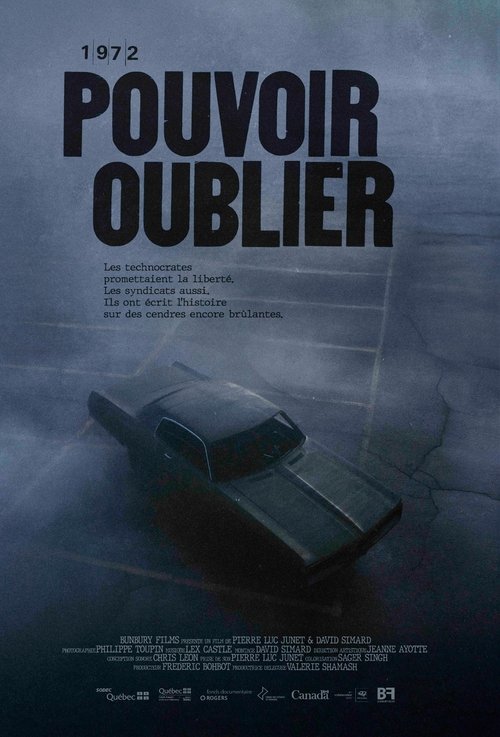
Pouvoir Oublier is a political documentary first constructed from the words of the speakers whose lives changed on the tragic day of May 10, 1972 in Sept-Îles. Their word will be juxtaposed with archival material from the events, some of which are unpublished, which will reflect the collective euphoria in which Sept-Îles and all of Quebec were then bathed.
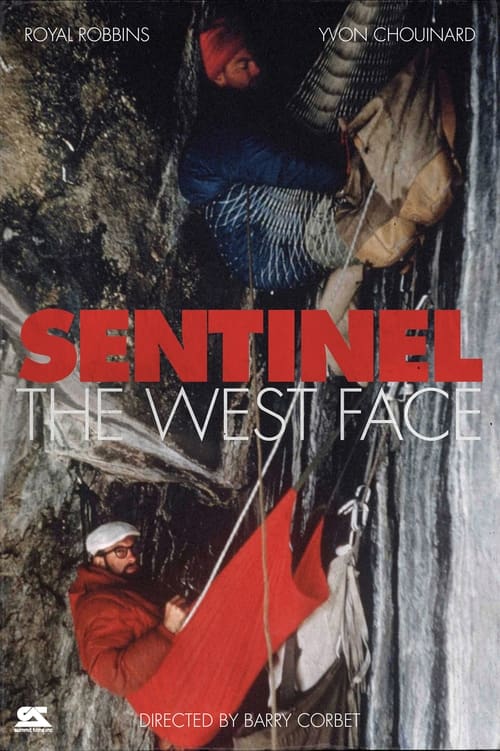
1967: Two of the world's best climbers, Yvon Chouinard and Royal Robbins, tackle the west face of Sentinel Rock, an iconic 2,100-meter granite peak located in Yosemite National Park, considered one of the most difficult in the world. The film's atmosphere is immersive, driven by a sober narrative that highlights the intimate relationship between man and the wall. The technical difficulty of the route, the prolonged physical effort, and the isolation reinforce the heroic dimension of this ascent. The documentary also reveals the essential solidarity between the climbers: each progression requires rigor, inventiveness, and total trust in both the equipment and the partner. This film is considered a benchmark in the history of mountain cinema. It testifies to the pioneering spirit of the era and the evolution of climbing techniques, perfectly illustrating the transition to a more athletic and thoughtful approach to large rock faces.
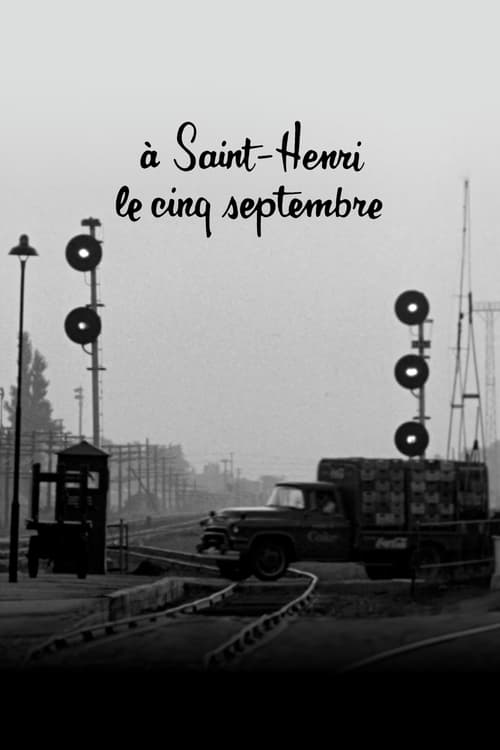
This short film is a series of vignettes of life in Saint-Henri, a Montreal working-class district, on the first day of school. From dawn to midnight, we take in the neighbourhood’s pulse: a mother fussing over children, a father's enforced idleness, teenage boys clowning, young lovers dallying - the unposed quality of daily life.
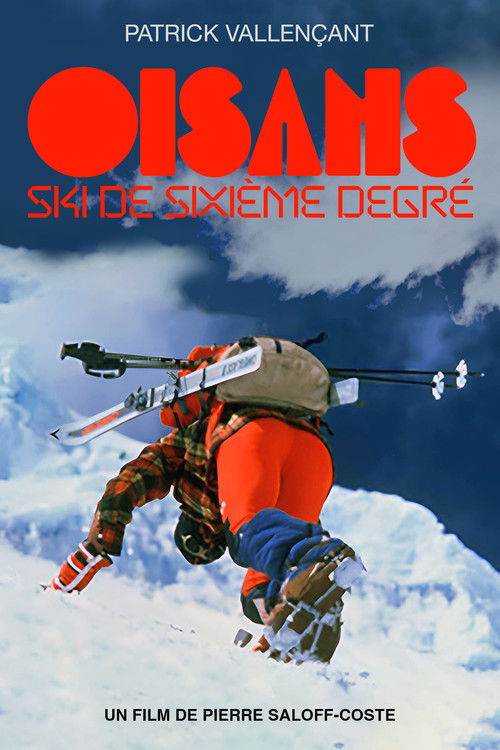
In 1975, Patrick Vallençant skied in some very challenging couloirs in the Oisans region: the north couloir of the Col du Diable, the north couloir of the Coup de Sabre, the couloir of the Pic sans Nom, the Barre Noire couloir in the Écrins massif, and the Gravelotte couloir on the Meije. He was accompanied by Jean-Marc Boivin, P. Guillet, P. Perrier, Gérard Pétrignet, Jacques Ramouillet, Pierre Saloff-Coste, and Joseph Spagnolo. In the second part of the trip, Vallençant completed a circuit of the Meije in three mixed-mountain ascents and, above the avalanche debris, skied off-piste through the steep couloirs and glaciers of the Oisans. He then climbed the routes to the summit of the Meije alone, following the stages of a high-mountain itinerary from the Refuge de l'Aigle.
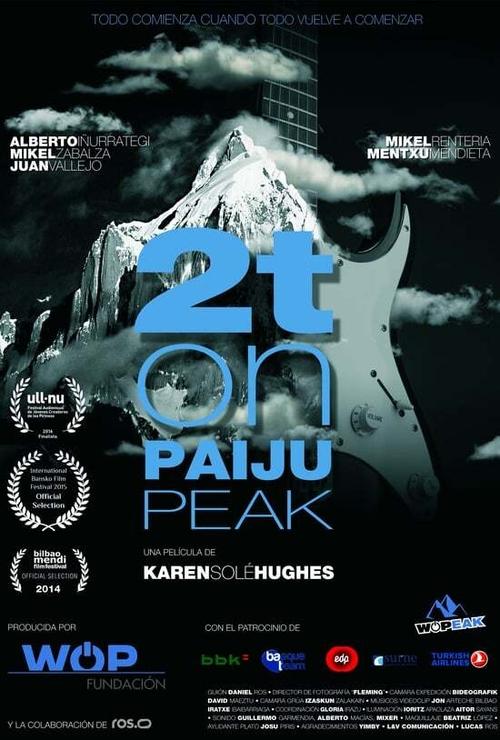
In 2013, Alberto Iñurrategi, Juan Vallejo and Mikel Zabalza desist in their attempt to climb Paiju Peak (6,610m). A year later, his steps cross with Mikel Renteria and Mentxu Mendieta from the WOP Foundation, who decide that the second attempt at Paiju Peak will be the first stage of their WOPeak project. The three members of the cordada land again in Pakistan. Identical scenery, the same objective and a maximum motivation for a challenge beyond mountaineering in a route full of emotions that ends with the opening of a new road in the heart of the Karakorum that they christened '2t'.
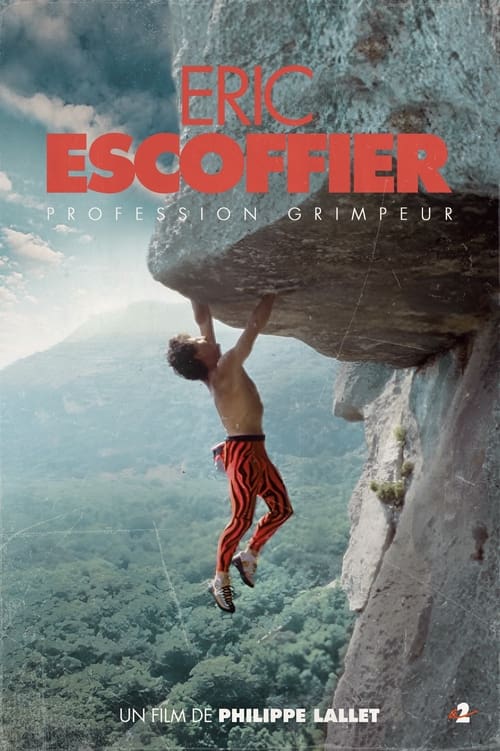
A documentary portrait of the legend Eric Escoffier at the height of his mountaineering career. A true athlete, Escoffier has comprehensive, cutting-edge preparation in three different climbing disciplines: rock climbing, ice climbing and solo free climbing, without any safety devices. Philippe Lallet's camera follows Eric in his performances and in his preparation for one of the first La Sportroccia climbing competitions, in 1985 in Bardonecchia in Italy.