Loading titles…
Documentary
The triumphs and failures of the men and women who created the world's first atomic bomb as part of the Manhattan Project at Los Alamos. This the story of the men and women who worked on a research and development project that produced the first nuclear weapons during the Second…
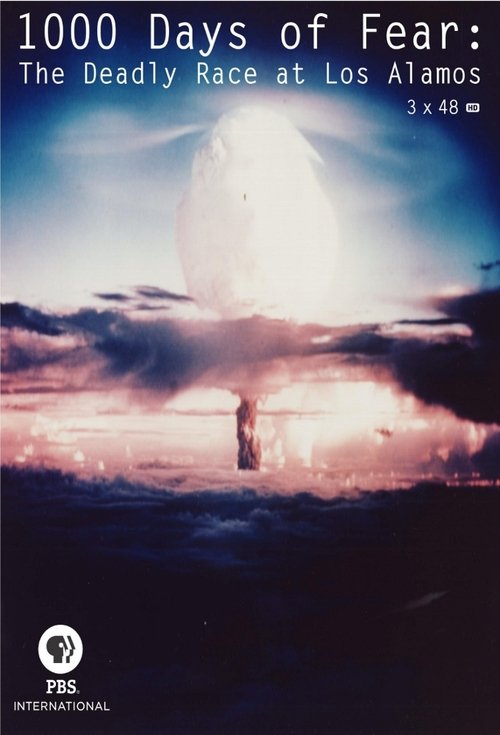
1000 Days of Fear is the inside-the-barbed-wire story of the brilliant men and women who worked on the Manhattan Project at Los Alamos. The fascinating personalities behind the creation of the world’s first atomic bomb were as extraordinary, and often as explosive, as the science they were working in. Through first-hand accounts, never-before-seen interviews, and Los Alamos lore, this documentary looks inside these atomic insiders’ hearts and minds, their triumphs and failures, their bravery in the face of paralysing fear and, ultimately, their war-winning and world-changing accomplishments.
The concept of splitting the atom and its possible implications was known to scientists across the world before the outbreak of the Second World War. President Franklin Roosevelt had been alerted to the energy generated by a nuclear chain reaction as early as August 1939, in a letter signed by Albert Einstein, which warned of the destructive possibilities of a bomb which harnessed such technology. Although Einstein did not participate in the project, not least due to his pacifist inclinations, he was terrified of the possibility of Nazi Germany developing such a weapon. Roosevelt took the warnings seriously, setting up an advisory committee to report further, but it was not until the United States’s entry into the conflict in December 1941 that decisive action was taken.This episode tells the story of the first testing of the nuclear fission bomb, code-named Trinity, in the New Mexico desert.
By the time the first device was tested on July 16, 1945, President Harry Truman was in the White House. The efforts of those who worked in Los Alamos could not be said to have won the war – by the time the first bomb levelled Hiroshima on August 6, Germany had already surrendered and Japan was near to collapse – but they certainly shortened the conflict and saved thousands of American lives.

Narrator

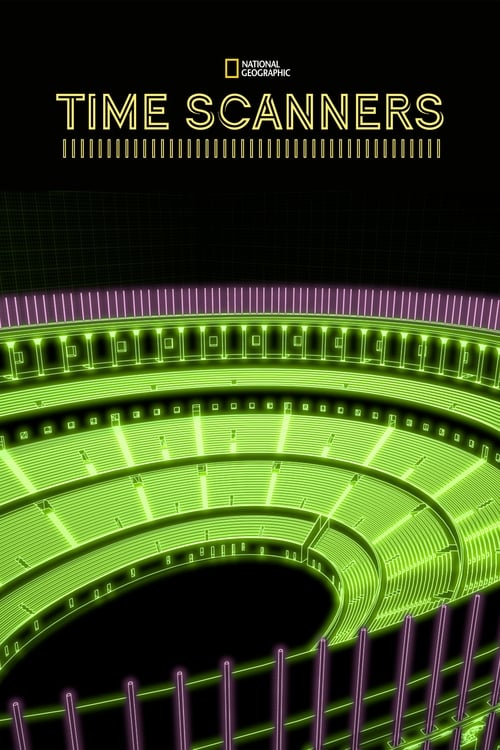
This is your chance to reach out and touch the past! Just as a forensic anthropologist analyses bones, and a historian deciphers ancient texts, we now have the technology to "read" the buildings, ruins and landscapes where history was made. The series, presented by Dallas Campbell, teams Steve Burrows (pictured), the brains behind the Bird’s Nest Stadium in Beijing, with a team of pioneering laser scanning experts from the Centre for Advanced Spatial Technologies to unlock the secrets of the world’s greatest engineering and cultural achievements. Locations include the Colosseum, Petra, Machu Picchu, St. Paul’s Cathedral, the Pyramids and Jerusalem.
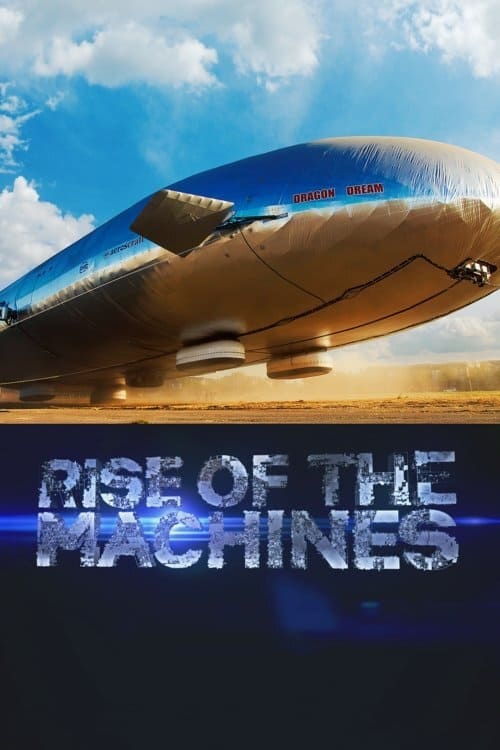
It is 2014 and the machines have not taken over…yet. The newest, most technologically advanced series from H2™, Rise of the Machines, reveals how the inventions behind the world’s most extreme machines have enabled them to evolve beyond humanity’s wildest imagination. This visually stunning series uses mind-blowing CGI animations to reveal the extraordinary engineering at the heart of the world’s most extreme machines. From the world’s biggest mega truck to the world’s fastest train to a revolutionary heavy lift ship, ground breaking CGI animation explodes the machines apart to reveal the ingenious inventions hidden under their skin that enables the teams who drive, fly and sail them to be at the top of their game. This series takes us inside these machines in close up detail and explores what helps these elite ships, trucks, trains and aircrafts rise above all others.

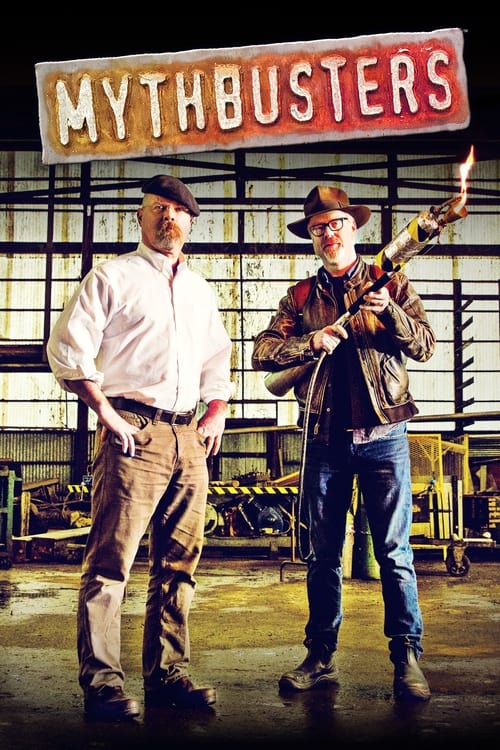
MythBusters is a science entertainment television program created and produced by Australia's Beyond Television Productions for the Discovery Channel. The show's hosts, special effects experts Adam Savage and Jamie Hyneman, use elements of the scientific method to test the validity of rumors, myths, movie scenes, adages, Internet videos, and news stories.

This series presents a number of unique vehicles that helped to shape Australia's automotive history. We briefly look at some of the most iconic cars to hit the Australian highways ( goat tracks ) and why we loved or hated them and how they faired on our roads and race tracks. Some of these cars are unique to Australia, while other cars will be instantly recognised in other parts of the world. Some international models were renamed and rebadged for the Australian market, but you may still recognise them just the same. We've asked automotive journalists Mark Oastler, John Wright & Joe Kenwright to present their exclusive articles for the Shannons Club in a television format.
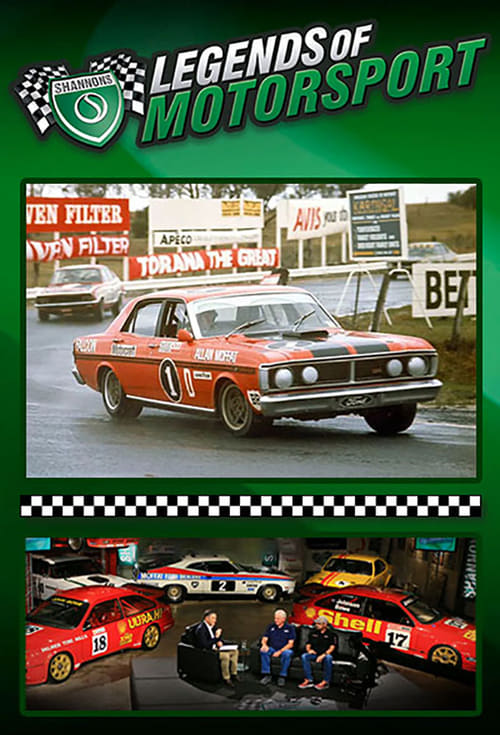
Relive the biggest events of Australian Motorsport history in 'Shannons Legends of Motorsport', hosted by Neil Crompton. In an entertaining 12 part series, Neil Crompton, Australia's premier motoring commentator, brings to life the history of Australian Motorsport with rarely seen historical footage from Seven's extensive archives dating from the '60's to the '90'. In the he second 12 part series, hosted by Bill Woods and Aaron Noonan, they interview many of our Australian motorsport legends and reveal even more historical footage taken from the Network Seven archives. The third 15 part series includes a number of short clips outlining some of the most iconic people, cars and race events in our Australian automotive history.
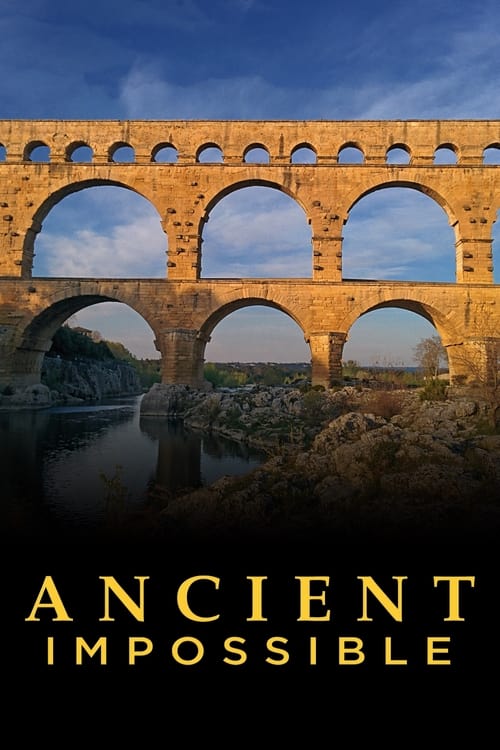
Ancient Impossible, the new H2 series, picks up where HISTORY’s long running Ancient Discoveries left off. In this next generation of storytelling, Ancient Impossible reveals how many of today’s technological achievements were actually developed centuries ago. Colossal monuments, impossible feats of engineering and technologies so precise they defy reinvention–the ancient world was far more advanced than we ever imagined. We’ll travel through history to reveal a radically different picture of the past, with innovations so far ahead of their time, they’re still in use today. New science uncovers a lost world more like our own than we ever suspected, and reveals how modern technology has its blueprint in the ancient world.