Loading titles…
Documentary / War & Politics
Over the past 60 years Britain's Special Air Service regiment has carried out a wide variety of clandestine missions - from deep-penetration raiding to hostage release operations - which have made it respected and feared for its professionalism and daring. The SAS prides itself…

As the Panzers of Rommel's Afrika Korps swept the British back into Egypt in 1941, a young commando lieutenant, David Stirling, persuaded his superiors to allow him to set up a special deep-penetration unit which could cause havoc behind enemy lines. Its first mission was a disaster but soon Stirling and the mavericks he had gathered proved that they had a valuable covert role to play.
After its initial and near-fatal problems the SAS changed its tactics - using its own heavily-armed jeeps to strike deep behind enemy lines attacking German and Italian airfields and supply lines. By the time the fighting in North Africa ended, the exploits of the unit were fast becoming legend - but it had lost its founder and was again struggling to survive.
As the Allies landed on D-Day to begin the liberation of Europe, the SAS used the skills it had honed in the desert in this new theatre of war. On the night before the landings, teams were parachuted in to create havoc and distract the German defenders. Then the armed jeeps ranged deep behind the enemy's lines attacking reinforcements and communications.
As the Allies broke out of their Normandy beachhead and swept towards the German border, the SAS continued its deep penetration role. But the regiment was also called on for other vital tasks - tracking down Hitler's mobile and elusive V-2 rocket launchers, and then hunting the Nazi war criminals that had killed members of the SAS in cold blood.
After World War II the SAS was disbanded, but it was soon realised that its special skills would be needed in the volatile post-war situation. The regiment was clandestinely rebuilt and undertook a variety of secret missions. Then in 1981 it hit the headlines when terrorists holding hostages in the Iranian Embassy were swiftly and successfully eliminated and their captives freed.
When the British Task Force sailed to take back the Falkand Islands from Argentine occupation, two squadrons of the SAS went with it. Over the next few weeks they were involved in a variety of surveillance missions, and a vital and brilliantly executed raid on an Argentine airstrip on Pebble Island which effectively eliminated all enemy air power on the Falklands.
In the Gulf wars of 1992 and 2003, the SAS returned to its roots as deep penetration teams fanned out into the Iraqi desert. Their missions ranged from disrupting supply lines and communications and raiding airfields, to the vital task of tracking down Saddam Hussein's Scud missile launchers which were being used to deadly effect and threatening to destroy the coalition against him.

Narrator

Sharpe is a British series of television dramas starring Sean Bean as Richard Sharpe, a fictional British soldier in the Napoleonic Wars. Sharpe is the hero of a number of novels by Bernard Cornwell; most, though not all, of the episodes are based on the books. Produced by Celtic Films and Picture Palace Films for the ITV network, the series was shot mainly in Turkey and the Crimea, although some filming was also done in England, Spain and Portugal. The series originally ran from 1993 to 1997. In 2004, as part of ITV's new set of drama, ITV announced that it intended to produce new episodes of Sharpe, in co-production with BBC America, loosely based on his time in India, with Sean Bean continuing his role as Sharpe. Sharpe's Challenge is a two-part adventure; part one premiered on ITV on 23 April 2006, with part two being shown the following night. With more gore than earlier episodes, the show was broadcast by BBC America in September 2006.


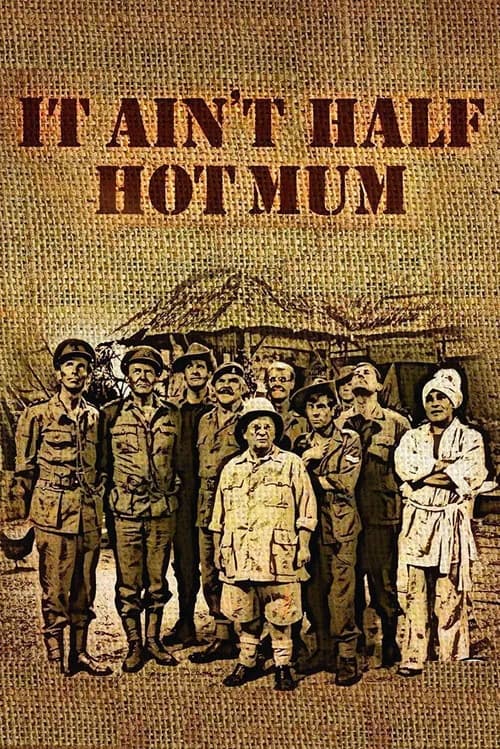
In 1945, during the final months of the Second World War, a group of soldiers perform for the Royal Artillery concert party, with comic acts and musical numbers for others prior to their departure for the frontlines. The party avoids partaking in combat duty; thus, the soldiers love being part of the outfit. Some even daydream of becoming world-famous actors when they leave the army.
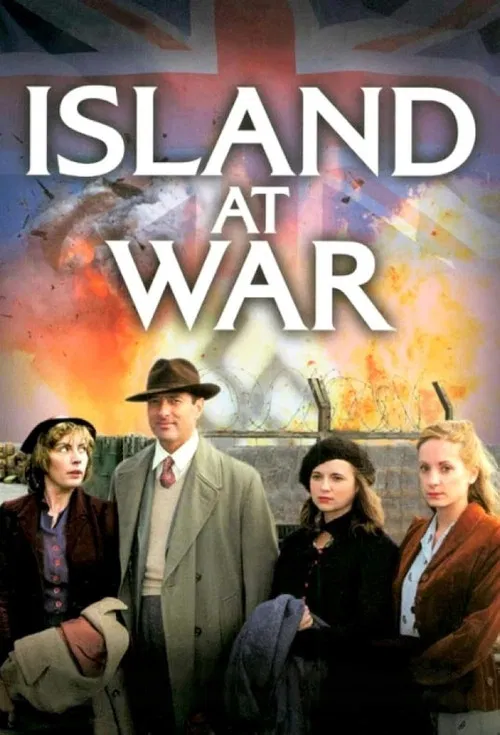
Island at War is a British television series that tells the story of the German Occupation of the Channel Islands. It primarily focuses on three local families: the upper class Dorrs, the middle class Mahys and the working class Jonases, and four German officers. The fictional island of St. Gregory serves as a stand-in for the real-life islands Jersey and Guernsey, and the story is compiled from the events on both islands. Produced by Granada Television in Manchester, Island at War had an estimated budget of £9,000,000 and was filmed on location in the Isle of Man from August 2003 to October 2003. When the series was shown in the UK, it appeared in six 70-minute episodes.

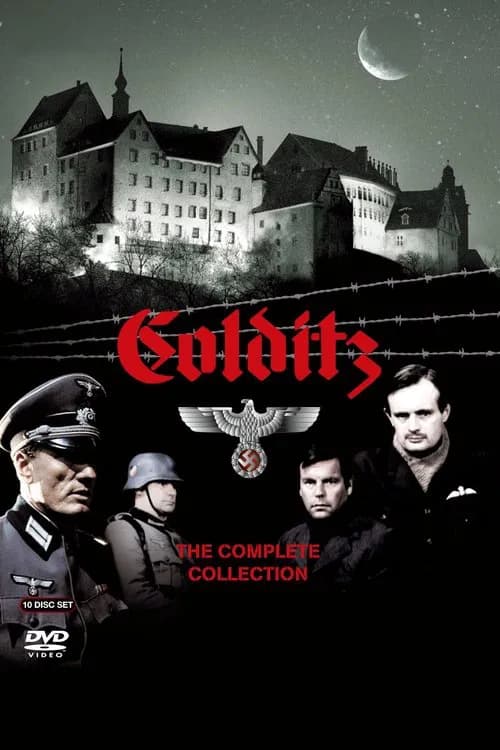
Colditz is a British television series co-produced by the BBC and Universal Studios and screened between 1972 and 1974. The series deals with Allied prisoners of war imprisoned at the supposedly escape-proof Colditz Castle when designated Oflag IV-C during World War II, and their many attempts to escape captivity, as well as the relationships formed between the various nationalities and their German captors.