Loading titles…
Drama / War & Politics
Bonn depicts the rise of the young West Germany, a country struggling to break free from the terrors and legacies of World War II and longing for a 'normal' life. Into this heady and volatile mix steps Toni, a young woman determined to seize every opportunity, overcome every…


London, New Year's Eve 1953/54: The 20-year-old Toni comes into contact with Otto John, the President of the Federal Office for the Protection of the Constitution (BFV). The former resistance fighter is impressed by Toni's reflected nature.

Toni's distrust of Gehlen grows when she overhears an explosive phone call about the "Scipio" secret, in which Chancellor Globke is involved. Her father is also involved. Gehlen entrusts Toni with an envelope that she is supposed to hand over to Globke personally. On the way, Toni is surprised by Wolfgang, who persuades her to have a coffee. Not without ulterior motives.

A meeting between John, Gehlen, Chancellery Minister Globke and Interior Minister Schröder takes place in the Ministry of the Interior. John is confronted with the counterfeiter Heimann about Wolfgang's "rough" interrogation methods. He prudently says nothing about the encrypted list from Heimann's apartment.

The Schmidts are in an ice age. Else refuses to accompany Gerd to the German Business Ball and Toni senses her chance. In the pompous ballroom, everything that has status and reputation in the capital is gathered. Gehlen is also there and Toni watches as he disappears with her father and other men.

Otto John gives Toni the task of finding out who supports "Scipio" financially. She finds what she is looking for in her father's office and comes across dubious payments. When trucks are loaded with the mysterious boxes in the yard, Toni lays in wait. In an unobserved moment, she jumps onto the loading ramp.

Tony's life has been turned upside down. After she confronts her family with a cruel truth and nobody believes her, she leaves her parents' house with a few belongings and moves in with Wolfgang. The two realize how strong their feelings are for each other, even when everything is crumbling around them.

Toni Schmidt

Wolfgang Berns

Otto John

Reinhard Gehlen

Gerd Schmidt

Else Schmidt

Lucie John


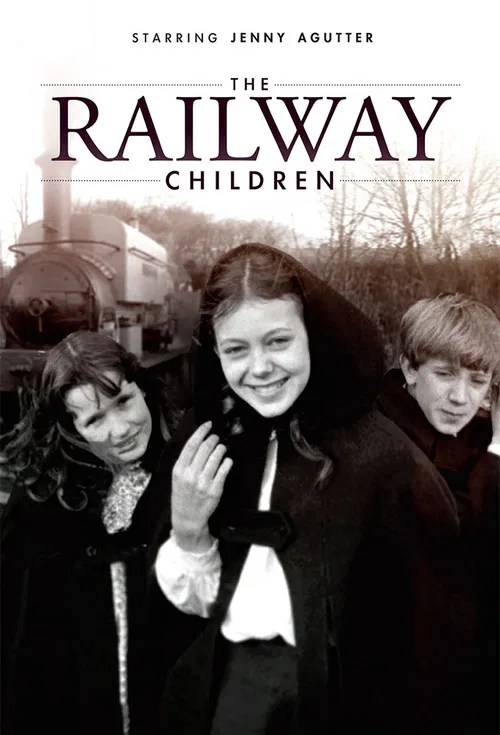
It's the summer of 1907, and cinema is in its infancy. In a northern industrial town two very different movie moguls are battling for the hearts, minds and purses of the local population. Frank Sheringham is an enterprising filmmaker determined to woo audiences away from the local flea-pit run by the villainous Albert Gold. The whole town becomes involved in the vendetta and three local children are at the eye of the storm.
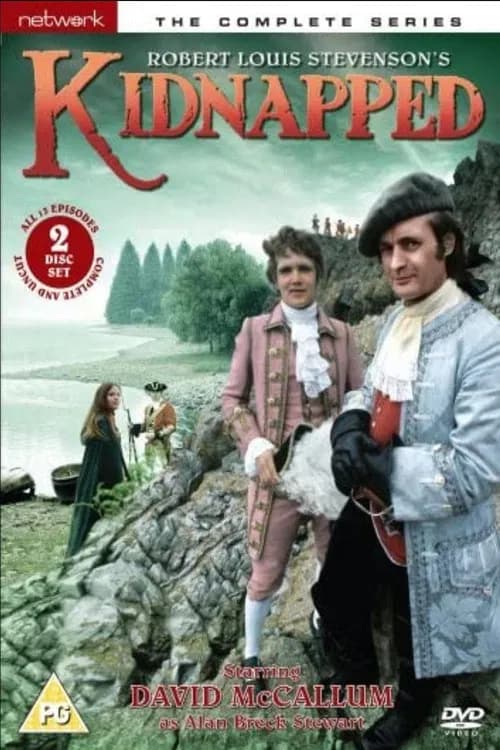
David McCallum stars as the rebellious Alan Breck Stewart, and this ambitious serial (a co-production between HTV and Germany's Tele-Munchen) also features a host of British character actors, including Bill Simpson, Patrick Allen, Andrew Keir, Patrick Magee and Frank Windsor. When young David Balfour arrives at his uncle's bleak Scottish house to claim his inheritance, his relative tries to murder him then has him shipped off to be sold as a slave in the colonies. Luckily for the lad, he strikes up a friendship with Alan Breck Stewart, who is on the run after Bonnie Prince Charlie's defeat at Culloden. When a ship's captain tries to kill Breck for his money, the two manage to get to land and set out for Edinburgh, dodging the ruthless Redcoats along the way.

With the growing threat of viral epidemic and the possibility of worldwide environmental catastrophe, humanity has an unprecedented ability to destroy itself, and vampires need to take control of their threatened food source. CIB is a clandestine, elite government unit that hunts vampires, referred to as 'Code Fives' or 'leeches'. DS Michael Colefield joins the team after his partner is turned, blending a realistic, scientific approach with modern vampire mythology, including their inability to appear on video or audio recordings.

GBH was a seven-part British television drama written by Alan Bleasdale shown in the summer of 1991 on Channel 4. The protagonists were Michael Murray, the Militant tendency-supporting Labour leader of a city council in the North of England and Jim Nelson, the headmaster of a school for disturbed children. The series was controversial partly because Murray appeared to be based on Derek Hatton, former Deputy Leader of Liverpool City Council — in an interview in the G.B.H. DVD Bleasdale recounts an accidental meeting with Hatton before the series, who indicates that he has caught wind of Bleasdale's intentions but does not mind as long as the actor playing him is "handsome". In normal parlance, the initials "GBH" refer to the criminal charge of grievous bodily harm - however, the actual intent of the letters is that it is supposed to stand for Great British Holiday.

In a heady tale of revenge and obsession, the outlaw Zastrozzi, assisted by courtesan, Matilda, abducts his half-brother, Verezzi, and torments him into believing his lover, Julia, has been murdered. His campaign of vicious psychological abuse signals a grisly bloodbath of greed, envy, betrayal, retribution, and eternal damnation.

Ingrid Schmidt

Hartmut Redlich

Ursula

Joseph von Waidburg

Hans Globke