Loading titles…
No synopsis available.
No synopsis available.
No synopsis available.
No synopsis available.
No synopsis available.
No synopsis available.
No synopsis available.
No synopsis available.
No synopsis available.
No synopsis available.
No synopsis available.
No synopsis available.
No synopsis available.
No synopsis available.
No synopsis available.
No synopsis available.
No synopsis available.
No synopsis available.
No synopsis available.
No synopsis available.
No synopsis available.
No synopsis available.
No synopsis available.
No synopsis available.
No synopsis available.

叶光明

蔡万

诸葛不亮

Virtues of Harmony is a long-running sitcom from Hong Kong, lasting 322 episodes with two direct seasons. Produced by Tsui Yu On, the sitcom was a TVB production and aired five days a week from September 17, 2001 to December 28, 2002. The series chronicles the comical events and life of the Kam household, a rich family during a prosperous time in the Ming Dynasty of China. The series was inspired by the 2000 TVB comedy drama Colourful Life. Originally planned to be an 150-episode sitcom, an extra 200 episodes were added due to the sitcom's rating success. After the episode finale, a spin-off sequel, Virtues of Harmony II was released in 2003, as well as a spin-off musical, which starred the same cast.

Tells the story between Leo and his father Li Changhai. Their relationship is tense and they don't understand each other. One day, while drunk, Leo made rude remarks towards an old photo. As a result, the photo started moving around and everyone got knocked down. When they woke up, they found themselves in a school playground in the 1990s – and soon realized that they had returned to Li Changhai's student days.




La Job is a French Canadian comedy television series set in Montreal. It is an adaptation of the British show The Office of the BBC. Produced by Anne-Marie Losique's Image Diffusion International, it has been broadcast for a limited number of viewers on Bell TV satellite television, beginning on October 9, 2006. It was later seen by a wider audience on the public broadcaster Radio-Canada and specialty channel ARTV. It is the third official foreign adaptation of the concept, and the second in a language other than English.

Black Hole High is a Canadian science fiction television program which first aired in North America in October 2002 on NBC and Discovery Kids. It is set at the fictional boarding school of the title, where a Science Club investigates mysterious phenomena, most of which is centered around a wormhole located on the school grounds. Spanning four seasons, the series developed into a success, and has been sold to networks around the globe. Created by Jim Rapsas, the series intertwines elements of mystery, drama, romance, and comedy. The writing of the show is structured around various scientific principles, with emotional and academic struggles combined with unfolding mysteries of a preternatural nature. In addition to its consistent popularity among children, it has been recognised by adults as strong family entertainment. Forty-two episodes of the series, each roughly twenty-five minutes in length, have been produced, the last three of which premiered in January 2006. Those three final episodes that aired were combined into a film, Strange Days: Conclusions. The show was filmed at the Auchmar Estate on the Hamilton Escarpment in Hamilton, Ontario.
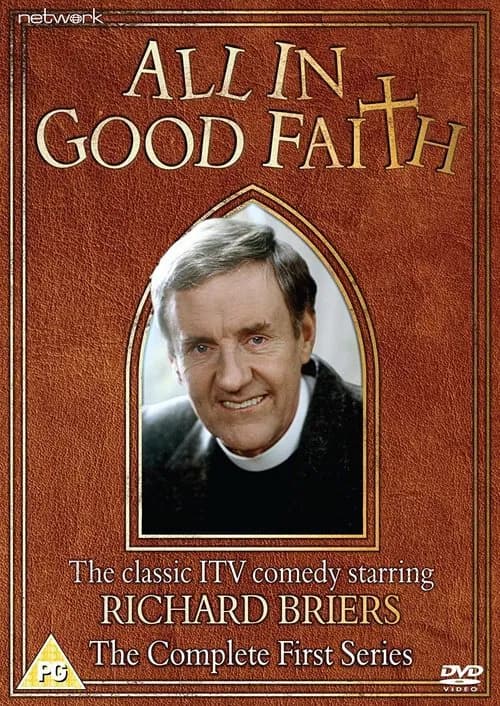
British sitcom in which Reverend Philip Lambe, after becoming bored in his wealthy Oxfordshire parish, asks for a transfer to a more difficult assignment. Sent to Edendale, a fictional urban town in the Midlands, he is accompanied by his wife Emma, sixteen-year-old daughter Miranda and twelve-year-old son Peter.

How do you like Wednesday? was a Japanese television variety series that aired on the HTB network in Hokkaidō, Japan, and on other regional television networks in Japan. The program debuted on HTB on October 9, 1996. The series was one of the first local variety programs to be produced on Hokkaido; prior to this series' launch, local variety programs in Hokkaidō were virtually non-existent. The program also had a significant influence on other local programs in other regions in Japan, most notably Kwangaku! in Kansai and Nobunaga in Tokai. The series achieved a record 18.6% viewing share on December 8, 1999, the highest share for a late-night program on a local TV station. Production of the weekly regular series ended in September 2002, though new limited-run series were produced on average of every 18 months; the latest series was shown on HTB in late 2005, eight episodes in length. Most of the series have been rerun under the names of Dōdeshō Returns and Suiyō Dōdeshō Classic.