Loading titles…
Documentary / War & Politics
The project attempts to understand the causes of the Afghan War (1979-1989) and to provide the most truthful coverage of all its stages. On a cold day on December 12, 1979, a small circle of members of the Politburo of the CPSU Central Committee discussed the situation in…

On June 30, 1978, an agreement on cooperation between the KGB of the Soviet Union and the security agencies of Afghanistan was signed in Kabul. The Soviet side began to provide advisory assistance in the areas of foreign intelligence, counterintelligence, protection of senior officials and the state border. The murder of a pro-Soviet leader by the leader of the Afghan elite, Hafizul Amin, became a reason to think about sending troops into Afghanistan. Although the Soviet leadership still doubted the expediency of this step...
On June 30, 1978, an agreement on cooperation between the KGB of the Soviet Union and the security agencies of Afghanistan was signed in Kabul. The Soviet side began to provide advisory assistance in the areas of foreign intelligence, counterintelligence, protection of senior officials and the state border. The murder of a pro-Soviet leader by the leader of the Afghan elite, Hafizul Amin, became a reason to think about sending troops into Afghanistan. Although the Soviet leadership still doubted the expediency of this step...
The KGB task forces were poor at combating the Afghan guerrilla war waged by religious groups with the support of the United States and its allies. The experience of fighting the Basmachi in Central Asia in the 1920s was forgotten, and the experience of other countries was not studied. All this reduced the effectiveness of military operations and led to large and unjustified losses among Soviet troops.
The combat losses of the Soviet troops in the first five years of the war with Afghanistan were the heaviest. The impossibility of resolving the Afghan conflict by force became increasingly obvious. After signing the Geneva Accords in 1986, M.S. Gorbachev announced the beginning of a phased withdrawal of Soviet troops. Which eventually became a symptom of the destruction of the bipolar world order and a prologue to the collapse of the Soviet Union...
No cast information available.
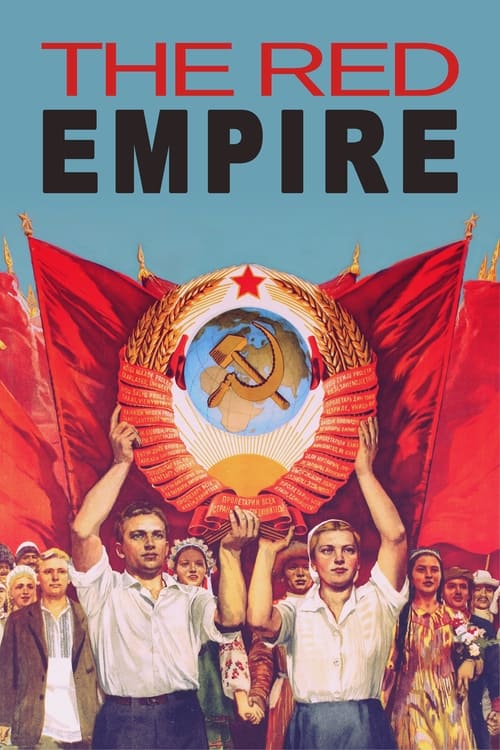
The story of an empire: From its founding in 1922 to its dissolution in 1991, the Soviet Union was shaped by revolutionary idealism, but also by oppression and decay. The USSR evolved from Stalinist terror through the Thaw under Khrushchev to political processes such as glasnost and perestroika under Gorbachev. Finally, in 1991, it collapsed.
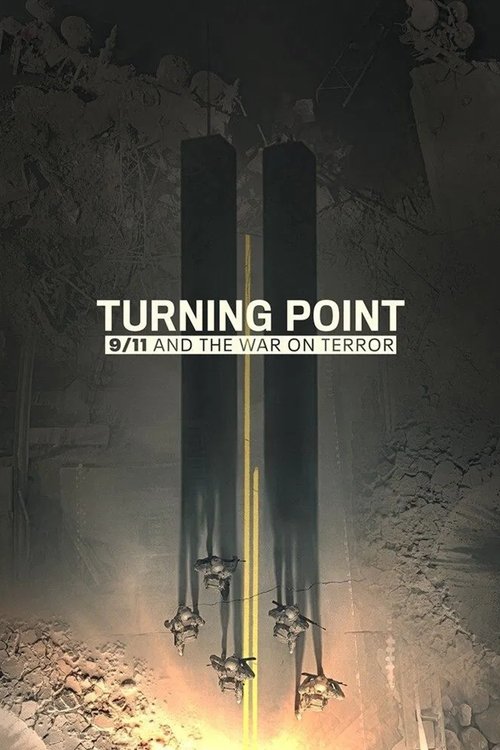
Modern history can be divided into two time frames: before 9/11 and after 9/11. This five-part docuseries is a cohesive chronicle of the September 11, 2001 attacks on the U.S., offering illuminating perspectives and personal stories of how the catastrophic events of that day changed the course of the nation.
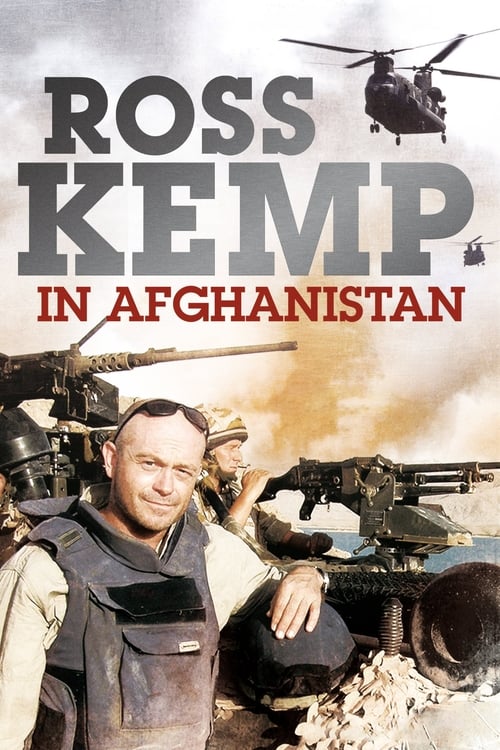
Ross Kemp in Afghanistan, also known as Ross Kemp: Return to Afghanistan for series 2, is a Sky One British documentary series fronted by actor Ross Kemp about the British soldiers fighting in the War in Afghanistan as part of the International Security Assistance Force mission against the Taliban. The two series involved Kemp and a small embedded film crew following troops fighting in Helmand Province, documenting their part in the ongoing Operation Herrick. Ross Kemp in Afghanistan, first broadcast in January 2008, followed the 2007 deployment of the 1st Battalion of the Royal Anglian Regiment. As a follow-up to the first series, Ross Kemp: Return to Afghanistan, first broadcast from 1 February 2009, followed the 2008 deployment of the Argyll and Sutherland Highlanders, the 5th battalion of the Royal Regiment of Scotland. In the first series Kemp and his crew participate in the Vikings' initial training in Britain for the deployment. They then visit the unit during their six-month tour, filming both life at rest and on fighting patrols in Helmand. The series finally covers their return to the UK. In the follow-up series Kemp returns to Afghanistan to assess how the conflict has changed since his first visit in 2007.
After the West left Afghanistan in August 2021, the Taliban returned to power. Thomas Erdbrink, who speaks fluent Persian (and therefore Dari) after years as a correspondent in Iran, presents various stories of Afghans. He speaks with Taliban fighters, courageous women, and the victims of the American bombings, among others.
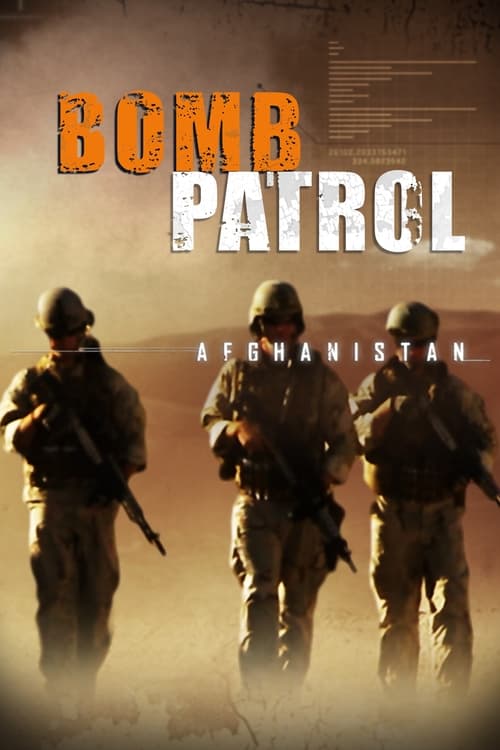
From the streets of Afghanistan comes an all-new series profiling the U.S. military's most dangerous job. The first of its kind, Bomb Patrol Afghanistan is a groundbreaking docu-series giving viewers an unprecedented first person view of one of the most dangerous jobs in the world in one of the most dangerous places on earth. G4 embeds viewers within the U.S. Navy E.O.D. (Explosive Ordnance Disposal) Unit as it trains state-side prior to deployment. Outside the wire in war-torn Afghanistan, helmet and body mounted cameras and state-of-the-art robotics bring you a never before seen look at the intensity of war. Viewers will witness as the elite team searches out, disarms and destroys an array of deadly explosives with one goal: to save civilian and military lives and return home safely. This is war like you've never seen before.