


Loading titles…
Who are the Ukrainians, what is their history, and what is their culture that they are fighting so hard for now? Jelle Brandt Corstius explores Ukraine during the third year of the war with Russia. It travels from cities along the front to areas more than 1000 km away. The…


What do you do as a man when a war breaks out? Are you going to fight or are you running? Jelle investigates in Ukraine, where it is becoming increasingly difficult to find men for the military. He walks on patrol along the border with Romania in search of deserters. In the Carpathians he speaks inveterate partisans who are willing to fight the last man, even if the Russians occupy the whole country. This way everyone makes their own choice.

A fifth of Ukraine is owned by the Russians. An even larger part has been occupied for a while. What is it like to live under an occupation? The occupied territories are inaccessible, but you get an idea in Kherson province. The area was occupied by them, but was liberated by the Ukrainians after six months. Some of them collaborated, others resisted. Jelle visits a hospital in Kherson. He also speaks to a doctor who refused to operate on Russians.

According to Putin, the war would last three days, which has been three years now. How do you keep Ukraine running? Everyone contributes. A beekeeper delivers honey to the front and a sawmill makes shelves for the trenches. Jelle visits a newly bombed power plant that is always repaired. An important pillar of Ukraine is the national railways. Because as long as the train runs on time, Ukraine is not defeated.

Jelle delves into the complex past of the Ukrainians. He visits the missile base where the nuclear missiles were located in the 1990s – a legacy of the Soviet Union. The Ukrainians had more nuclear weapons than England, France and China combined, but voluntarily handed in those missiles in exchange for security guarantees from the Russians. Unfortunately, they turned out to be of little value. Jelle speaks to the commander who had to press the ‘red button ’ in the Cold War. He also investigates the Holodomor, an artificial famine in the 1930s that killed millions of Ukrainians. In a suburb of Lviv, Jelle speaks to men who still act out SS soldiers with conviction. It just shows how complex history can be. For them, the Germans were not the occupiers, but the liberators of the Soviets.

In addition to a military struggle, a cultural war is also raging in Ukraine. Statues, street signs and books: everything that smells of Russia goes to the plains or ends up with the old paper. Perfectly understandable, but for some this is going too far. Jelle visits a book market in Kyiv where a stable owner is one of the few still selling Russian literature. And he goes out with a photographer who fights for the preservation of Soviet heritage. The Russian language also disappears. Jelle visits a village where the Russians have spent a few weeks. After they have been driven there, no one speaks a word of Russian anymore.
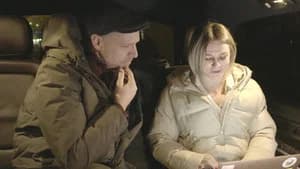
Despite the devastating war, the Ukrainians still try to look ahead. Peace may finally begin this year. Or more realistic: a truce. In the meantime - even in the middle of the war - work is being done on the future. Slowly a new generation comes to power, young Ukrainians who have no memories of the Soviet era, when everything in Moscow was determined. These young people are working impatiently on a new Ukraine. They are not going to wait for the end of the war to change their country.

Self

In 2007, TVB invited Helen To to host the travel show "Popular Tokyo". Because of her unique hosting style and her "Hong Kong girl" style behavior, she received a lot of support even in the scolding. While scolding her Hong Kong girl behavior for "teaching a bad way", the audience was attracted by her humorous language style, so an interesting phenomenon of scolding and watching was formed. Therefore, Helen To also created a new form of travel programs, that is, launching a series of programs with the host as the core, which can maximize the host's hosting skills and personality charm.


Travel documentary series in which Canadian journalist Brandy Yanchyk explores the vibrant cities, culinary delights, world-class attractions, unique characters, and natural wonders of Canada. Through Brandy's charm, sense of humor and adventurous spirit, the audience has a chance to learn something new about even the most familiar of destinations.

"Back Pack Series" (English: Back Pack Series) is a travel program series filmed and produced by TVB. There are currently four series in the program series, namely "Backpack America", "Backpack Utopia", "Backpacking Morocco" and "The North Of South America", hosted by Chris Leung Yin Chung from the perspective of backpackers to travel around the world .


Dragons, the rulers of the sky. To many people on the surface, they are a dire threat, but at the same time, a valuable source of medicine, oil, and food. There are those who hunt the dragons. They travel the skies in dragon-hunting airships. This is the story of one of those ships, the “Quin Zaza,” and its crew.


