

Loading titles…
Action & Adventure / Drama
It follows the story of Lee Dae Gil, a man of high birth, whose family was ruined when Won Gi Yun, a slave, burnt down his house and escaped with his sister, Un Nyeon, who was in love with Dae Gil. Driven by his desire for revenge, he survived his harsh years on the street and…


Slaves who ran away were rounded up by bounty hunters called chuno-kkun. “Chuno” itself is a portmanteau word combining “chase” with “slave”; hence, slave hunter.

In the Manchu war, amidst the chaos and fighting, invaders had raided homes and dragged off their inhabitants.
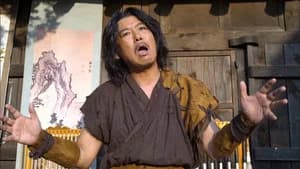
Chun Ji-Ho is nothing if not an opportunist. He tells his men to fire away. If he manages to kill Dae-Gil and the runaway slave, that's like killing two birds with a few dozen arrows.

Seol-hwa blocks Dae-gil’s path and refuses to budge until he agrees to bring her along on their mission to catch Tae-ha. Dae-gil is just about to turn his horse the other way, when Eop-bok fires his musket.

There is only one son of the Crown Prince left alive, and Tae-Ha must save him. Tae-Ha, with his secret message from the Crown Prince himself, must get to and save the last son of the Crown Prince and avenge his master’s murder.

Aware that they’d be overtaken easily if they tried to escape on horseback, Tae-ha sends a riderless horse galloping away to misdirect the slave hunters once again.
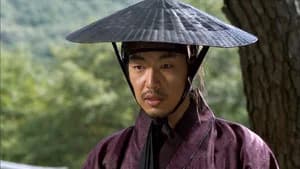
Choi and Wang-son cannot believe it; they’ve seen it before more than a few times. But Dae-Gil is adamant – Un-Nyun is alive!
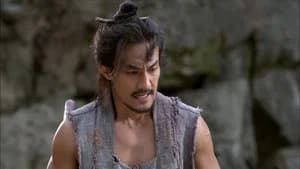
Seol-hwa is jolted awake by the slave hunters demanding to know what she did with their horses and money. Seol-hwa says she sold the horses and spent all of the money on food and drink.

Tae-Ha was not born a slave. Rather, he chose to swear an oath to defend the Crown Prince, thus he endured the loss of his command, the torture, the permanent branding of slave symbol on his forehead, because he had a greater purpose.

Dae-gil had begged his father to allow him to marry Un-nyun, saying that he couldn't live without her. Furious, his father had ordered that Un-nyun be locked up in the storage room, where she would be left to die from dehydration.

According to Dae-gil, in this world of slavery co-existing with Neo-Confucian ideals of virtue, Good and Evil don’t really have meaning.

King Injo asks his number two man, the Left State Minister Lee Gyeong Shik, about the happenings in Jeju Island, where the last surviving son of the murdered Crown Prince So-Hyeon was supposed to be killed.

Dae-Gil has found his beloved, but she has apparently forgotten about him.

Just as it seems they might have to settle in for a long and cold wait, one of the slaves spies the yangban approaching in the distance. The slaves immediately scramble to their positions.

Scholar Jo and his cohorts grow anxious as it seems that General Song Tae-Ha may not merely follow orders and do as he is told.
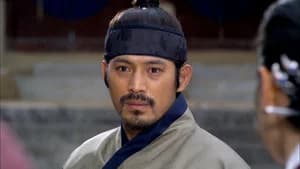
There are certain fates that are just not meant to be. After Dae-gil's relentless chase to find Tae-ha and Un-nyun, he hits a dead-end where he has to face reality and accept that Un-nyun has moved on and has found happiness.

Both Tae-ha and Dae-gil get captured by Officer Hwang and get tortured until they disclose the whereabouts of the Crown Prince.

Execution day. Both Tae-ha and Dae-gil are sentenced to die since they failed to reveal the whereabouts of the Crown Prince and follow orders.
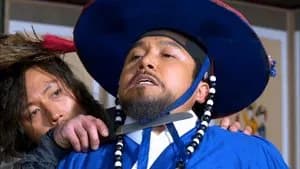
While trying to escape to keep the Crown Prince safe, Hye-won gets caught by officers because they are suspicious that she is carrying the Crown Prince.

In order to keep the Crown Prince safe, Dae-gil guides them into the deep mountains, where his slave hunting comrade lives in a village surrounded by other slave hunters.

Dae-gil is now reunited again with his chuno brothers, General Choi and Wang-son. A welcoming festivity is prepared for Dae-gil and the rest of his crew.

The Qing Emperor sends his soldiers to the small village to get the Crown Prince so that they can take him back to Qing for his safety.

No synopsis available.

Eop-bok discovers that the leader of their revolution regime used them as part of their scheme to get rid of certain people that the Left Prime Minister did not want around.

Lee Dae-gil

Un-nyun / Kim Hye-won

Song Tae-ha

Hwang Chul-woong

Eop-bok

Wang Son-i

Lee Gyeong-sik



David McCallum stars as the rebellious Alan Breck Stewart, and this ambitious serial (a co-production between HTV and Germany's Tele-Munchen) also features a host of British character actors, including Bill Simpson, Patrick Allen, Andrew Keir, Patrick Magee and Frank Windsor. When young David Balfour arrives at his uncle's bleak Scottish house to claim his inheritance, his relative tries to murder him then has him shipped off to be sold as a slave in the colonies. Luckily for the lad, he strikes up a friendship with Alan Breck Stewart, who is on the run after Bonnie Prince Charlie's defeat at Culloden. When a ship's captain tries to kill Breck for his money, the two manage to get to land and set out for Edinburgh, dodging the ruthless Redcoats along the way.


Shi Xiaofan, a modern engineer, transmigrates into a fictional dynasty as Shi Feifan, a notorious playboy, and secretly uses his advanced knowledge to protect his family, build power, and reshape the empire. While pretending to be irresponsible, he quietly amasses wealth, outsmarts political enemies, and rises from “good-for-nothing” to a hidden military force pivotal to the kingdom’s survival.

In 17th century France, young D'Artagnan wants to join the King's Musketeers, but instead befriends three legendary musketeers—Athos, Porthos, and Aramis—and together, they become embroiled in the political intrigue surrounding King Louis XIII and his adversaries, particularly the powerful Cardinal Richelieu.

It tells the story of the first generation of leaders of the Communist Party of China represented by Mao Ze Dong. When the country is in crisis, the first congress of the Communist Party of China was held to establish the Communist Party of China and lead the Communist Party to explore the great course of maturity. The story takes Mao Ze Dong’s “one major representative” as the perspective, starts from the main contradictions in Chinese society after 1919, and takes the party’s development context as the foundation. The arduous struggle opened up an unprecedented revolutionary road and finally won a great victory.


Jo Sun Bi

Seol-hwa

General Choi

Eun Sil

Jakeun Jumo