Loading titles…
Documentary
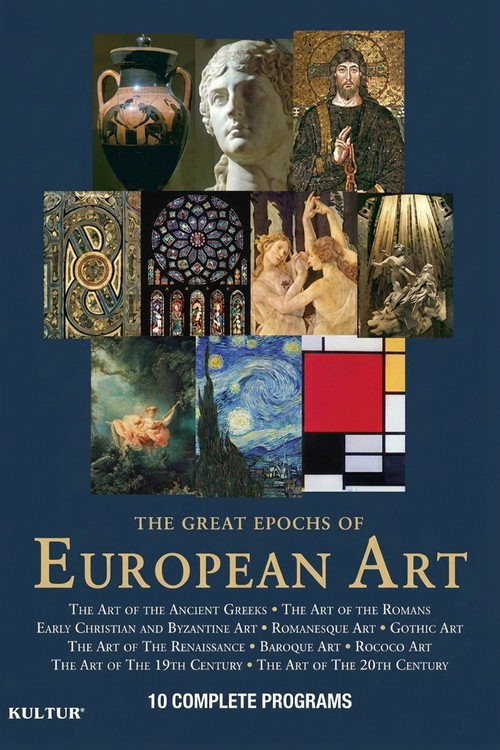
Ten programs filmed across Europe explore the history of European art through masterpieces of architecture, sculpture, and painting. The series spans from Greek and Roman art to Christian, Byzantine, and Gothic styles, followed by the Baroque, Rococo, and the artistic movements…
An introduction to the origins of European art, exploring Greek sculpture, architecture, and aesthetics. The episode highlights ideals of beauty, harmony, and proportion that shaped Western artistic tradition.
A journey through the monumental architecture and refined decorative arts of ancient Rome. It examines engineering achievements, imperial imagery, and the artistic legacy that spread across the Roman Empire.
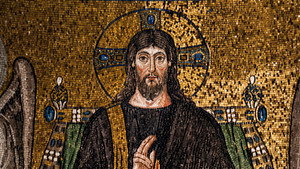
A study of early Christian and Byzantine visual culture, focusing on mosaics, icons, and sacred architecture. The episode reveals how spirituality and symbolism defined the art of the Eastern Empire.
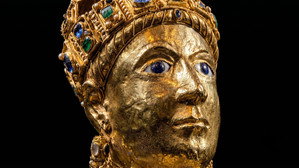
An exploration of the Romanesque period, marked by massive churches, expressive sculpture, and a deeply religious visual language that dominated Europe in the 11th and 12th centuries.
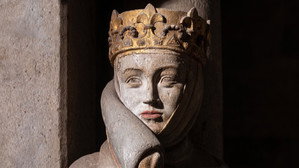
A look at the rise of Gothic cathedrals, the pointed arch, stained glass, and the pursuit of light and verticality. This episode shows how medieval Europe transformed architecture and artistic expression.
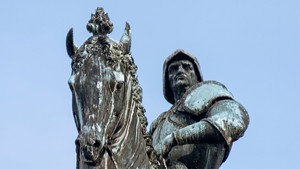
A survey of the rebirth of classical ideals in Italy and Europe. Featuring masters such as Leonardo, Michelangelo, and Raphael, it presents a new vision of humanity, nature, and artistic innovation.
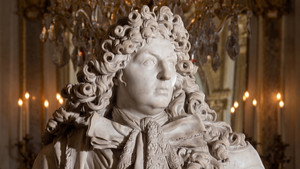
An examination of the dramatic, emotional, and theatrical style of the Baroque era. From Caravaggio’s intense realism to Bernini’s dynamic sculptures, the episode reveals art shaped by power and faith.
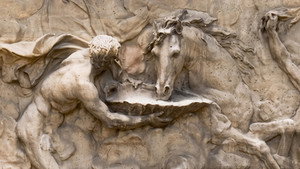
A portrait of the refined and ornate Rococo style, with its elegant interiors, playful themes, and aristocratic taste. The episode highlights French and German contributions to this decorative movement.
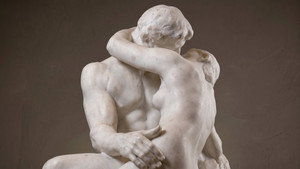
A journey through Romanticism, Realism, and Impressionism, showing how industrialization, social change, and new ideas transformed European art during the 1800s.
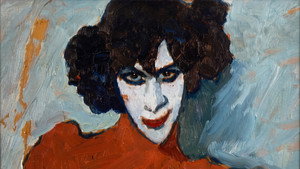
An overview of the revolutionary artistic movements of the modern era: Expressionism, Cubism, abstraction, and the avant‑garde. The episode explores how the very definition of art was reimagined.
No cast information available.
During the turbulent 19th century, a number of brilliant French artists developed the Romantic movement in Paris: writers Victor Hugo, Alexandre Dumas, George Sand, Honoré de Balzac and Charles Baudelaire, painter Eugène Delacroix and composer Hector Berlioz, among others, changed the way of looking at art and created enduring works that have inspired the world to this day.
In his most personal project to date, Simon Schama looks back at the dramatic history that has played out in his lifetime. Best known for writing history, he has lived a fair bit of it too. Born in 1945, on the night of the bombing of Dresden, Simon grew up as part of a generation determined to rebuild the world from the ashes of war. In this film, he reveals the stories of artists and writers who have been at the forefront of the fight for truth and democracy, often at great personal cost.
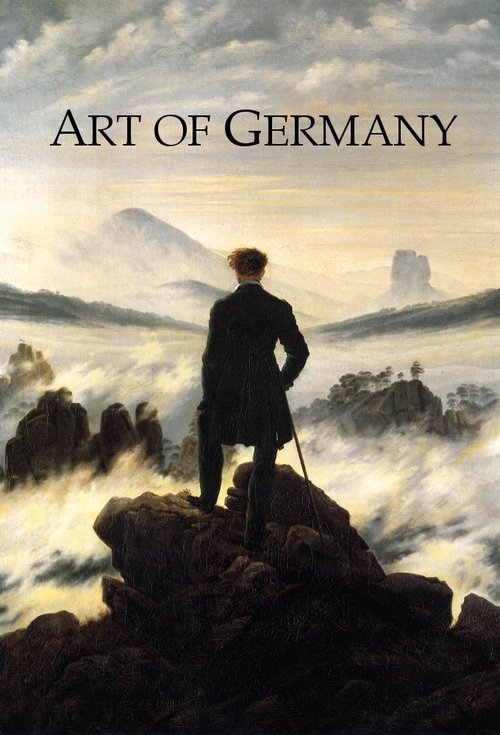
In an absorbing study, Andrew Graham-Dixon tells the story of a national art that conveys passion, precision, hope and renewal. He juxtaposes escapism with control and a deep affinity with nature against love for the machine. The fascinating story takes us from the towering cathedral of Cologne, the woodcuts of Albrecht Dürer and paintings of Grünewald to the gothic fairytale Neuschwanstein Castle, the Baltic landscapes of Caspar David Friedrich and the industrialisation lent expression of Adolph Menzel and Käthe Kollwitz. As the series progresses, it presents a rare focus on the cultural impact of Hitler's obsession with visual art, reveals how art became an arena for the Cold War and examines the redemptive work of the "visionary" Joseph Beuys – the most influential artist of modern times.