


Loading titles…
Documentary
The elite Combat Rescue members of the U.S. Air Force, Pararescuemen, or PJs, have one mission: rescue American or Allied forces in extreme danger. Whether their targets are shot down or isolated behind enemy lines, surrounded, engaged, wounded, or captured by the enemy, PJs…

It's their most dangerous mission yet; the PJs take on enemy fire while rescuing two American soldiers from an active battle zone in the heart of Kandahar City. Surrounded by gunshots and explosions, pilots fly in fast and low to evade Taliban gunners and possible rocket launchers. Once on the ground, rescuers race against time to reach the injured men and evacuate them to the nearest hospital before they bleed out.
With heartfelt goodbyes, the men of the 38th Rescue Squadron at Moody Air Force Base, Ga., leave their loved ones behind, bound for a war zone half a world away Afghanistan. A 22-year-old rookie is put to the test when a soldier is gravely injured with a gunshot wound to the chest, and clinging to life. Back at base, an expecting father on his third deployment awaits word from his wife of the gender of their first child but just as the news comes in, he gets pulled away on a rescue mission.
They call it the golden hour, the critical window of time in which PJs strive to complete a rescue and offer the injured their best chance of survival. The PJs can't land in an area littered with enemy mines until a full sweep of the zone confirms that it's safe to land and this setback jeopardizes the life of an Afghan soldier with a severed leg. On another call, frustration mounts when defensive jamming techniques block radio communications, complicating the rescue of several U.S. soldiers.
The team medevacs two Afghan allies who have been shot in a firefight. When one of the guns on their chopper breaks in midair, the men must change their tactics to land safely. With the threat of improvised explosive devices at the landing zone slowing down the process, the men are feeling the pressure to get their allies back to safety. Back at base, each man must deal with the stressors of the job in his own way.
Go inside an elite Air Force paracrescue unit as they deploy to Afghanistan. One PJ, Chris, is eager to prove himself and save lives. When an Afghan civilian is injured in an improvised explosive device blast, the men of the 38th Rescue Squadron must treat and transport him to the hospital within the hour to save his life. Since the men must constantly stay on top of current medical knowledge, each Monday they review and practice their skills so when they need to use them, they are ready.
As their deployment draws to a close, the 38th Rescue Squadron PJs count down the days until they can return home. But when two suicide bombers detonate a bomb near the city of Kandahar, injuring dozens of civilians, the PJs are reminded that they are a long way from home. Later, the team takes to the air to rescue a U.S. serviceman who has lost three limbs and is quickly losing blood.
No cast information available.

A six-part French documentary about the Second World War composed exclusively of actual footage of the war as filmed by war correspondents, soldiers, resistance fighters and private citizens. The series is shown in color, with the black and white footage being fully colorized, save for some original color footage. The only exception to the treatment are most Holocaust scenes, which are presented in the original black and white.
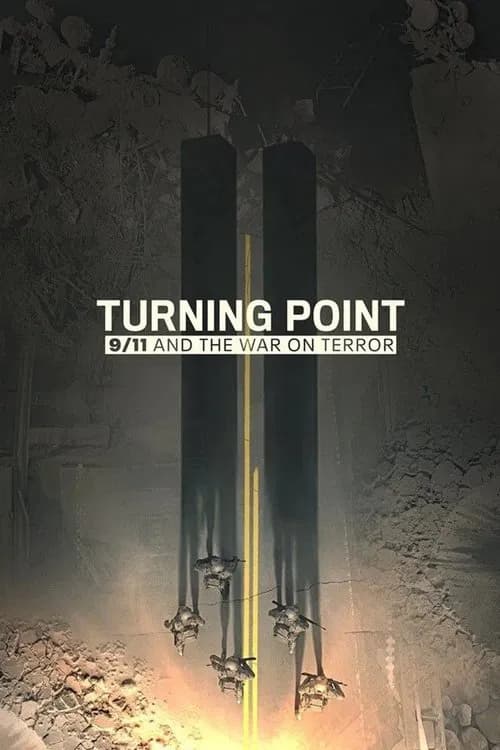
Modern history can be divided into two time frames: before 9/11 and after 9/11. This five-part docuseries is a cohesive chronicle of the September 11, 2001 attacks on the U.S., offering illuminating perspectives and personal stories of how the catastrophic events of that day changed the course of the nation.

Ross Kemp in Afghanistan, also known as Ross Kemp: Return to Afghanistan for series 2, is a Sky One British documentary series fronted by actor Ross Kemp about the British soldiers fighting in the War in Afghanistan as part of the International Security Assistance Force mission against the Taliban. The two series involved Kemp and a small embedded film crew following troops fighting in Helmand Province, documenting their part in the ongoing Operation Herrick. Ross Kemp in Afghanistan, first broadcast in January 2008, followed the 2007 deployment of the 1st Battalion of the Royal Anglian Regiment. As a follow-up to the first series, Ross Kemp: Return to Afghanistan, first broadcast from 1 February 2009, followed the 2008 deployment of the Argyll and Sutherland Highlanders, the 5th battalion of the Royal Regiment of Scotland. In the first series Kemp and his crew participate in the Vikings' initial training in Britain for the deployment. They then visit the unit during their six-month tour, filming both life at rest and on fighting patrols in Helmand. The series finally covers their return to the UK. In the follow-up series Kemp returns to Afghanistan to assess how the conflict has changed since his first visit in 2007.


After the West left Afghanistan in August 2021, the Taliban returned to power. Thomas Erdbrink, who speaks fluent Persian (and therefore Dari) after years as a correspondent in Iran, presents various stories of Afghans. He speaks with Taliban fighters, courageous women, and the victims of the American bombings, among others.

From the streets of Afghanistan comes an all-new series profiling the U.S. military's most dangerous job. The first of its kind, Bomb Patrol Afghanistan is a groundbreaking docu-series giving viewers an unprecedented first person view of one of the most dangerous jobs in the world in one of the most dangerous places on earth. G4 embeds viewers within the U.S. Navy E.O.D. (Explosive Ordnance Disposal) Unit as it trains state-side prior to deployment. Outside the wire in war-torn Afghanistan, helmet and body mounted cameras and state-of-the-art robotics bring you a never before seen look at the intensity of war. Viewers will witness as the elite team searches out, disarms and destroys an array of deadly explosives with one goal: to save civilian and military lives and return home safely. This is war like you've never seen before.


Mike Brewer sets off on a journey of discovery to find out the story of one of the most remarkable aircraft in the British Armed Forces: a Chinook helicopter code named Bravo November. By doing so he examines the invaluable contribution that these helicopters have made to campaigns from the Falklands War onwards. And how Chinooks are now being upgraded to keep them at the cutting edge of British tactical weaponry.

