


Loading titles…
Documentary
Henry Louis Gates Jr. takes a look at the history of Africa, from the birth of humankind to the dawn of the 20th century. A breathtaking and personal journey through two hundred thousand years of history, from the origins, on the African continent, of art, writing and…


Journey with Professor Henry Louis Gates, Jr. to Kenya, Egypt and beyond as he discovers the origins of man, the formation of early human societies and the creation of significant cultural and scientific achievements on the African continent.

Professor Henry Louis Gates Jr. charts the ancient rise of Christianity and Islam, whose economic and cultural influence stretched from Egypt to Ethiopia. Learn of African religious figures like King Lalibela, an Ethiopian saint, and Menelik, bringer of the Ark of the Covenant.
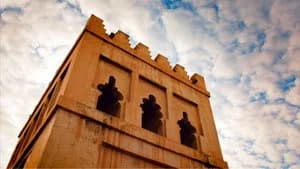
Henry Louis Gates Jr. uncovers the complex trade networks and advanced educational institutions that transformed early north and west Africa from deserted lands into the continent’s wealthiest kingdoms and learning epicenters.

Gates explores the power of Africa’s greatest ancient cities, including Kilwa, Great Zimbabwe and Benin City, whose wealth, art and industrious successes attracted new European interest and interaction along the continent’s east and west coasts.

Henry Louis Gates Jr. explores the impact of the Atlantic trading world, giving rise to powerful new kingdoms, but also transatlantic slave trade. Learn of the revolutionary movements of the 18th and early 19th centuries, including the advent of the Sokoto Caliphate.

Henry Louis Gates Jr. explores the dynamism of 19th century Africa, the “scramble” by European powers for its riches, and the defiant and successful stand of un-colonized Ethiopia.

Self - Presenter

In this four-part BBC documentary, former Monty Python funnyman and renowned globe-trotter Michael Palin sets off from Gibraltar to travel across the Sahara, his witty humor downplaying the hardships he faces along the arduous journey. He travels to Morocco, Mauritania, Mali and beyond, across some of the harshest terrain on the planet.

The Earth’s continents are instantly recognizable. These iconic landmasses seem permanent and unchanging, yet they are merely the wreckage of a much larger long-lost supercontinent – Pangaea. In this stunning four part series Professor Iain Stewart uncovers the evidence for this ancient past. He reveals how the world around us is full of clues – in the rocks, the landscapes and even the animals. All of which tell us how the land we live on was created.

Africa is a land sculpted by time where animals have evolved complex weapons to arm them in the battle to live another day. An elephant's tusks can defend, or attack. An octopus uses camouflage to find food, or hide from an enemy. A Cape Fur Seal's speed and agility are valuable tools to catch a penguin, but ineffectual against a Great White Shark. A single hippopotamus holds a pride of twelve lions at bay with his sheer bulk, but backs down when faced with the piercing teeth of another hippo. With lethal weapons wielded by fearsome predators and prey, animals walk a precarious path, here among Africa's Deadliest.


This series explores the facts and investigates the truth behind the British Redcoat Army's campaign in Zululand during 1879. The war was started by a country at the height of it's imperial powers and prosecuted by an army charged with the responsibility of implementing a policy known as Confederation - a proposal to unite various black and white factions in South Africa under British authority. Interviews, on-location footage and new geological surveys all help to reconstruct the conflicts and give insight into the tactics used in these epic battles.


