

Loading titles…
Documentary
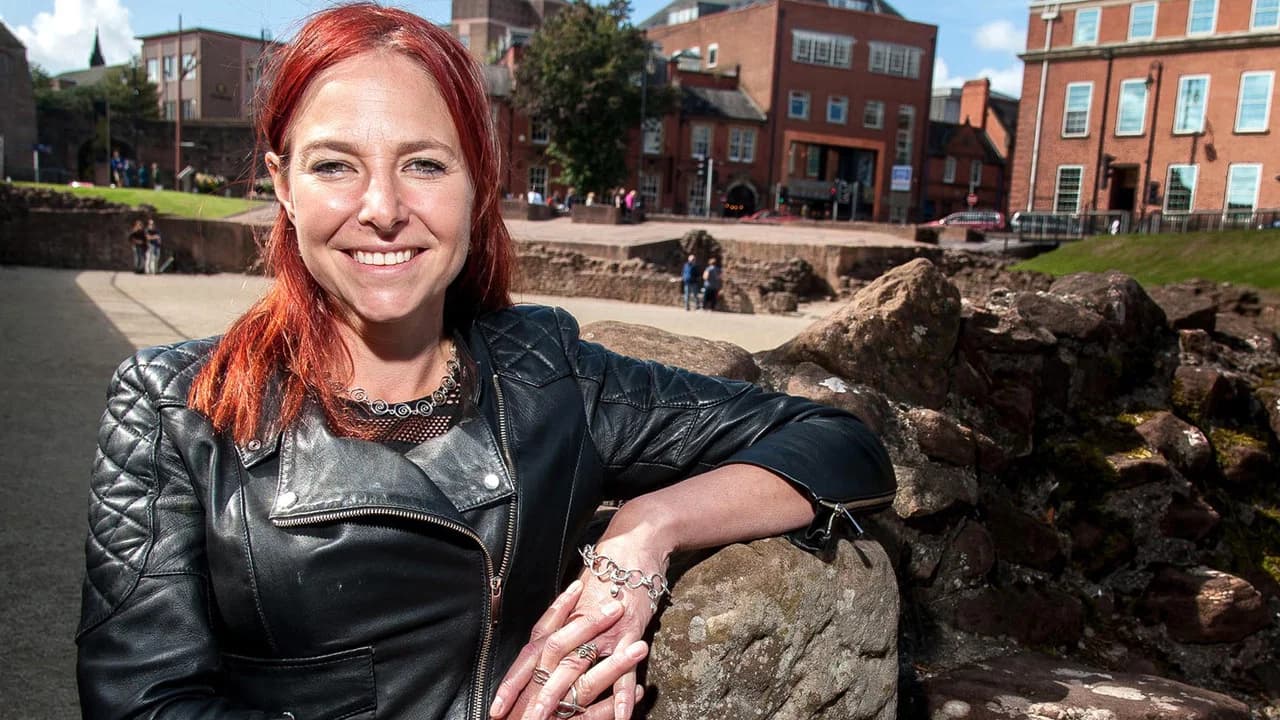
In this unique take on British history, Professor Alice Roberts explores Britain's rich and varied past through the stories of individual towns and cities. In each programme Alice studies one key period in history by delving into the secrets of a historic town that encapsulates…


In Chester, Britain's most Roman city, Alice enjoys a Roman feast, checks out an extraordinary archaeological find deep underground and explores a radical theory on the Romans' plans for the city

Alice tells the story of Viking England by studying the history of York, Britain's most Viking city. She takes part in a Viking battle, meets the metal detectorists behind one of the UK's greatest archaeological finds and gets her hands on an almost 1000-year-old Viking poo.
Alice tells the story of Norman England by studying the history of Winchester, Britain's most Norman city. Alice attempts to storm a castle in chain mail, investigates the origins of modern surgery and tucks into an appetising eel pie.
Alice learns the harsh reality of religious intolerance, uncovers the origins of Norwich City FC's iconic canary, and experiences humiliating Tudor justice

In Cheltenham, Britain's most Regency town, Alice attends a period society ball, investigates the rigid social hierarchy of the age and explores the Regency fondness for enemas
Alice reveals the history of Belfast, the UK's most Victorian city. She visits the shipyards that built the Titanic, gets locked up in the notorious Crumlin Road gaol and takes a crash course in 19th-century female etiquette.

Self - Presenter

On the edge of London stands Hampton Court, one of Britain's biggest palaces and most popular tourist spots, attracting almost a million visitors every year. Spanning 750 acres of grounds, it boasts 1,300 rooms and 23 courtyards...along with a host of secrets and historic stories. This two-part special provides an exclusive and intimate look at life inside the court today for the people keeping Henry VIII's world alive in the modern age, and also explores what life was like in the palace where the private world of the Tudors began.

Andrew Marr's The Making of Modern Britain is a 2009 BBC documentary television series presented by Andrew Marr that covers the period of British history from the death of Queen Victoria to the end of the Second World War. It was a follow-up to his 2007 series Andrew Marr's History of Modern Britain.

From cafes to craft fairs, glamping to ghosts, join Dame Penelope Keith as she meets the owners of Britain’s historic country houses struggling to keep their homes intact. Featured properties include Ashby Manor in Northamptonshire, Chillingham Castle in Northumberland, and Mapperton House in Dorset. As these estates turn to innovative ventures to stay afloat, Keith offers insight into the challenges of maintaining these grand homes in 2025. Will their creative solutions be enough to save their history?

Time Team is a British television series which has been aired on British Channel 4 from 1994. Created by television producer Tim Taylor and presented by actor Tony Robinson, each episode featured a team of specialists carrying out an archaeological dig over a period of three days, with Robinson explaining the process in layman's terms. This team of specialists changed throughout the series' run, although has consistently included professional archaeologists such as Mick Aston, Carenza Lewis, Francis Pryor and Phil Harding. The sites excavated over the show's run have ranged in date from the Palaeolithic right through to the Second World War.

Dr Xand Van Tulleken and Raksha Dave investigate the Great Smog of 1952 - the deadliest environmental disaster ever recorded and one of the world's worst peacetime catastrophes. Lasting just over four days, the Great Smog plunged London into a terrifyingly murky gloom - the acrid pollution seeping into homes, leaving Londoners gasping for breath, shutting down transport and emergency services, and overwhelming hospitals and undertakers alike.


Dr Clare Jackson tells the story of The Stuarts in Exile and sheds new light on the political, military and cultural threat the Jacobite's posed to the embryonic British state. Although the '15' ultimately failed, it crystallised the stark choice facing those living in early 18th-century Britain. Are you for the Stuarts or are you for Hanoverian's?

In four chapters, largely based on and illustrated with archaeological finds and sites, Neil Oliver explains how, as far as is known, the Iron Age Celtic tribes known as the Ancient Britains evolved and entered European civilization. Their internecine tribal phase was warlike and partitioned. Overseas contacts, especially metal trade, brought wealth and progress. Ultimately, it attracted the superior Roman empire, which would conquer and pacify Britain into a province, like Gaul shortly before, but Caesar's invasion wasn't the definitive annexation yet, that was left to emperor Claudius; even afterward some Celtic traits and even rebellions remained.


