

Loading titles…
Documentary
Andrew Marr's The Making of Modern Britain is a 2009 BBC documentary television series presented by Andrew Marr that covers the period of British history from the death of Queen Victoria to the end of the Second World War. It was a follow-up to his 2007 series Andrew Marr's…

In the first of a six-part series, Andrew Marr revisits Britain at the dawn of the 20th century. He finds the country mourning the death of Queen Victoria; fighting an intractable war against the Boers in South Africa; enjoying the bawdy pleasures of music hall; and worrying about the physical and moral strength of the working class.
The assassination of an archduke in Sarajevo sets in motion the wheels of world war. In the corridors of Westminster old allies Winston Churchill and David Lloyd George fight over strategy. Out on the streets, the people are eager for battle, determined to 'teach the Hun a lesson'. Britain is on the road to war.
Britain gets its first taste of total war. Marr argues that no shock has ever hit these islands with quite the force of what became known as the Great War. It transformed the lives of the British people - most dramatically the millions who fought on the frontline but also those at home who were bereaved, bombed, uprooted and bankrupted.
In the 1920s, Imperial Britannia was sliding from view and a more modern Britain tried everything new and asked endless questions about how we should live our lives. A great new age of experiment arrived in politics, writing, art, sex and drugs. Survivors of World War I threw themselves into the new urban scene of nightclubs, cocktails and jazz, where royalty, gangsters and Hollywood stars rubbed shoulders with new money.
For Andrew Marr, the story of Britain in the 1930s was one of betrayal, political extremism, unemployment and... hats. Bowlers, trilbies, top hats and flat caps were everywhere, as the country descended into chaos when the financial crash on Wall Street engulfed Britain. Solutions to the national crisis were offered by Britain's most unlikely paramilitaries, the Greenshirts.
Marr's story of 'the people's war' begins with the defeat that came to define modern Britain's national spirit: Dunkirk. In 1940, Britain stood alone against the might of the German war machine. Churchill produced the words that stirred the Blitz spirit, but a Nazi invasion seemed inevitable. How could Britain fight on? The 'Dad's Army' of the Home Guard was hastily assembled and Britain was forced to pull together in ways it never had before.

Self - Presenter


Over the past 60 years Britain's Special Air Service regiment has carried out a wide variety of clandestine missions - from deep-penetration raiding to hostage release operations - which have made it respected and feared for its professionalism and daring. The SAS prides itself on doing its work in the shadows, never allowing any publicity and never claiming credit for any of its extraordinary achievements. But, over the years, sufficient information has emerged for a picture of the regiment's exploits to be clear. This series uses interviews with former members of the SAS; detailed and painstaking reconstructions; and cutting edge 3-D graphics to recreate seven great missions which show why the SAS is today regarded as the world's leading special forces unit.


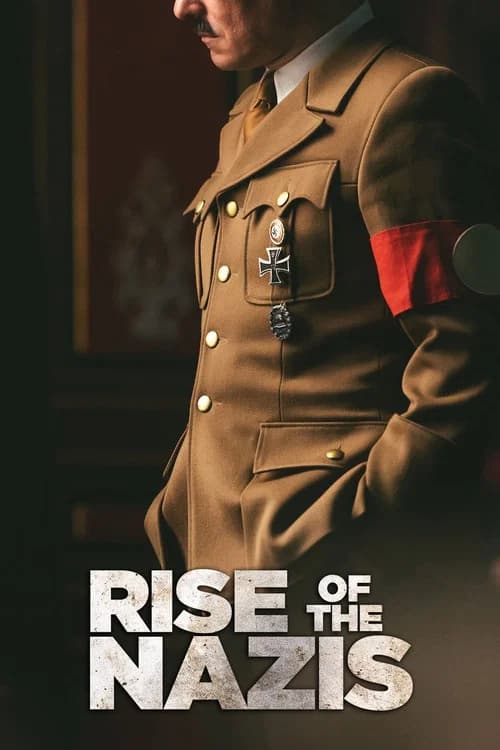
How did 20th Century Europe's most liberal democracy fall into the hands of fascists? From Hitler's political scheming that turned Germany's parliament into a House of Cards, his War on Truth leading to book burning, and his scapegoating of minorities, this series explores in extraordinary detail the events leading up to the outbreak of World War II.


From tunnels to towers, artillery sites, resistance nests and communication centers, Nazi Germany left their footprint throughout the world. To this day, silent remains still exist, sentinels guarding clues about plots that Hitler was unable to carry out. The collapse of the Third Reich left as many secrets as it did relics. Still today, remnants of the Nazi's schemes lie concealed in structures scattered across the globe. Skeletons of projects give way to mysteries. Conspiracies abound about science fiction scenarios. The Nazis were nothing if not methodical, and a deeper look reveals even darker plans. From tunnels to towers, artillery sites and communication centers; the remains of these schemes lie waiting to reveal truths about the Fuhrer's tactics and dreams in Secret Nazi Bases. What did Hitler have planned?

A four-part history series examines relations between Nazi Germany and Finland in the 1930s and 1940s. The series explores how the close relationship between Finland and Germany was born and developed, and what was known in Finland about the Holocaust, the mass extermination of the Jews at a time when the countries were at war together. Through archives and expert interviews, it explores how close Finns were to the Nazi German leadership.
