Loading titles…
Documentary / TV Movie
The sexual revolution of the '70s has allowed women to claim their right to pleasure and to better know their body. However, 30 years later, the female orgasm remains mysterious to a lot of people - both men and women. During the 1970's the sexual revolution enabled women the…

Self - sexologist
Self - psychoanalyst
Self - neurosciences researcher
Self

Dr. Wardell Pomeroy demonstrates the sex history-taking procedure integral to therapy and research. A key factor is the order of questions asked and his non-judgmental approach. Using a rapid notation system, Dr. Pomeroy condenses into a single sheet the equivalent of 25 typed pages. For training therapists and counselors in interviewing techniques

An intimate discussion film, Self-Loving is a unique cross-cultural statement about female sexuality, focused around masturbation. Filmed in both city and rural settings, the eleven women of gay, bi-sexual and heterosexual lifestyles Share their early experiences, current patterns, use of vibrators, fantasies and orgasmic patterns. Specifically a film dealing with women's feelings and experiences of masturbation, it is a positive, in depth statement about women's Sexuality.

This documentary tells the story of three grandmothers who earn a living as prostitutes. Christel, Paula and Karolina either work in their own apartment, in a brothel, or receive clients at a dominatrix studio. They have no desire to justify what they do, nor do they make a show of their profession. These three women are engaged in a constant merry-go-round of slipping into different identities, selling dreams and trying to manage their own private life. Their multifaceted personalities make it clear just how differently they go about their trade, and what made them choose to earn their bread as a sex worker. The film provides an insight in to the lives of Christel, Paula and Karolina and their sometimes surprisingly middle-class routine.
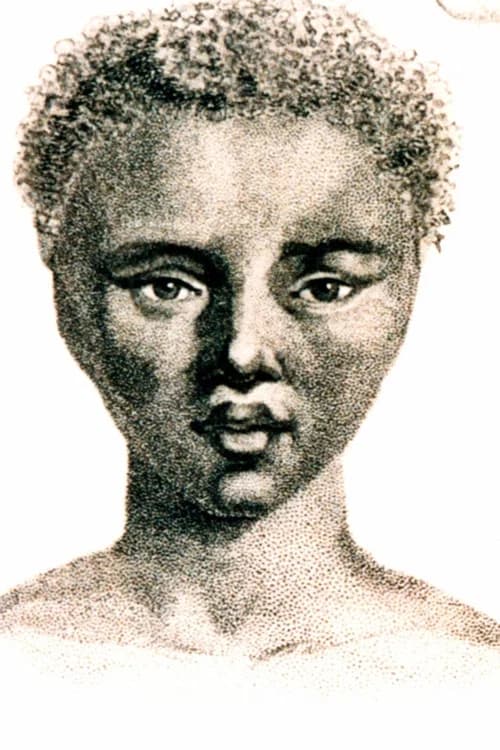
In 1810, 20 year old Sara Baartman got on a boat from Cape Town to London, unaware that she would never see her home again, or that she would become the icon of racial inferiority and black female sexuality for the next 100 years. Four years later, she became the object of scientific research that formed the bedrock of European ideas about BFS. She died the next year, but even after her death, Sara remained an object of imperialist scientific investigation. In the name of Science, her sexual organs and brain were preserved and displayed in the Musee de l'Homme in Paris until as recently as 1985. Using historical drawings, cartoons, legal documents, and interviews with noted cultural historians and anthropologists, this documentary deconstructs the social, political, scientific, and philosophical assumptions that transformed one young woman into a representation of savage sexuality and racial inferiority.


Even now, in times of an ubiquitous sexualisation of everyday life, the female orgasm continues to remain a mystery. In the documentary essay LA PETITE MORT, women of different ages and with different sexual preferences share how they experience orgasms, describe what it feels like and open up about a failed climax. Removed from pornography and excessive eroticism, they open up in indirect conversation with director-narrator Annie Gisler, who illustrates the sensual narratives of her protagonists with poetic, abstract and metaphorical images. Driven by the desire to overcome taboos and expectations that still overshadow female sexuality, the young Swiss filmmaker provides a sensitive and humorous examination of feminine intimacy in all its multifaceted richness. A dialogue among women, for women. And men.